Personhood, Yes—But “Peoplehood,” Too

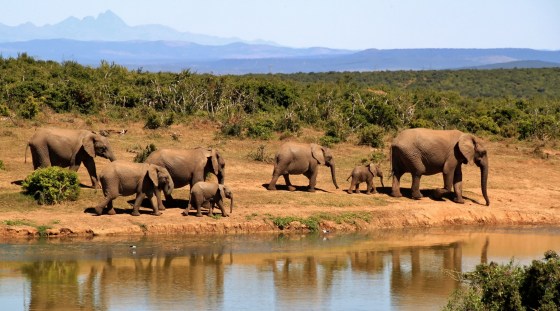
In support of the Humane Party‘s zoocracy concept and model, the present article seeks to offer a conceptual framework that may be regarded as fully including personhood but also as being more comprehensive, with respect to the goal of animal protection, than that of personhood alone, namely, that of “peoplehood.”  Personhood does not necessarily imply peoplehood, and, without recognition of this latter concept—recognition of other animals’ cultures, their relationships, their languages and communication styles, their full-fledged existence, dignity, and sovereignty as other “peoples”—animal-protection measures will tend to be severely under-inclusive in theory and under-performing in practice.

Greenhouse Gas Emissions at 400 PPM:  The New Normal

It seems like every day the normal changes.  Last year was hotter than the previous one, which was the hottest year on record.  Storms have reached greater intensity than the year before.  In some places spring comes sooner with trees budding in January and in others the snow rests until late May, only to see record temperatures in June bypassing spring altogether.  No matter where any of us lives, all of us can claim that the weather is freaky and abnormal.  But why?  Maybe greenhouse gas emissions in the atmosphere are the reason.

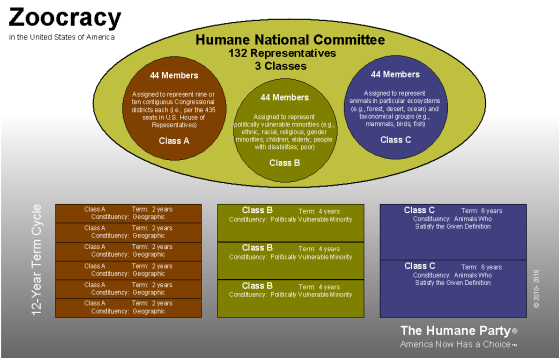
Zoocracy:  Placing Permanent Political Power—Yes, the Vote—in the Paws, Claws, and Jaws of Other Species

Zoocracy is a representative form of government in which members of all sentient species—not just homo sapiens—hold permanent political power of equal dignity.  Zoocracy is akin to democracy, in that decisions are made by vote of an enfranchised population.  But democracy pertains to an enfranchised population that is limited to humans, whereas zoocracy extends the franchise to all species.

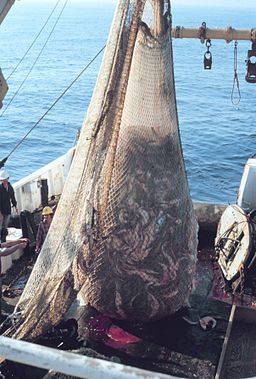
Members of the European Parliament Vote to Ban Electric Pulse Fishing

The European Parliament voted on January 16, 2018 for a ban on the controversial fishing practice of electric pulse fishing, in which electrically charged lines are dragged just above the sea floor, stunning marine life up into trawling nets.  The Members of the European Parliament (MEPs), the only directly elected body to represent the European Union (EU), voted 402 to 232 in favor of the ban. 

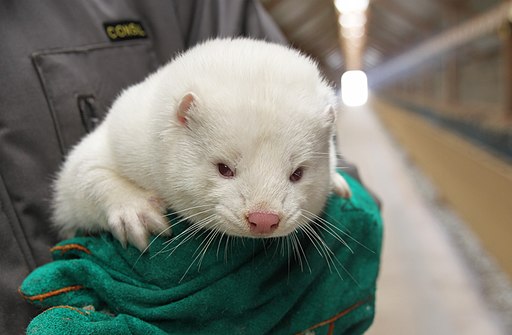
Norway Pledges Fur Farming Ban

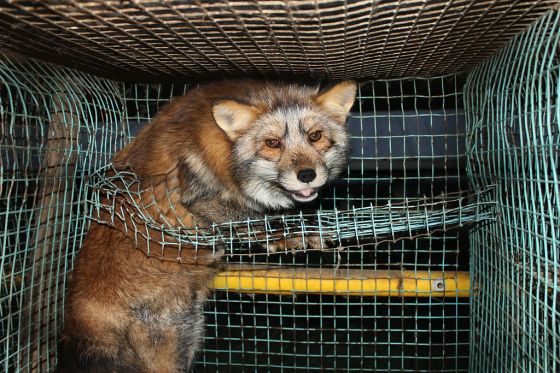
The newly formed coalition government of Norway, led by Conservative Prime Minister Erna Solberg, announced on January 14, 2018 a pledge to end all fur farming in Norway, with the phase-out complete by 2024/2025.  Norway is the 14th European nation to phase out fur farming.  Belgium, Germany, and Luxembourg are also considering legislation to ban fur farming.  The United Kingdom was the first to institute a ban in 2000, followed by Austria in 2004.

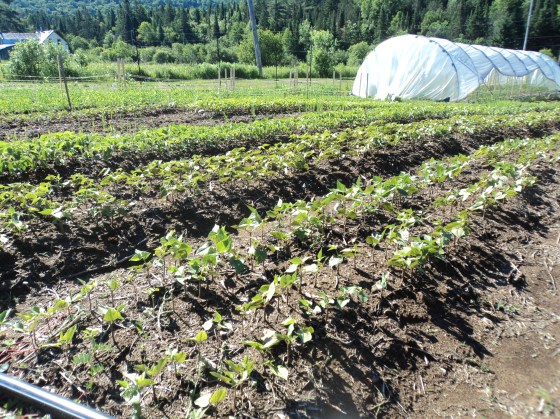
Soybean’s Potential

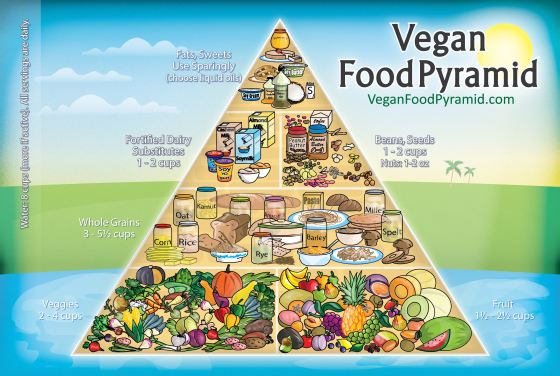
Could the soybean be the best possible food for us?  It may very well be.  A pound of boiled soybeans delivers 82.67g of protein, 463 mg of calcium and over 23 mg of iron, along with many other essential vitamins and minerals.  It may also be the most efficient source of protein that can be produced for us to consume anywhere in the world. 

The Hazards of Rising Rates of Meat Consumption

According to the socially conscious Farm Animal Investment Risk and Return (FAIRR) investor initiative, global meat consumption increased five-fold between 1992 and 2016.  This rise has worldwide implications for human health as well as the environment. The United States Department of Agriculture (USDA) estimates that the average American consumer will eat a record-breaking 222.2 pounds of red meat and poultry in 2018.

First Amendment Victory for Animal Activists in Idaho

In a split decision on Idaho’s 2012 “ag-gag” law, the U.S. Court of Appeals for the Ninth Circuit ruled on January 4, 2018 that audio and visual recordings in animal agricultural facilities could not be prohibited by the state, upholding an earlier ruling that invalidated the Idaho law for violating free speech. The January 4th ruling is a partial victory for animal activists. 

Bringing in the New Year with Brandy Walt

The Humane Party’s Staff Coordinator, Brandy Walt, continues in their role for a second term, January 1-March 31, 2018. This announcement also lists some of the notable changes that were made during their first term, October 1-December 31, 2017.

Book Review | Sister Species: Women, Animals, and Social Justice

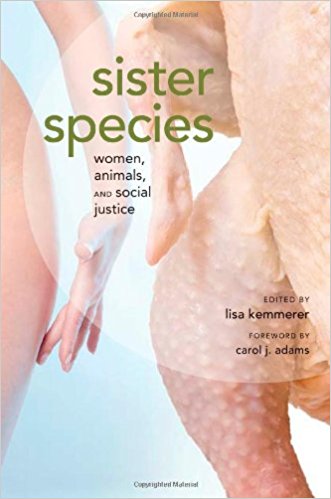
In Sister Species: Women, Animals, and Social Justice editor Lisa Kemmerer brings together essays by 14 women who work as animal advocates.  Carol J. Adams contributed the foreword to the book, addressing the importance of bringing together these women’s stories as a way for the reader to discover their own stories of awareness and engagement. In the field of biology, “sister species” refers to pairs of species in which each is the other’s closest relative. 

Join the Humane Party and Help Us Envision and Create a Vegan World

Back in 1992, The Union for Concerned Scientists and more than 1,700 more independent scientists called on humankind to curtail environmental destruction. Today in 2017, world scientists have released a second warning notice, stating that most environmental challenges “are getting far worse.” Thankfully there is hope. There is the Humane Party, and within the Humane party there is the Economic Transition Team that is diligently working on bringing these issues to light and on creating effective change. Join the Humane Party to help us accomplish our mission.

Vegan Literary Theory and Criticism: Toward a “Literature of Their Own”

This article briefly proposes an initial framework for articulating and formalizing a literary theory informed by the values of veganism and ahimsa and for applying that theory through literary criticism of individual works of literature. “Literature” here is broadly construed so as to include fiction and non-fiction written and spoken material as well as works in the fine and performing arts and in all expressive media, from painting and sculpture to audio and video recordings to video games and computer-generated simulations.

Working on Creating a Vegan World: A Rebuttal of “Nutritional and Greenhouse Gas Impacts of Removing Animals from US Agriculture”

In the November 13, 2017 issue of the journal Proceedings of the National Academy of Sciences Robin R. White and Mary Beth Hall attempt to establish why a hypothetical vegan world is not possible. Their findings do show a decrease in greenhouse gas emissions, but they argue that a diet without animals or any kind of supplementation would be nutritionally deficient. Our mission at the Humane Party and specifically in the Economic Transition Team is to create a United States agriculture and economy 100% free of animal exploitation.

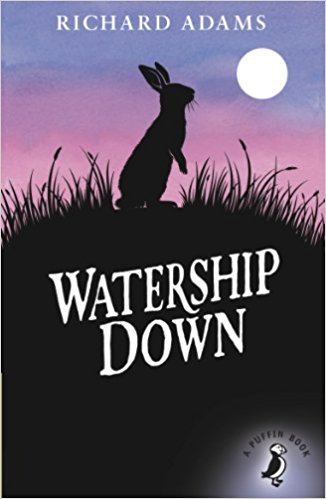
Mythology and Fantasy Literature for Activists #2: Watership Down

The first installment of this “Mythology and Fantasy Literature for Activists” series sought to introduce the potential value of mythology and fantasy literature for activists. Examining such literature may yield insights that reading history alone may not readily provide, particularly when one faces a challenge that, as far as the historical record goes, has never been overcome. Since animal emancipationists face just such a challenge, this potential value is, in the present author’s view, worth exploring. The previous article provided an example of a possible gleaning from Tolkien’s mythology-rich universe in which The Hobbit and The Lord of the Rings trilogy are set. The present article continues to explore fantasy and mythology as a source of insights and inspiration for activists by means of another example.