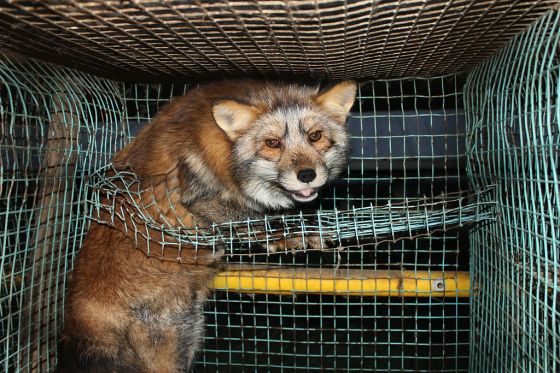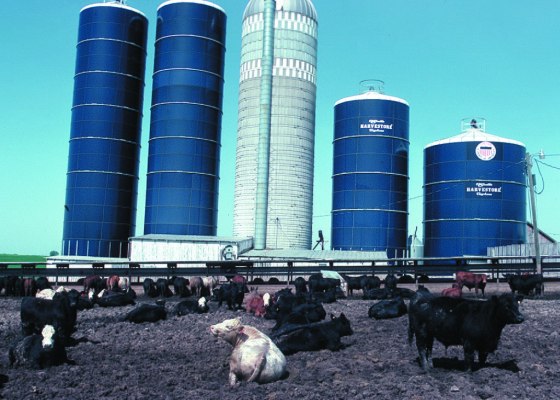
In a split decision on Idaho’s 2012 “ag-gag” law, the U.S. Court of Appeals for the Ninth Circuit ruled on January 4, 2018 that audio and visual recordings in animal agricultural facilities could not be prohibited by the state, upholding an earlier ruling that invalidated the Idaho law for violating free speech. The January 4th ruling is a partial victory for animal activists.
Category: animals
Farming Animals vs. Farming Plants Named Most Important and Popular Research of 2017
The report of the Humane Party’s Economic Transition Team, “Animal based Agriculture vs. Plant-based Agriculture: A Multi Product Comparison,” has been named one of the most important research articles of 2017 by Faunalytics. The 27-page report analyzes products of animals and plants from the perspectives of land use, yield, income, expenses, and profitability.
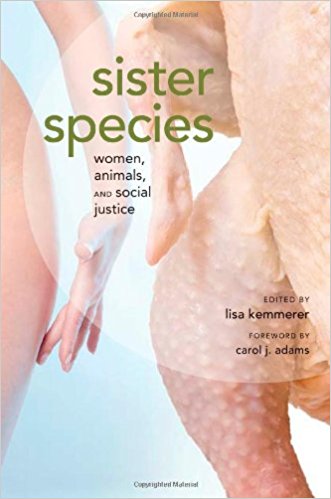
Book Review | Sister Species: Women, Animals, and Social Justice
In Sister Species: Women, Animals, and Social Justice editor Lisa Kemmerer brings together essays by 14 women who work as animal advocates. Carol J. Adams contributed the foreword to the book, addressing the importance of bringing together these women’s stories as a way for the reader to discover their own stories of awareness and engagement. In the field of biology, “sister species” refers to pairs of species in which each is the other’s closest relative.
Making Fashion Cruelty-Free
Fashion industry icon Michael Kors has joined the list of designers who will no longer use fur in their fashion lines. Kors follows on the recent announcement by the Italian industry giant Gucci that they will begin phasing out fur starting in the spring of 2018. Unfortunately, fur products are sometimes mislabeled as fur-free.
Join the Humane Party and Help Us Envision and Create a Vegan World
Back in 1992, The Union for Concerned Scientists and more than 1,700 more independent scientists called on humankind to curtail environmental destruction. Today in 2017, world scientists have released a second warning notice, stating that most environmental challenges “are getting far worse.” Thankfully there is hope. There is the Humane Party, and within the Humane party there is the Economic Transition Team that is diligently working on bringing these issues to light and on creating effective change. Join the Humane Party to help us accomplish our mission.
Vegan Literary Theory and Criticism: Toward a “Literature of Their Own”
This article briefly proposes an initial framework for articulating and formalizing a literary theory informed by the values of veganism and ahimsa and for applying that theory through literary criticism of individual works of literature. “Literature” here is broadly construed so as to include fiction and non-fiction written and spoken material as well as works in the fine and performing arts and in all expressive media, from painting and sculpture to audio and video recordings to video games and computer-generated simulations.
Distribution of Animals Used for Agriculture and Manure Generated: Ratio of Manure to Land Application–Conclusions and Findings
The Humane Party’s Economic Transition Team has completed its report analyzing the manure generated from animals. The purpose of the document is to understand the daily generation of animal manure due to animal agriculture and its implications. Recommended rates of manure application to farmlands are taken into account along with each state’s total land and farming-allocated land to evaluate whether the amount of manure generated per state is insufficient, sufficient, or excessive to meet the fertilization needs of each state.
Working on Creating a Vegan World: A Rebuttal of “Nutritional and Greenhouse Gas Impacts of Removing Animals from US Agriculture”
In the November 13, 2017 issue of the journal Proceedings of the National Academy of Sciences Robin R. White and Mary Beth Hall attempt to establish why a hypothetical vegan world is not possible. Their findings do show a decrease in greenhouse gas emissions, but they argue that a diet without animals or any kind of supplementation would be nutritionally deficient. Our mission at the Humane Party and specifically in the Economic Transition Team is to create a United States agriculture and economy 100% free of animal exploitation.
Thanksgiving Thoughts
I’m thankful for my human kin who want to protect other animals from our own fierce species as we recognize that the playing field isn’t level and as we’re unwilling to take advantage of the power differential, all the while acknowledging superior kinds of intelligence embodied in other species.
Eat the Carrot, Not the Rabbit
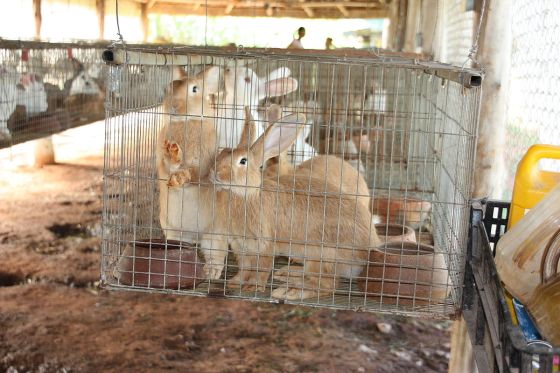
The over 30 million people living in Venezuela face shortages of many basics, and what many call a hunger crisis faces the country. President Nicholas Maduro announced a plan on September 12, 2017 to alleviate the hunger crisis through Plan Conejo, a plan to convince Venezuelans to eat rabbit. A better plan in promoting food security is being implemented with the government’s much more efficient proposal to have residents plant rooftop gardens.
“World Vegan Day” News: Humane Party Nominates Clifton Roberts (CA) for U.S. Senate, Robert Mason (TX) for U.S. House of Representatives
The Humane Party today announced its first two candidates for the 2018 United States Congress elections. Clifton Roberts has been nominated as the Humane Party’s 2018 candidate for U.S. Senator representing the state of California. Robert Mason has been nominated as the Humane Party’s candidate for U.S. House of Representatives representing the state of Texas (District 3). Both candidates are the first-ever HP nominees for U.S. Congressional races in California and Texas.
The Paw Project
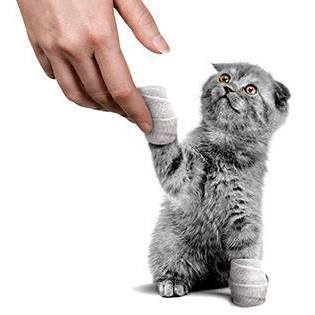
There are 21 countries in which it is illegal to have your cat declawed: England, Scotland, Wales, Italy, France, Germany, Austria, Switzerland, Norway, Northern Ireland, Ireland, Denmark, Finland, Israel, Slovenia, Portugal, Belgium, Spain, Brazil, Australia, and New Zealand. Conspicuously missing from this list is the United States.
What Does It Take?
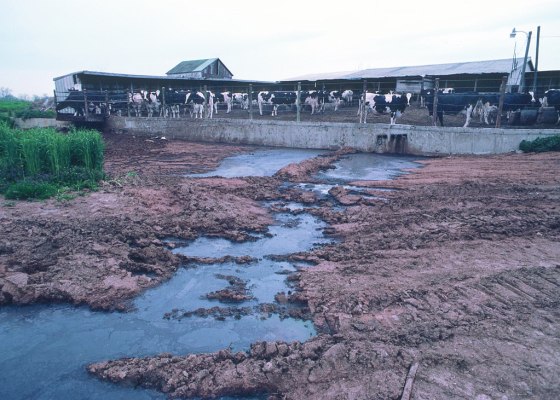
Knowing the devastation that factory farming causes to water, land or human health hasn’t convinced industry captains of the error of their ways. The myth of efficiency boosted factory farming for these many decades. Now the devastation it causes is coming back to haunt us. A conference in London, taking place October 5-6, will bring it all together.
Adversity’s Peace
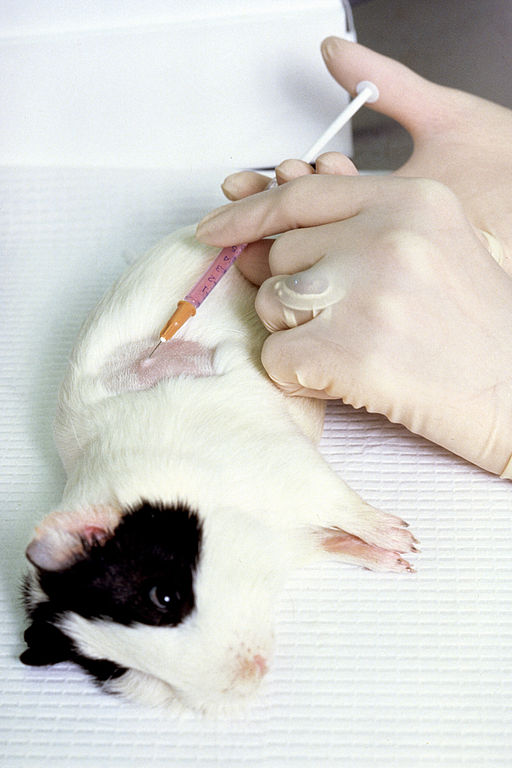
This tiny beast, this guinea pig, had become golden to the researchers! He saved them a lot of time and money. He was very patient. He caused no one any grief. Ever. He required very little anesthetic and so they hardly ever gave him any. They didn’t need to! Because he only purred. And they used him, and used him, and abused him. He was their bread and butter. They didn’t put the guinea pig on a fork and poke it into their mouths, but that’s only a technicality. The suffering of the guinea pig was food to them. His flesh and body sustained them. So they ate him.
Wings of Rescue
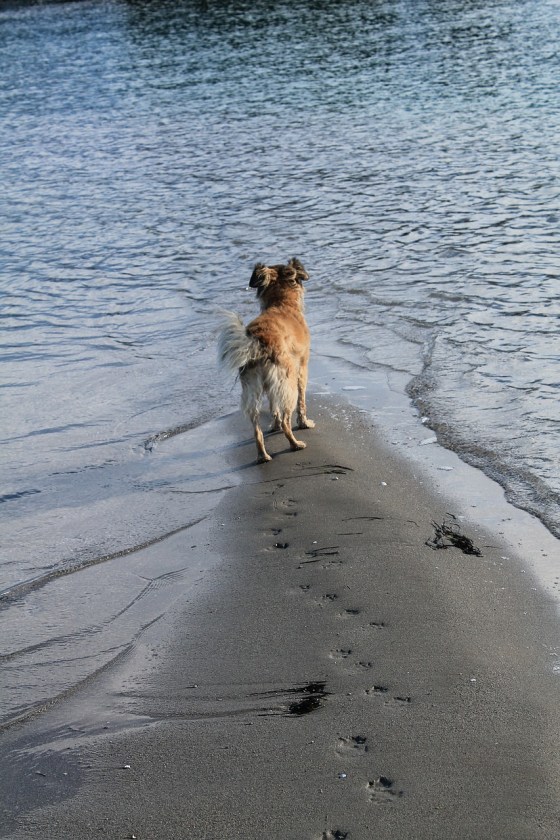
Playa Lucia on Puerto Rico has long been where unwanted and abused dogs, called satos, have been abandoned. Hundreds of dogs live, or try to survive, there at any given time. Residents of the area have taken to calling it Dead Dog Beach. When Hurricane Maria hit the island on September 20, a volunteer with the Sato Project was able to take in 53 of the dogs, who rode out the storm in crates atop concrete blocks. Then Wings of Rescue came into the picture.
Finding Freedom in September
A personal story.
What started off as any other morning, was about to prove the opposite. I was awake, had my morning coffee, and was navigating through my morning routine. I couldn’t tell you the exact day of the week it was, though I know it was two weeks ago on an overcast day in September.
The Joan Jett Station was playing on Pandora, when a friend of mine appeared quickly before me and seemingly frazzled. He told me that it was screaming and that he didn’t know what to do.