
Global Momentum Grows for Animal Welfare and Accountability Governments around the world are taking steps—some bold, some overdue—to advance animal … More

where science and ethics intersect with politics
Global Momentum Grows for Animal Welfare and Accountability Governments around the world are taking steps—some bold, some overdue—to advance animal … More

Essential History and Philosophy for Activists, a new column published by The Humane Herald, will kick off in a few … More

International Action Is Essential While many Humane Party policy positions and law-making efforts pertain specifically to the jurisdiction of the … More
Launch Day “Planks” As of the date of the Humane Party’s launch on Earth Day of 2009,1 the HP had … More

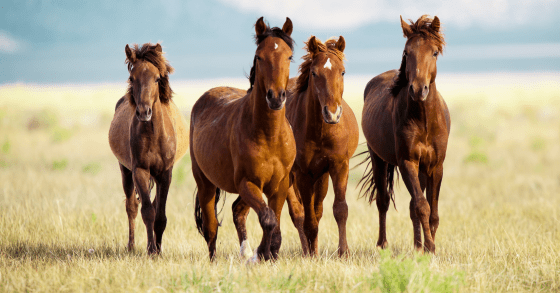
The concept of “herdthink” highlights the dangers of conforming to popular beliefs, often leading to false and morally questionable practices. The Humane Party aims to liberate animals through a Constitutional amendment, requiring members to be vegan. This commitment fosters critical thinking and resilience against cultural norms, strengthening the party’s cause.

A column exploring the deeper origins and evolution of the Humane Party platform from those who helped build it.

Freedom delayed is freedom denied. Let us mark this Juneteenth not with passive celebration but with active resolve.
By Brandy W. Walt, Humane Party U.S. Presidential Candidate The middle class is the backbone of a stable, thriving society. … More

The Humane Party‘s call for a national holiday celebrating the end of human slavery has now gained the unanimous endorsement … More
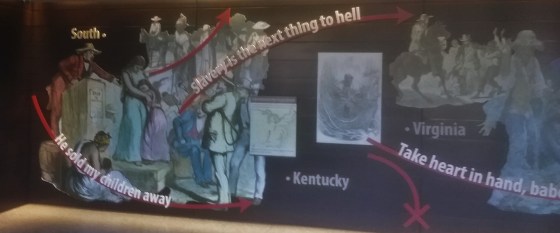
An overview of the historical events leading to Juneteenth and an explanation of the Humane Party’s Abolition Day.

The Abolition Amendment was designed to be passed and ratified at the federal level, thereby ending slavery and emancipating all animals throughout the United States of America. But with a simple modification of the text, the Abolition Amendment can also be enacted at the state level. The Humane Party expressly encourages activists to pursue abolition at the state level, even before sufficient numbers have been attained to achieve victory at the national level. However, as the Compromise of 1820 (“Missouri Compromise”) marks its 200th anniversary, it is worth examining a concern associated with the state-by-state approach.
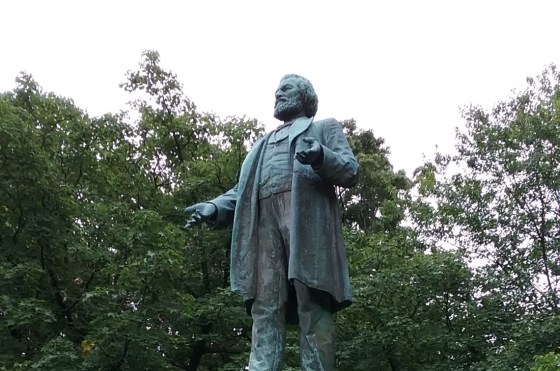
History holds a treasure trove of resources for vegan, abolitionist, animal rights activists, but many of these resources remain untapped by the movement. This omission can, one hopes, be partly remedied through articles and film dramatizations pointing to information about moments in history from which readers and viewers can extract valuable lessons, glean techniques, and draw moral support.
As the 10th anniversary (April 22) of the official launch of the Humane Party approaches, it may be beneficial to … More
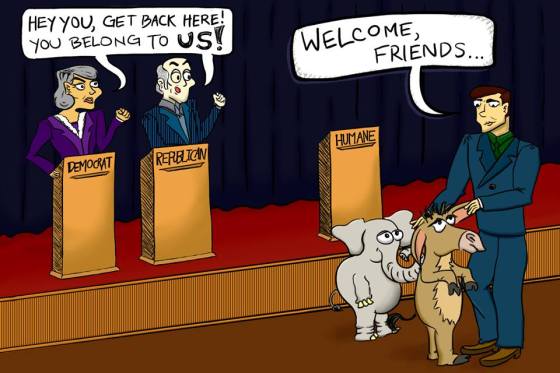
Under the Democrat-Republican regime, animals are property. Living creatures, other than humans, can currently be bought, owned, bartered, and sold … More
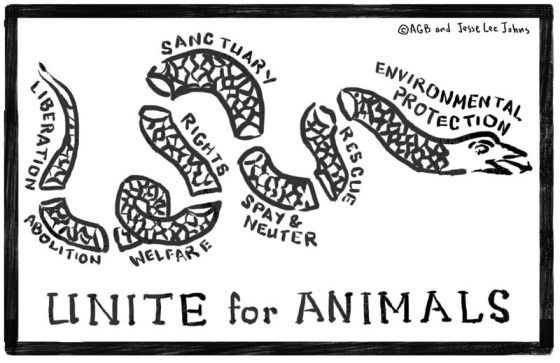
The animal-exploitation industries and their political representatives place their hope in keeping the animal-protection community divided against itself. Such division … More
In seeking to abolish the property status of other animals, animal rights activists are pursuing a hitherto unattained goal: no human culture, at least to the author’s knowledge, has ever achieved animal emancipation and personhood. In short, modern abolitionists can rely upon no roadmap drawn by “someone who’s been there.” But analogy and vicarious experience can help serve at least some of the functions of a roadmap. The present article begins to explore fantasy and mythology and the types of teachings one might take from fictional worlds and tales.
 The Humane Herald