
Tens of thousands of animals, new whistleblower allegations, calls for investigation—and a scientific landscape increasingly questioning its reliance on animal testing.
On September 12, animal advocates began walking west from Albany, New York, toward a sprawling property roughly 200 miles away in North Rose. Their destination is Marshall BioResources, a name that means relatively little to much of the American public despite the company’s significant place within the animal-research industry. Marshall is not a pharmaceutical company whose products eventually appear in medicine cabinets, nor is it a university whose name accompanies published research. It occupies an earlier and considerably less visible part of the pipeline: Marshall breeds and supplies animals for research.
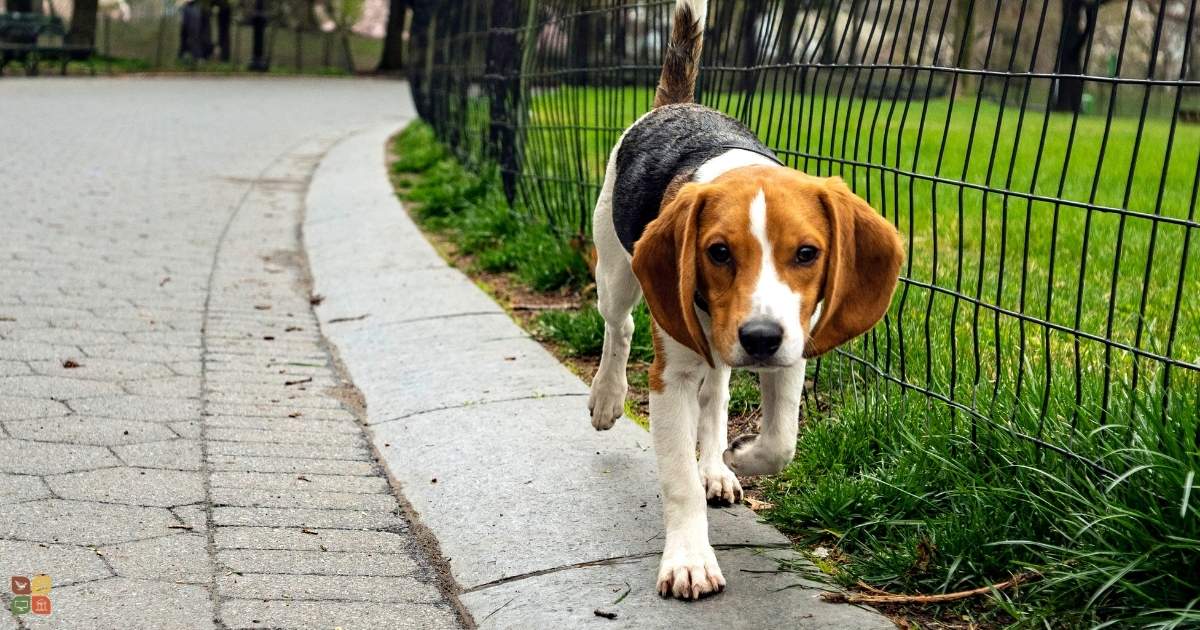
Dogs, cats, ferrets and pigs are among the animals bred through Marshall’s operations. The company traces its history to 1939, beginning with ferrets and eventually expanding into animals marketed today under names including the Marshall Beagle®, Marshall Ferret®, Marshall Cat® and Göttingen Minipig®. Its operations extend beyond the United States to the United Kingdom, France and China.
The scale of its New York operations alone can be difficult to comprehend. According to figures reported by Rise for Animals from a May 19, 2026 USDA inspection, Marshall’s North Rose facility contained 9,171 adult dogs, 5,394 puppies and 11,706 ferrets—26,271 animals across just those three categories at one facility. The organization reports that additional Marshall locations in New York held hundreds more dogs and cats, along with thousands of ferrets and pigs.
For decades, facilities like Marshall have occupied a peculiar place in the public consciousness. Most people understand, at least generally, that animals are still used in scientific experiments. Far fewer encounter the industry responsible for breeding those animals before they ever enter a laboratory. The story of animal experimentation does not begin when a researcher opens a cage. It begins much earlier—with an animal deliberately brought into existence for the possibility of becoming a research subject.
Before the Laboratory
The familiar debate over animal experimentation tends to begin inside the laboratory. What happens during an experiment? How much pain or distress does an animal experience? Is a particular procedure scientifically necessary? Could something else have been used instead? Those are essential questions, but beginning there skips an entire industry that exists before experimentation starts. Laboratories that use thousands of animals need a reliable supply of them, and companies like Marshall occupy that space.
Reporting reviewed by The Humane Herald illustrates where some animals supplied by Marshall can ultimately end up. Sentient Media reported on research involving Marshall-supplied dogs at Temple University in which mixed-breed hounds underwent procedures involving spinal nerves, tail removal and electrodes implanted in connection with bladder research before being euthanized. The outlet also described a study involving 40 eight-month-old beagles from Marshall who were administered cannabis extract through tubes placed into their stomachs each day for approximately 52 to 56 weeks. Seven dogs reportedly died during the experiment, with examinations attributing the deaths to complications including reflux, aspiration of stomach contents and/or treatment formulation entering the lungs.
Research compiled by volunteer researcher Jennifer also identified reporting from the White Coat Waste Project based on Freedom of Information Act records and other documents. The organization says those records connect dogs and cats supplied by Marshall with NIH-funded experiments involving induced heart failure, obesity, diabetes, spinal-cord injuries, decerebration and toxoplasmosis infection. It has also reported experiments involving procedures such as vocal-cord cutting, exposure to ticks and flies, and administration of experimental drugs.
Marshall’s role in that system is an important distinction. The company is not necessarily conducting the experiments that eventually happen to the animals it breeds. It supplies animals to the institutions that do. That makes Marshall one part of a much larger infrastructure connecting breeding facilities, laboratories, universities, pharmaceutical research, government funding and regulatory oversight—and it raises questions not only about what happens to animals once they reach laboratories, but about what happens to them before they ever leave the breeder.
What Whistleblowers Say Happens Before They Leave
That part of the story has received increasing scrutiny. Whistleblowers cited by Rise for Animals have alleged troubling conditions at Marshall’s facilities, including ferrets and their offspring kept in filthy environments, dogs housed in wire cages above floors containing feces and beagles tethered on short leads while wearing masks. According to the organization’s reporting, one whistleblower photographed a dead puppy in a dirty metal bin, while another former worker alleged that puppies sometimes died overnight and that dogs classified as “non-standard”—and therefore potentially unsellable—could be killed.
Additional allegations emerged in reporting by animal-rights activist Wayne Hsiung shortly before September’s March to Abolish Animal Testing. Hsiung described accounts of dogs allegedly being thrown against cage walls, puppies dying after becoming trapped or suffocating in food bowls while seeking warmth, and a dog dying while restrained during an inhalation-training procedure. Another account alleged that a dog was restrained while sodium pentobarbital was injected into the abdomen after staff members were unable to locate a vein. The same reporting includes an allegation that extensive cleaning occurred before supposedly unannounced regulatory inspections.
These are serious allegations, but they remain allegations. That distinction matters, particularly when describing potential criminal conduct. Whistleblower testimony can provide authorities and journalists with information that would otherwise remain inaccessible, but allegations must still be investigated and corroborated before they can be treated as established findings. In this case, however, the allegations have already moved beyond advocacy circles and into calls for formal investigation.
On September 2, organizers of the March to Abolish Animal Testing announced that a criminal referral drafted by former federal prosecutor Bonnie Klapper had been sent to New York authorities. The referral asks officials to investigate allegations concerning the treatment of dogs at Marshall and to take measures to protect animals while those claims are reviewed. That development arrived only days before advocates began their 207-mile march toward the North Rose facility, dramatically changing the context surrounding an event that had already been months in the making.
Congress Was Already Asking Questions
The newest whistleblower allegations did not emerge in a complete vacuum. Months earlier, members of Congress had already asked federal regulators to take a closer look at Marshall.
On June 26, 2026, Congressman Nick Langworthy and Representative Nicole Malliotakis sent a letter to U.S. Secretary of Agriculture Brooke Rollins requesting an unannounced, comprehensive, multi-day inspection of Marshall facilities. According to the research reviewed by the Herald, the lawmakers asked that enough inspectors and veterinarians be deployed to examine the facilities, records and a statistically meaningful sample of animals and enclosures. They also requested that inspectors document their work through written notes, photographs and video.
The specificity of that request is noteworthy because animal-welfare enforcement often depends on what inspectors can observe during a particular visit. Whistleblowers, meanwhile, may describe conduct witnessed over weeks, months or even years. When routine inspection records and firsthand allegations appear to present different pictures of the same operation, the appropriate response is neither to dismiss the whistleblowers nor to declare every allegation proven. It is to investigate thoroughly enough to determine why those pictures differ.
That question becomes especially significant given Marshall’s scale. A facility housing thousands of dogs, puppies and ferrets cannot reasonably be understood through a handful of individual anecdotes alone, but neither can the experiences of individual animals be dismissed simply because an operation is large. Meaningful oversight has to contend with both realities: the sheer size of the population and the conditions experienced by the animals within it.
This Is Bigger Than a Cruelty Investigation
The allegations surrounding Marshall deserve scrutiny on their own terms, but focusing exclusively on whether individual animal-welfare laws were violated risks missing the larger transformation happening around the company. For much of the modern debate over animal experimentation, advocates calling for its abolition have encountered a familiar argument: whatever ethical concerns exist, using animals remains necessary for medical and scientific progress. If that premise is accepted without question, companies that breed animals for research can appear equally necessary.
That premise is becoming much more complicated—not simply because animal advocates are challenging it, but because federal scientific and regulatory institutions are increasingly investing in ways to reduce and replace animal use themselves.
In April 2025, the U.S. Food and Drug Administration announced a roadmap to reduce, refine and potentially replace animal testing in aspects of drug development with New Approach Methodologies, commonly called NAMs. These approaches can include human-derived cell systems, organoids and organ-on-chip technologies, advanced in vitro methods and computational models capable of predicting biological responses. The shift does not amount to an immediate federal abandonment of animal research, but it represents something important: animal testing is increasingly being treated as a methodology that can and should be replaced when scientifically credible human-relevant approaches are available.
The movement continued in 2026. In March, FDA released draft guidance intended to help drug developers validate NAMs for regulatory use. The following month, the agency announced that it had met key first-year goals under its roadmap and highlighted a particularly striking limitation of the traditional system: historically, more than 90 percent of drugs that successfully clear animal studies ultimately fail to receive FDA approval, often because safety or efficacy problems become apparent during human trials.
That statistic does not prove that every animal study lacks scientific value, and FDA has not taken that position. Animal studies have historically been used to identify potential risks before experimental drugs reach people, and some research questions do not yet have fully validated replacements. What the current federal transition does demonstrate is that animal experimentation is no longer entitled to remain the unquestioned default simply because it has been the default before.
What Could Replace It?
“Alternatives to animal testing” can sound aspirational when the actual technologies remain unnamed. In reality, the category encompasses a rapidly developing collection of research tools. The material reviewed for this investigation includes in vitro models using cultured cells and tissues to examine biological responses, in silico methods using computer modeling and existing data to predict chemical or biological effects, and “omics” technologies—including genomics, proteomics, metabolomics and transcriptomics—that can identify complex patterns associated with disease and toxicity. Some chemical assays can assess particular reactions without using living biological systems at all.
Other replacement approaches can involve human tissues and cells, established human cell lines and, where ethically and scientifically appropriate, research involving human volunteers. Increasingly sophisticated organoids and organ-on-chip platforms attempt to recreate aspects of human organ function in controlled research environments, while computational tools can integrate enormous quantities of existing biological and chemical information. None is a single universal replacement for every animal experiment, but that is partly the point: the future of biomedical research may not depend upon finding one substitute for “the animal model.” It may depend on assembling different human-relevant methods appropriate to different scientific questions.
This is where the story of Marshall becomes considerably larger than Marshall. If regulators, researchers and technology developers are actively building a scientific infrastructure designed to reduce dependence on animals, then the future of the businesses breeding those animals becomes part of that transition as well. A debate about whether particular animals at one facility received legally adequate care exists alongside another, more fundamental question about why so many animals continue to be bred for experimentation in the first place.
The Animals We Don’t See
The language of research can make individual animals disappear surprisingly quickly. A dog becomes a model. A group of puppies becomes a cohort. An animal purchased for a study becomes one entry in a protocol, one data point in a paper, or one line in a procurement record. Those terms serve legitimate scientific purposes, but they can also make it easy for people outside the system to forget that the research supply chain begins with living animals whose experiences start long before an experiment does.
Marshall makes that hidden beginning unusually visible because of its scale. Thousands of adult dogs and puppies can exist at a single facility before any university, pharmaceutical company or laboratory receives them. Some will eventually become subjects of research. Their lives before that point—their breeding, housing, handling and eventual transportation—are part of the animal-testing system too, even if those stages rarely enter the public debate.
That invisibility is precisely what participants in the March to Abolish Animal Testing are attempting to disrupt. The march began September 12 in Albany and is scheduled to arrive at Marshall BioResources in North Rose on September 26. Co-directors Ella Magers and Gretchen Primack are leading the campaign, which places the physical distance between state government and an animal-breeding facility directly in public view.
Magers recently told The Humane Herald that she believes the end of animal testing is near. Part of her reason is remarkably simple: she believes people are beginning to make the connection. Her own rescued beagle, Jane, came from Ridglan Farms, another breeding operation at the center of a major animal-advocacy campaign. Jane is now doing remarkably well. For Magers, animals bred for laboratories are therefore not an abstract population. One of them sleeps in her home.
What Happens Behind the Gates Matters. So Does What Comes Next.
The whistleblowers have brought allegations. Members of Congress have requested greater scrutiny. A former federal prosecutor has asked New York authorities to investigate. Advocates are walking more than 200 miles to put Marshall before a larger public. At the same time, federal regulators are accelerating work on research methods intended to reduce or replace the use of animals altogether.
Those developments should not be collapsed into a single conclusion. Allegations against Marshall require evidence and investigation. Questions about animal welfare are not identical to questions about scientific validity. And the existence of promising non-animal methods does not mean every animal-based experiment can be replaced immediately. Treating those distinctions seriously makes the larger picture more—not less—significant.
Because even if every allegation against Marshall were set aside tomorrow, the fundamental question would remain.
Marshall exists on an enormous scale because there is an enormous demand for animals to use in research. If the scientific system generating that demand is beginning to change, then attention cannot stop at whether animals are being housed, handled or killed according to the rules governing the system we have now. We also have to ask what kind of system we are building next.
Behind the gates in North Rose are thousands of animals whose futures have largely been determined before they are born. They are bred because laboratories may need them, sold because researchers can use them and transported into a system most members of the public will never see.
The question raised by Marshall BioResources is therefore larger than what may or may not have happened behind its gates.
If science is increasingly capable of moving beyond animals, how long should we continue breeding them by the thousands for a system already beginning to change?
For the animals inside Marshall, that is not an abstract argument about the future of biomedical research.
It is their future.
Editor’s Note: This article was developed with research contributions from Humane Party volunteer Jennifer Paul, whose work gathering records, reporting, and source material helped inform The Humane Herald’s examination of Marshall BioResources and the broader animal-research system.

