What a chat revealed about the man behind IP28
What I called the “beautiful audacity” of David Michelson before I had the pleasure of chatting with him is actually more like joyous conviction.
He doesn’t need a recovery or a deload from six years of campaigning for the biggest abolitionist ask there is; there’s no trace of burnout or sacrifice. He says the work is fun and the effort is enjoyable. He’s fresh-faced, relaxed and smiling. He’s not dragged down by negativity from the opposition.
What might account for this?
David’s values and actions are in alignment, and he stays off social media.
What people might not know about him: He has fun wearing the hats of public speaking, graphic design, building websites, and data analysis for the campaign. He craves purpose. He values relationships built around specific goals or purpose rather than incidental friends. He believes people are ready for authenticity. He believes if people talk about not eating animals, they will want to stop, eventually, and it’s just a matter of bringing their attention to it. Maybe. “That might not be true,” he said, on second thought.
As for ballot initiatives, go ahead and ask for what you actually want, he says.
“Making change at all takes a long time, regardless of the change you’re asking for. So it feels a little quicker to me just to start asking now for the thing I want.”
You might remember that I called IP28 the whole vegan enchilada – the end of killing animals in the state of Oregon.
David said people have tried to convince him to ask for something less, in favor of pragmatism or efficiency. His response, since no one really knows what’s going to be effective in the long run: “Given the uncertainty we have, the thing I’m most confident in is just what’s meeting my needs in this moment to pursue.”
And that, friends, is a strategy that is sustainable through integrity. He does the big ask because that’s the one he believes in and can enjoy advocating for. His consistency, not incrementalism, is building the movement’s credibility over time.
What he likes about ballot initiatives: anyone can start them and immediately get into conversation with people in everyday life.
“I think it helps that I really enjoy talking about the campaign and animal rights. And so, even when people are upset, it doesn’t feel like an attack so much as an invitation.”
“I try really hard not to hear what people think, and I try to hear instead what they’re needing by saying what they’re saying,” he said. “It’s a lot easier when a farmer expresses frustration to just hear them being concerned about how they’re going to meet their economic needs, and connect at that level regardless of whatever words they’re using to articulate that frustration.”
He says ballot initiatives are less threatening to people because the only thing they can force is a conversation. No amount of signatures can just make it law, but a certain amount can put forward a vote – and then the people get to choose.
About IP25, the right-to-hunt amendment, he’s not worried: it won’t prevent him from pursuing his strategy, it may broaden alliances, the chief petitioner has a losing track record, and it keeps the conversation going while his campaign focuses on a fundraising period and looks toward 2030 or beyond.
“We filed an initiative for 2022, 2024, and 2026 consecutively, and that was largely because at the end of each cycle we had more resources than when we started. … Right now, we spent all our resources on the 2026 campaign, so we don’t have the time or money to jump into a 2028 cycle.”
In the meantime, he’s creating a membership-based activist organization to advance ballot initiatives. David says it’s filed but not yet public, modeled on the women’s suffrage associations and will function a bit like DSA, Democratic Socialists of America. He’s hesitant to say much more just yet, except that “joining, when it’s ready to be joined, is I think the most helpful thing at this moment.”
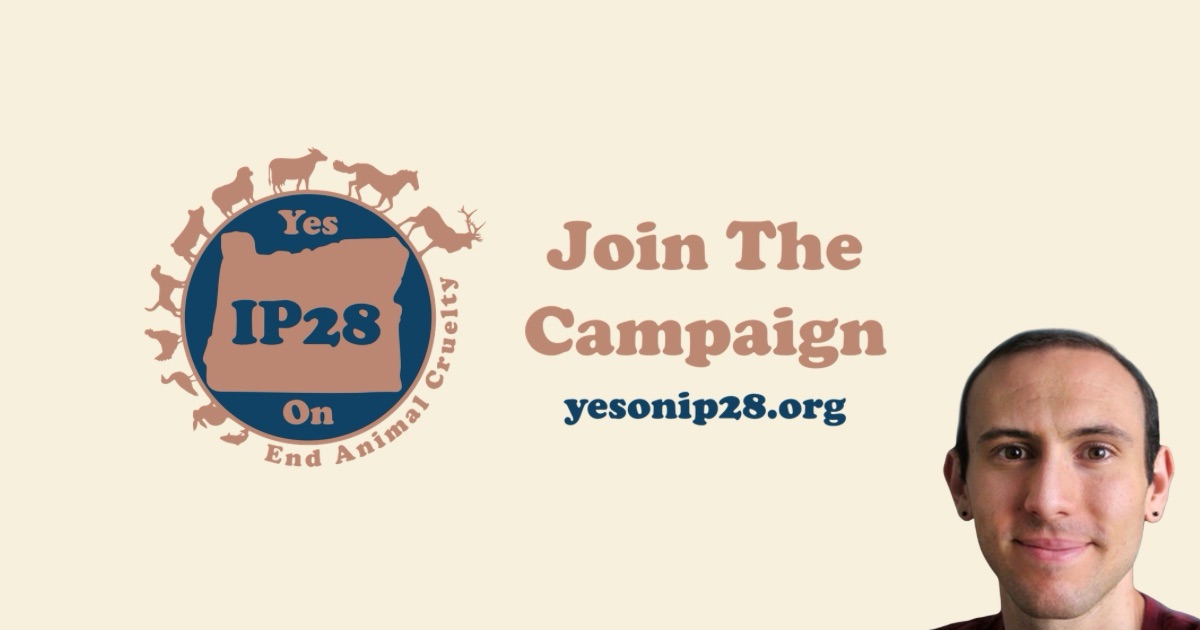
And we can do that by signing up for the email list on the IP28 website, yesonip28.org.