
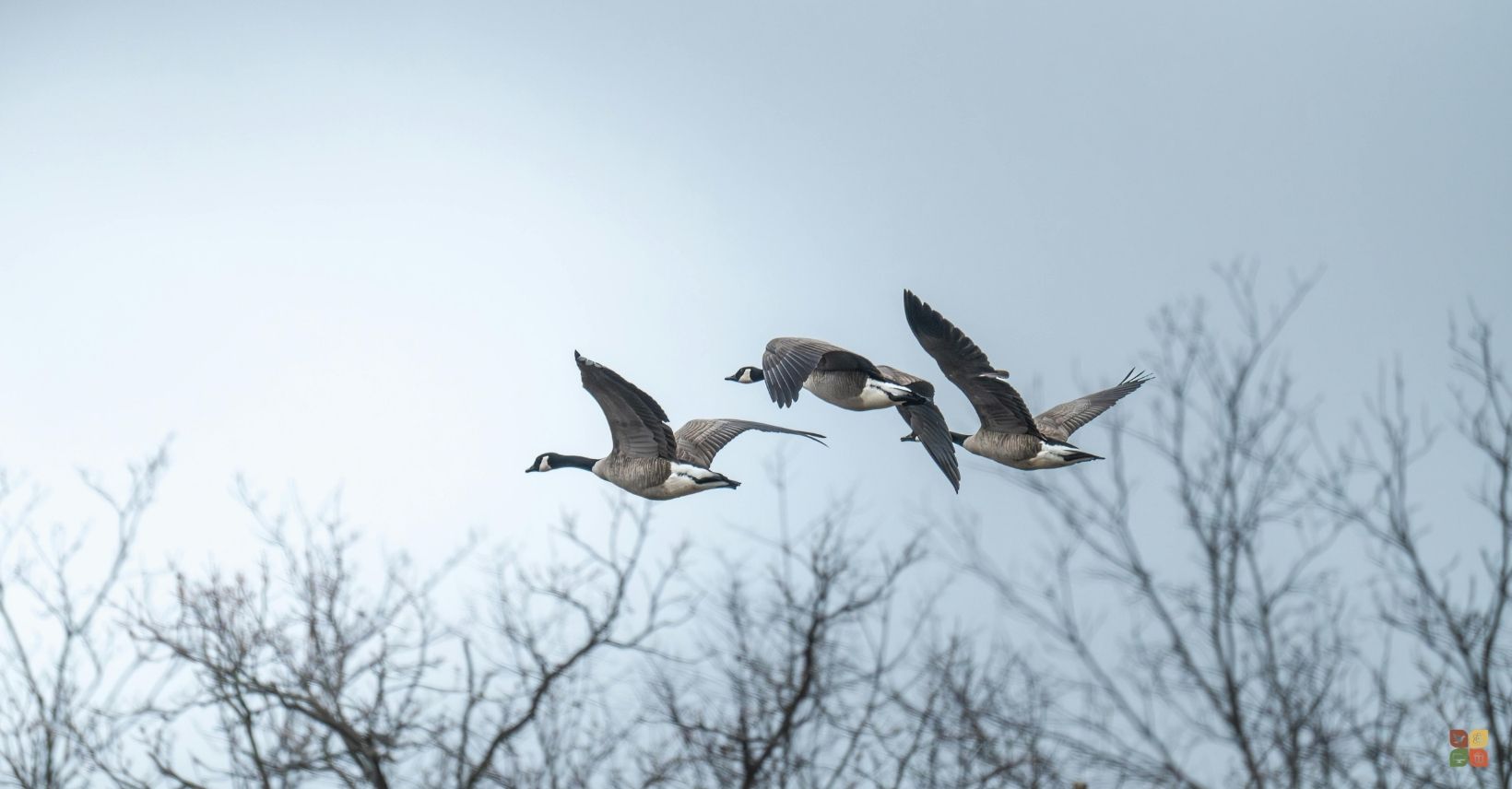
As molting season places Canada geese at heightened risk, advocates urge immediate mayoral action to keep lethal federal agencies from killing those geese and from formally shaping New York City’s new wildlife management plan.
New York City has a new wildlife law on the books. Now advocates are asking whether the city’s promise of humane wildlife management will protect the animals it names—or leave the door open for the same agencies and practices that have long targeted them.
Intro 806-A, sponsored by Council Member Phil Wong, creates a wildlife management advisory board tasked with developing a citywide wildlife management plan. The law’s stated purpose is to analyze wildlife management issues and recommend policies to preserve and promote biological diversity and the humane treatment of wildlife.
On paper, that sounds like progress.
But for advocates working to protect Canada geese in New York City parks, airports, and the city’s one wildlife refuge, the timing is urgent and the central question is unavoidable: can a wildlife plan be called humane if agencies associated with lethal wildlife control are invited into the room to help shape it?
The concern is not theoretical. Canada geese are especially vulnerable during the mid-June through mid-July molting season, when they lose their ability to fly. That is when Wildlife Services rounds them up and trucks them to slaughter.
Advocates fear that without immediate intervention, city agencies may continue cooperating with federal wildlife-control operations even as the city begins building a new plan that claims to prioritize humane treatment.
The immediate demand from goose advocates is direct: Mayor Zohran Mamdani should issue an Executive Order prohibiting NYC Parks and the Department of Environmental Protection from cooperating with USDA APHIS Wildlife Services, including providing access to city-owned parks and maintaining any active work authorizations connected to roundups, removals, egg and nest destruction, or other coercive management practices.
In plain terms: if New York City owns the parks, New York City can stop opening the gates.
The issue extends beyond city parks to airport properties and Jamaica Bay Wildlife Refuge, where goose advocates say federal wildlife-control policies continue to shape how Canada geese are treated.
A Law With Promise — and a Dangerous Opening
Intro 806-A was passed as part of a broader environmental package and was ultimately enacted after being returned unsigned by the Mayor. The law establishes an advisory board to develop a citywide wildlife management plan and requires attention to biodiversity and humane treatment.
That language matters. It recognizes that wildlife are not background scenery in the urban landscape. They are residents of the city’s ecosystems, affected by agency decisions, public infrastructure, development, pollution, and long-standing “management” practices.
But advocates are concerned that the law’s humane intention could be undermined if federal agencies tied to lethal wildlife management are allowed to participate in shaping the city’s future plan.
USDA APHIS Wildlife Services has long been condemned by animal advocates nationwide for its role in lethal wildlife-control programs across the United States.
In New York, Canada geese have been subject to terrifying roundups, gassing, slaughter, egg and nest destruction, and other forms of gratuitous violence under the language of public safety, nuisance reduction, or wildlife management.
Advocates note that New York City’s goose-removal program once relied on carbon-dioxide gassing after birds were rounded up during molting season. The practice drew significant opposition from animal advocates, who argued that it caused unnecessary suffering and ignored nonlethal alternatives. While large-scale gassing operations no longer appear to be part of New York City’s current airport goose-management program, similar methods continue to be used or proposed in other states, including New Jersey.
This is where the word “humane” becomes politically meaningless.
For many agencies, “non-lethal” can still include egg oiling, nest destruction, harassment by dogs, pyrotechnics, acoustic devices, and forced dispersal. Yet describing these practices as humane raises difficult ethical questions. In the case of egg oiling, eggs are coated with corn oil to prevent normal development, causing the embryo inside to die before hatching. The process is often discussed in technical or bureaucratic language, but the reality is more direct: a developing life is intentionally prevented from continuing. For critics of egg-destruction programs, that fact alone makes it difficult to reconcile such practices with the word “humane.”
They are part of the same control-based framework that treats wild animals as problems to be managed, displaced, or prevented from reproducing.
A citywide wildlife plan that fails to define “humane” clearly could become a blueprint for more of the same—only with deceptive language.
The argument for mayoral action is simple: the city does not need to wait for another report, committee, or agency process to stop cooperating with lethal or coercive wildlife-control operations in city parks.
If NYC Parks and DEP are granting access, signing work authorizations, or otherwise enabling federal goose operations on city-owned land, the Mayor can direct city agencies to stop.
That would not erase Intro 806-A. It would protect its stated humane intent while the advisory process unfolds.
An Executive Order as an Interim Safeguard
Some advocates are also pursuing a longer-term legislative fix: amending the law or its language to ensure that agencies engaged in lethal wildlife management are not given a role in defining New York City’s humane wildlife future.
But legislation takes time. Roundups do not.
And the roundups are upon us.
The Problem With “Management”
The debate over Canada geese is often framed as a conflict between animals and public safety, animals and parks, or animals and aviation. But advocates argue that this framing hides a deeper truth: New York City’s relationship with wildlife has too often been built around removal rather than coexistence.
The geese did not create the concrete, the airports, the manicured lawns, the polluted waterways, or the bureaucratic systems that decide which species are welcome and which are disposable.
They are surviving in a city humans built over their habitat and then they’re declared inconvenient.
There are nonviolent approaches that deserve serious public investment and transparent review, including habitat modification, avian radar, airport design changes, vegetation strategies, and infrastructure that reduces conflict without terrorizing or killing animals.
But these approaches require a different starting point: coexistence, not control.
A truly humane wildlife plan cannot begin with the assumption that wild animals must be made invisible, infertile, displaced, or dead.
A Test for New York City
New York City now has a choice.
Intro 806-A can become a meaningful shift toward ethical urban coexistence. Or it can become another advisory structure where the language of compassion is filtered through agencies accustomed to killing animals in the name of management.
For Canada geese, the difference is not abstract.
It is life or death.
The Mayor has the power to act before the next roundup, before the next nest is destroyed, before another family of geese is treated as a logistical inconvenience.
If New York City is serious about humane wildlife policy, it should start with the clearest possible step:
Stop giving federal goose killers access to city airports, our one wildlife refuge, and parks.
Acknowledgment:
The author thanks Joan Harrison for her review of this article and for providing historical context, research materials, and documentation related to Canada goose management policies in New York City.
Sources
- USDA APHIS Wildlife Services. New York City Canada Goose Management Program Annual Report (2024)
- New York City Council. Intro 806-A, Wildlife Management Advisory Board legislation
- USDA APHIS Wildlife Services – Program Data Reports
- The United States Department of Agriculture’s War on New York City’s Canada Geese and other Wild Birds

