Clifton Roberts (CA) and Robert Mason (TX)

“World Vegan Day” News: Humane Party Nominates Clifton Roberts (CA) for U.S. Senate, Robert Mason (TX) for U.S. House of Representatives

The Humane Party today announced its first two candidates for the 2018 United States Congress elections. Clifton Roberts has been nominated as the Humane Party’s 2018 candidate for U.S. Senator representing the state of California. Robert Mason has been nominated as the Humane Party’s candidate for U.S. House of Representatives representing the state of Texas (District 3). Both candidates are the first-ever HP nominees for U.S. Congressional races in California and Texas.


Brandy Walt Becomes the Humane Party’s Staff Coordinator

Brandy Walt came to the Humane Party in February 2017 as a new volunteer, ready to assume the role of Pennsylvania State Developer and soon to be State Developer Coordinator. After a few months coordinating meetings, Brandy accepted an invitation to spend the next few months as Policy Team Coordinator and Project Coordinator. On October 1, 2017, Brandy Walt became Staff Coordinator for the final shift rotation of the year.

Mythology and Fantasy Literature

Mythology and Fantasy Literature: A Role in Activism

In seeking to abolish the property status of other animals, animal rights activists are pursuing a hitherto unattained goal: no human culture, at least to the author’s knowledge, has ever achieved animal emancipation and personhood. In short, modern abolitionists can rely upon no roadmap drawn by “someone who’s been there.” But analogy and vicarious experience can help serve at least some of the functions of a roadmap. The present article begins to explore fantasy and mythology and the types of teachings one might take from fictional worlds and tales.

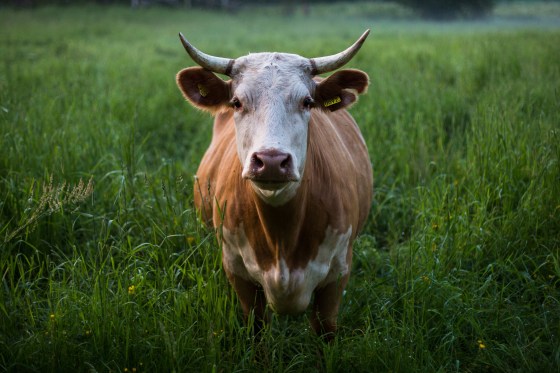
Dairy Industry Vs. Plant-Based Alternatives: A Review of Current Trends and Economic Implications

Consumers are visibly and increasingly shifting to plant-based alternatives; failing to recognize and implement the necessary measures to align our production to the demand can potentially cost taxpayers substantial amounts of money given the core value of the agricultural system within our economy and its interconnected nature with rural development and affordable access to food.