
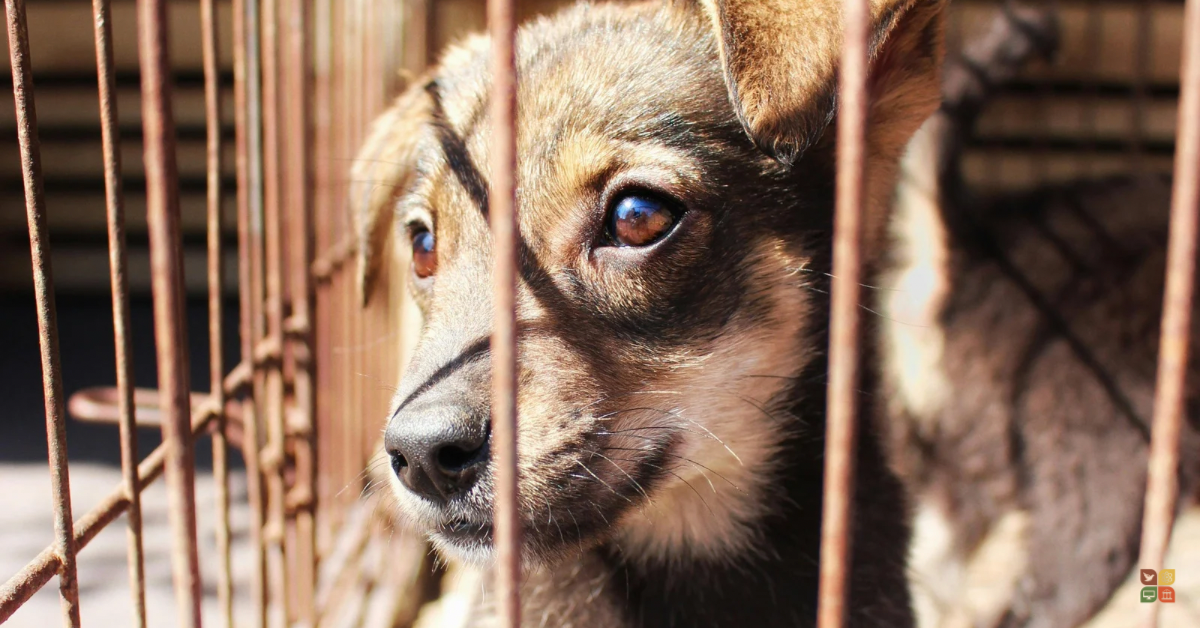
The confirmation of New World screwworm in a dog and the resulting quarantine orders across parts of Texas have sparked concern among pet owners and animal shelters alike. Officials hope movement restrictions will slow the spread of the flesh-eating parasite, but many advocates now warn that the emergency could trigger an unintended consequence: mass euthanasia in already overcrowded shelters.
The New World screwworm is a parasitic fly whose larvae feed on the living tissue of warm-blooded animals. Unlike ordinary maggots, which often consume dead tissue, screwworm larvae burrow into open wounds and can cause severe injury, infection, and death if untreated.
The parasite can affect cattle, horses, sheep, goats, wildlife, companion animals, and, in rare cases, humans. The United States eradicated New World screwworm decades ago through sterile-fly release programs, but recent detections have raised concern that the parasite could become reestablished if not contained quickly.
For shelters and rescue organizations, that containment effort creates a painful dilemma. Animal shelters often rely on transporting dogs and cats to rescue organizations in other states to relieve overcrowding. Quarantine restrictions can halt those transfers overnight. When animals cannot leave, shelters continue to receive new arrivals while available space rapidly disappears. For facilities already operating at or beyond capacity, the math becomes grim.
Yet the crisis raises another question that extends beyond shelter walls.
Why are companion animals now caught in an emergency that began with livestock?
For many Americans, the story has only become personal now that dogs are involved.
That reaction is understandable. Dogs occupy a unique place in many households as beloved family members. Images of shelter animals potentially facing euthanasia because they cannot be relocated evoke an immediate emotional response.
But this is also where the comfortable little wall between “pets” and “livestock” starts to crack.
The parasite did not suddenly become a moral emergency when it reached a dog. The suffering was already there. The fear was already there. The risk was already there. What changed was not the biology of the outbreak, but the category of animal many people were willing to care about.
That is speciesism doing what speciesism does best: deciding whose pain counts only after humans decide what that animal is “for.”
Parasites, viruses, and bacteria do not recognize the difference between an animal considered a companion, one raised for food, or one living in the wild. They move wherever conditions allow them to spread. When millions of animals are transported, confined, bred, and managed across large geographic regions, opportunities for disease transmission inevitably increase.
That reality has long been recognized by veterinarians, epidemiologists, and public health researchers. Many emerging infectious diseases affecting humans and other animals originate where humans, domesticated animals, and wildlife interact closely. While the current screwworm response focuses on immediate containment, the outbreak also highlights how interconnected these systems have become.
For advocates of animal protection, the Texas shelter crisis is therefore more than an isolated emergency.
It demonstrates how decisions affecting one group of animals can quickly ripple outward to others. A parasite associated primarily with livestock management is now influencing the fate of rescue dogs hundreds of miles away. Shelters, rescue organizations, veterinarians, and pet owners all become part of the same unfolding story.
The Humane Party has long argued that public policy should recognize these connections rather than treating companion animals, farmed animals, wildlife, and environmental health as separate issues. Whether discussing zoonotic disease, habitat destruction, or industrial animal production, the underlying principle remains the same: systems are interconnected, and so are their consequences.
For families worried about dogs in Texas shelters, the current outbreak is an urgent reminder of that reality.
Protecting companion animals means more than responding when disease reaches them. It also means examining the broader systems that allow these crises to emerge in the first place.
The screwworm outbreak may ultimately be contained, as similar outbreaks were in the past. Federal and state agencies continue expanding surveillance, enforcing movement restrictions, and deploying sterile flies to stop reproduction before the parasite becomes permanently reestablished in the United States.
But the questions raised by this outbreak will likely remain.
When the health of ranch animals, wildlife, shelter dogs, and even people becomes intertwined, protecting one group increasingly requires thinking about them all.

