
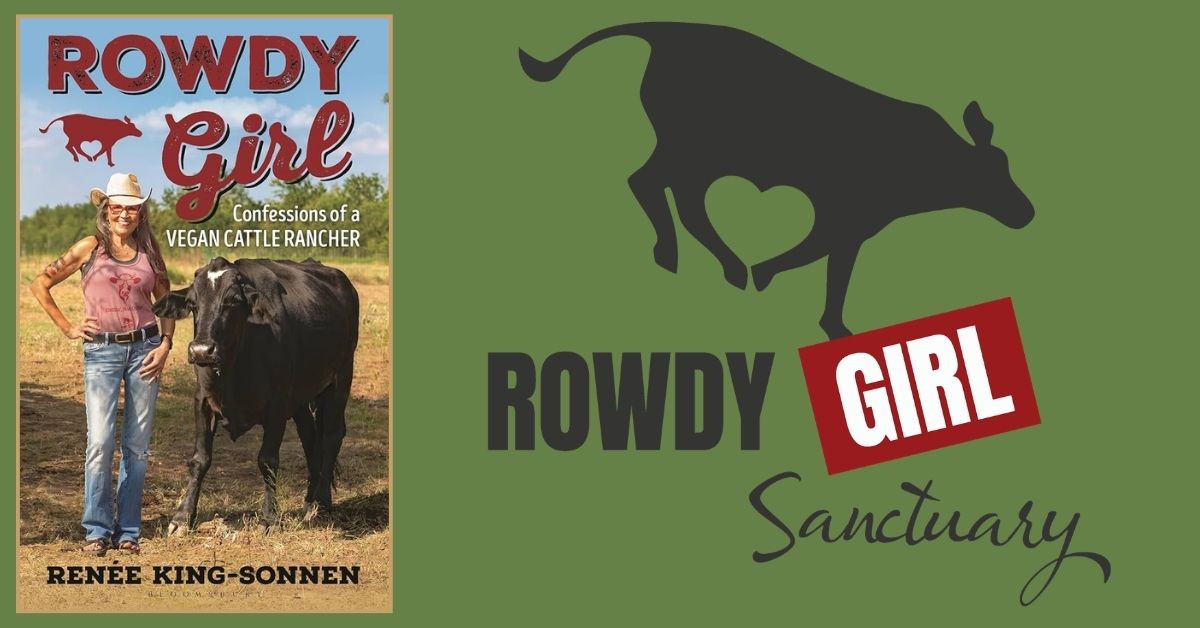
From a Texas cattle ranch to Rowdy Girl Sanctuary, Renee King-Sonnen’s story is one of moral rupture, radical compassion, and the courage to stop looking away.

Before Renee King-Sonnen became a sanctuary founder, she lived on the other side of the fence.
Not as an outsider looking in. Not as a critic observing from a safe distance. But as a woman standing in the middle of a Texas cattle ranch, surrounded by the very system she would one day challenge.
Her story does not begin with slogans, protest signs, or theory. It begins with dust on boots, fences across pastureland, family tradition, economic pressure, inherited language, and a calf named Rowdy Girl.
That calf would not simply change Renee’s life. She would expose a contradiction that countless people are taught to bury before they ever learn how to name it: the uneasy space where affection for animals collides with a system built upon their exploitation.
Today, Renee King-Sonnen is known around the world as the founder of Rowdy Girl Sanctuary, a former cattle ranch transformed into a refuge for farmed animals. Her forthcoming memoir, Rowdy Girl: Confessions of a Vegan Cattle Rancher, tells the story of that transformation—one that is deeply personal, unmistakably political, and impossible to separate from the larger moral crisis surrounding the way society treats animals.
It is not merely a memoir about becoming vegan.
It is a memoir about what happens when conscience enters the room, pulls up a chair, and refuses to leave.
A City Girl in Ranch Country
Born and raised in Houston, Texas, Renee did not come from generations of ranchers. By her own account, she was a city girl who found herself immersed in ranch life after marrying cattle rancher Tommy Sonnen.
For years, she lived inside that world. The ranch was home. The cattle were part of daily life. The rhythms of ranching became familiar—the feeding, the watching, the caring, the naming, the knowing. But familiarity is not the same as peace, and proximity has a way of undoing the stories people tell themselves from a distance.
Then something shifted.
Like many people who ultimately question long-held assumptions, Renee did not appear to experience a single neat lightning-bolt moment. Instead, the walls began to crack. Questions emerged. Discomfort lingered. What once seemed normal began to feel increasingly impossible to reconcile.
And eventually, those questions stopped whispering.
The Calf Who Changed Everything
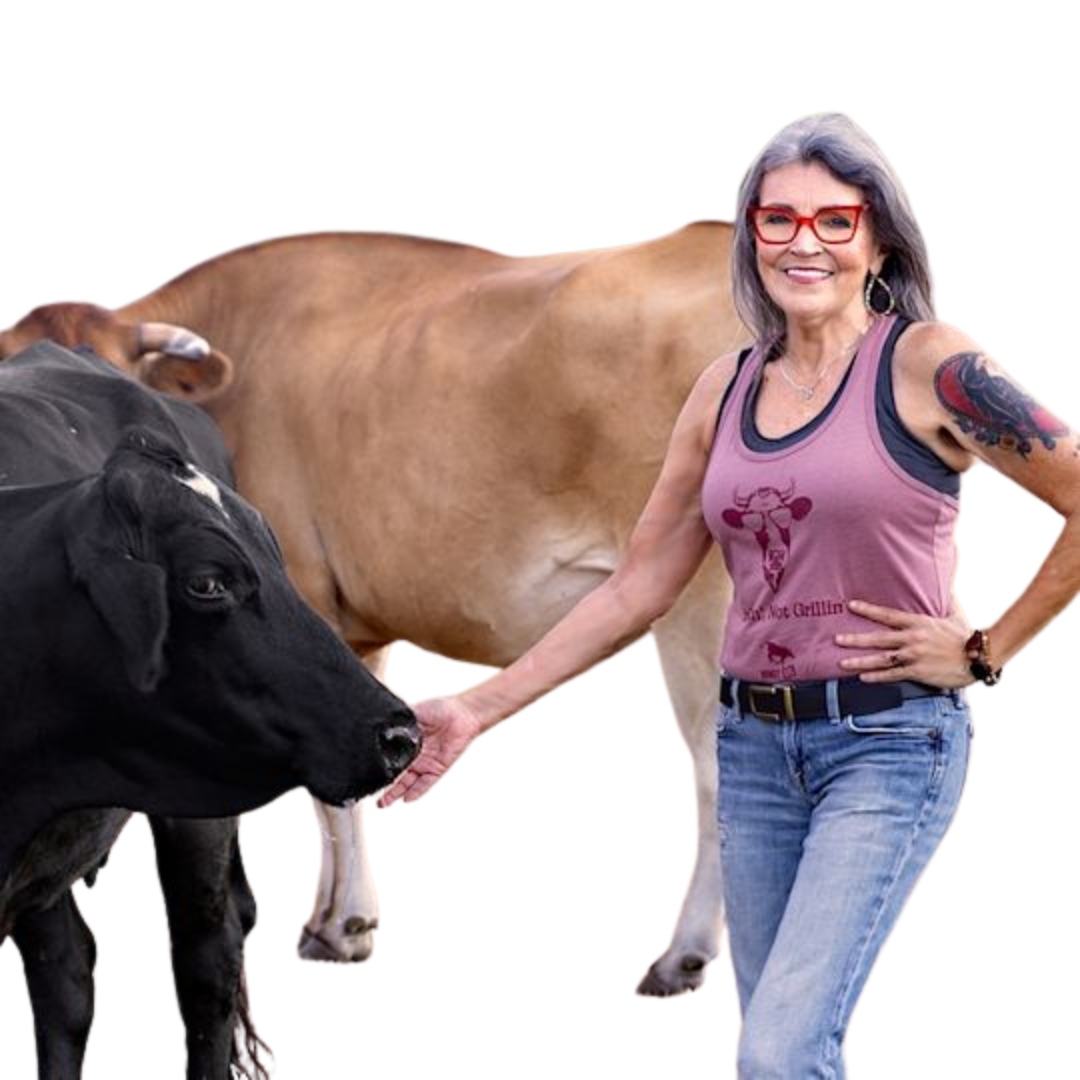
The story that would eventually inspire the sanctuary began with a calf named Rowdy Girl.
What started as a relationship between a woman and an animal evolved into something far more profound. Through Rowdy Girl and the cattle around her, Renee began seeing individuals where the industry had taught the world to see inventory.
The transformation was not abstract. It was intimate.
The cattle had faces, personalities, relationships, preferences, fears, habits, and ways of moving through the world that did not fit neatly into the language of production. Once Renee recognized them as someone rather than something, the entire framework of ranching began to look different.
That is the fracture point animal agriculture fears most.
Not outrage. Not even protest.
Recognition.
Because once an animal is truly seen, the old vocabulary starts to collapse. “Livestock” becomes a word trying to hide a living being. “Processing” becomes a word trying to hide violence. “Product” becomes a word trying to hide a body.
Many advocates spend years trying to explain that shift to others.
The Moment the Story No Longer Worked
For generations, animal agriculture has depended not only on fences, trucks, markets, and slaughterhouses, but on narratives.
Stories about necessity. Stories about tradition. Stories about “humane” treatment. Stories about “good” ranchers and “bad” facilities. Stories that separate the animal in the pasture from the animal on the plate, as though the knife appears from nowhere and the consumer bears no relationship to the killing.
Renee has spoken openly about the emotional and ethical reckoning that followed her growing awareness of what happens to animals in food systems. As she learned more, the distance between what she believed and what she was participating in became increasingly difficult to survive.
Eventually, the story no longer worked.
The justifications no longer worked. The separation between loving animals and profiting from their deaths no longer worked. The inherited language no longer worked.
And once those foundations collapsed, there was no returning to the person she had been before.
Saving the Herd
Many people who undergo profound ethical transformations change their own lives and stop there.
Renee chose something harder.
She decided to fight for the animals she already knew.
In 2015, supporters rallied around an effort to save the cattle who otherwise faced being sold into the conventional animal-agriculture system. That effort became Rowdy Girl Sanctuary.
What emerged was something few would have considered possible: a former cattle operation transformed into a sanctuary for the very animals once raised for profit.
The symbolism is difficult to miss.
A place once shaped by ownership became a place dedicated to protection. A place once tied to commerce became a place centered on compassion. A place once participating in the machinery of animal use became a refuge from it.
A ranch changed sides.
Building a Movement Beyond Rescue
The sanctuary itself would have been remarkable enough.
But Renee’s work did not stop at rescue.
Rather than treating ranchers as unreachable, she brought a perspective few advocates possess: she understood the culture because she had lived inside it. She understood the emotional pull of tradition, the financial pressure of land and animals, the pride people attach to rural identity, and the defensiveness that can rise when someone feels their entire way of life is being judged.
That experience gave her advocacy a rare doorway.
Through her work with Rowdy Girl Sanctuary and rancher transition efforts, Renee has helped expand the conversation beyond rescue alone and into the deeper question of what comes next. What happens when people tied to animal agriculture begin questioning the system? What support exists when conscience collides with livelihood? What alternatives are possible when the old model no longer fits the future?
Those questions matter because transformation cannot live on condemnation alone. It requires a bridge sturdy enough for people to cross.
Renee’s story does not excuse animal agriculture. It does something more useful.
It proves that leaving it is possible.
A Memoir Arriving at the Right Time
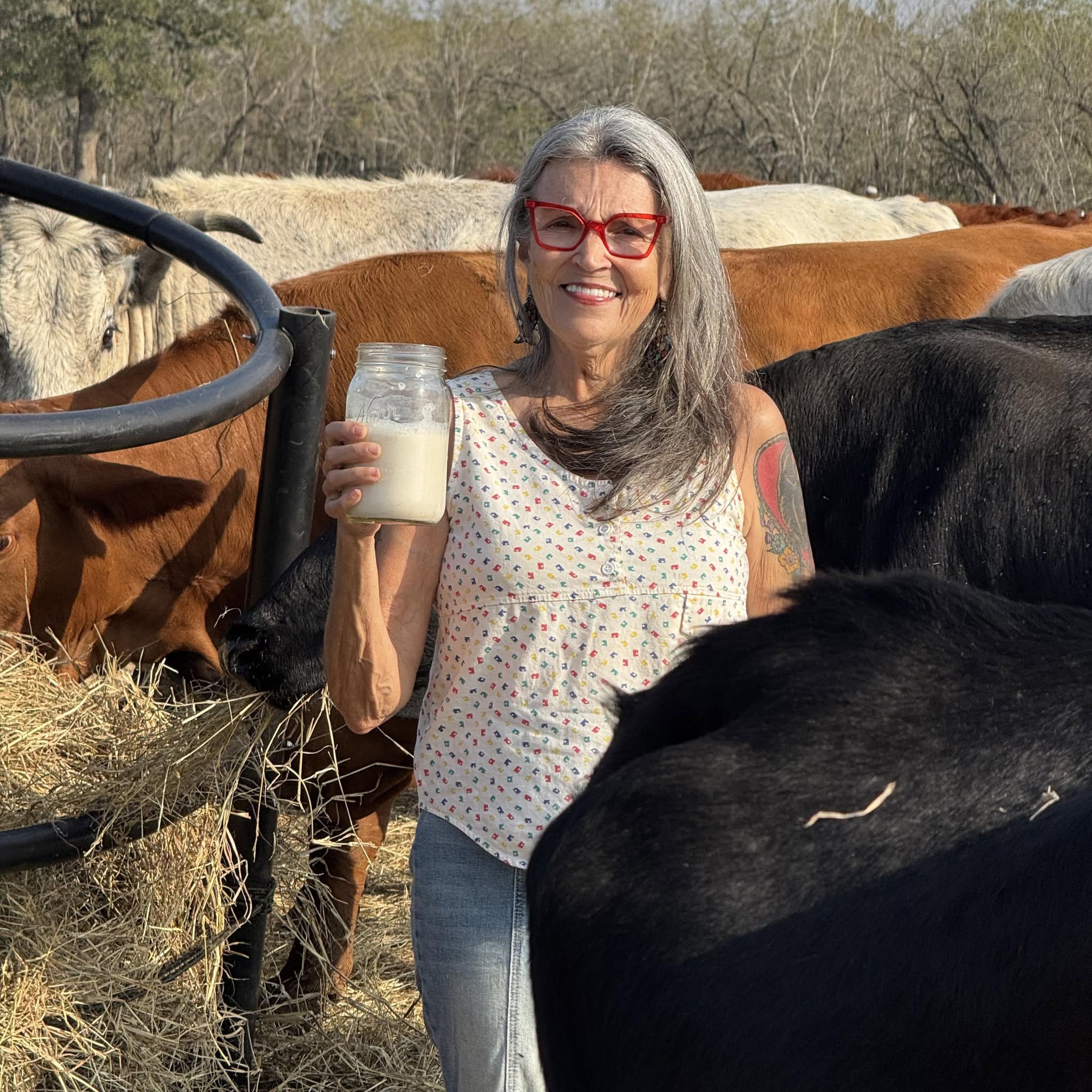
The release of Rowdy Girl: Confessions of a Vegan Cattle Rancher arrives during a period of growing cultural tension around food systems, animal agriculture, environmental sustainability, public health, climate responsibility, and the future of farming itself.
Supporters see the book as more than a personal memoir.
They see it as evidence.
Evidence that people can change. Evidence that inherited systems can be questioned. Evidence that compassion does not have to remain private, polite, or symbolic. It can become structural. It can become a sanctuary. It can become a movement.
In recent social media posts promoting the book, Renee has spoken candidly about the emotional impact of witnessing footage from slaughterhouses and industrial farming operations. She has argued that society asks children to consume animals while shielding them from the realities of how those animals are killed.
That question cuts through decades of cultural conditioning.
If people are comfortable eating animals, should they not also be willing to witness the process that puts those animals on their plates?
It is a simple question with a devastating echo.
And perhaps that is why so much energy is spent avoiding it.
The Power of Moral Transformation
Animal advocacy is often framed as a battle between opposing sides: vegans and ranchers, activists and farmers, consumers and critics.
Renee King-Sonnen’s story complicates that narrative.
She was not born into the movement. She was not raised vegan. She did not spend her youth protesting slaughterhouses or studying animal-rights philosophy. She arrived at her convictions through experience, discomfort, introspection, and ultimately courage.
That may be why her story resonates so deeply.
It is not the story of someone who never crossed the fence.
It is the story of someone who lived there, learned the language, saw the animals, felt the rupture, and chose to climb back over.
In a culture that often insists people are too fixed, too invested, or too afraid to change, Renee King-Sonnen offers a different answer.
People can change.
Ranches can change.
Movements can widen.
And sometimes, the most powerful testimony does not come from someone who always knew the truth.
Sometimes it comes from someone who finally allowed herself to see it.
Looking Ahead
As Renee prepares to release Rowdy Girl: Confessions of a Vegan Cattle Rancher, her story continues to stand as one of the animal-rights movement’s clearest examples of moral transformation in action.
It asks more of readers than admiration.
It asks them to consider what they have been taught not to see.
It asks whether love for animals can remain honest while their suffering is hidden behind industry language, cultural habit, and consumer comfort.
And it asks whether transformation, once possible on a Texas cattle ranch, might be possible in far more places than society has dared to imagine.
Rowdy Girl Sanctuary began with one calf, one woman, and one unbearable contradiction.
Today, it stands as a reminder that conscience can arrive anywhere—even behind the fences of the very system it will one day refuse to serve.

