
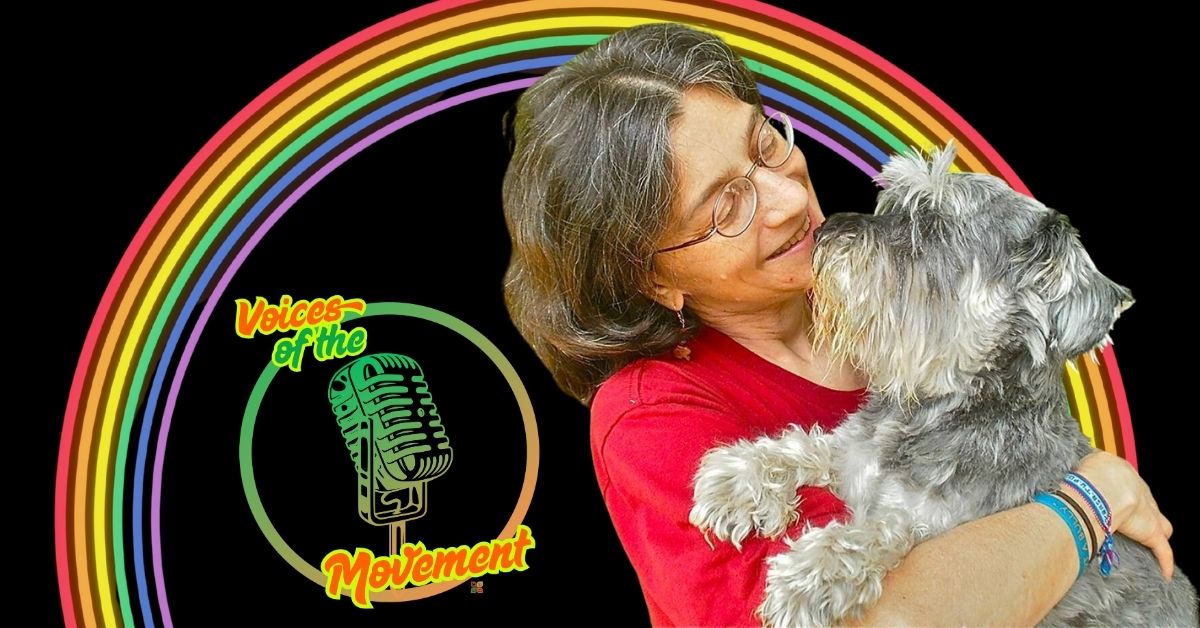
The Massachusetts activist, musician, social worker, and vegan educator speaks about food as outreach, human privilege, racial justice, and the long practice of compassion.
For Sherry Zitter, veganism is not only what she refuses to eat. It is what she brings to the table.
Sometimes that table is literal: a racial justice event, an environmental gathering, a holiday meal, a friend’s lunch, or a silent auction where she donates a recipe transformation to help someone veganize an old family favorite.
Sometimes the table is metaphorical: a conversation with someone who is curious, defensive, unsure, overwhelmed, or not yet ready to make the full leap.
Either way, Zitter’s approach is grounded in a deceptively simple question: What is your next step?
A Massachusetts-based vegan activist, musician, social worker, and educator, Zitter has spent decades connecting compassion with action. She was featured earlier this year on Vegan Nation, the Worcester-based vegan radio program hosted by Marlene Narrow, in a Valentine special with her wife, Forest Otter. The program highlighted the couple’s vegan life, activism, recipes, and music, including Zitter’s own musical contributions. They were also featured in one of Narrow’s first shows in 2015.
Public biographies describe Zitter as a longtime advocate for veganism and social justice. The American Vegan Society has described her as “a troubadour of veganism and social justice,” noting that she became vegetarian in 1977 and vegan in 2008. She and Forest have also written a vegan booklet titled Kindness Counts, a phrase that could easily serve as a summary of her life’s work.
But Zitter’s kindness is not passive. It is not the soft, decorative kind that asks for politeness while injustice continues. Instead, her kindness appears rooted in responsibility: the belief that how we treat others, including animals, is a measure of who we are and what kind of world we are willing to build.
Food as Outreach
When Zitter spoke with the Humane Herald, she was quick to explain that her current activism is not confined to specifically vegan spaces.
Much of her recent work, she said, has been rooted in racial justice and environmental organizing. But that does not mean veganism has disappeared from her activism. In many ways, it is exactly where veganism keeps showing up.
Zitter sees those spaces as deeply connected to vegan advocacy. In racial justice and environmental groups, she said, conversations about food, animals, climate, and compassion often arise naturally.
Rather than keeping veganism separate from those efforts, Zitter brings it into the broader justice work she is already doing. Her approach is not to force the subject, but to make sure animals are not left out of conversations about harm, responsibility, and care.
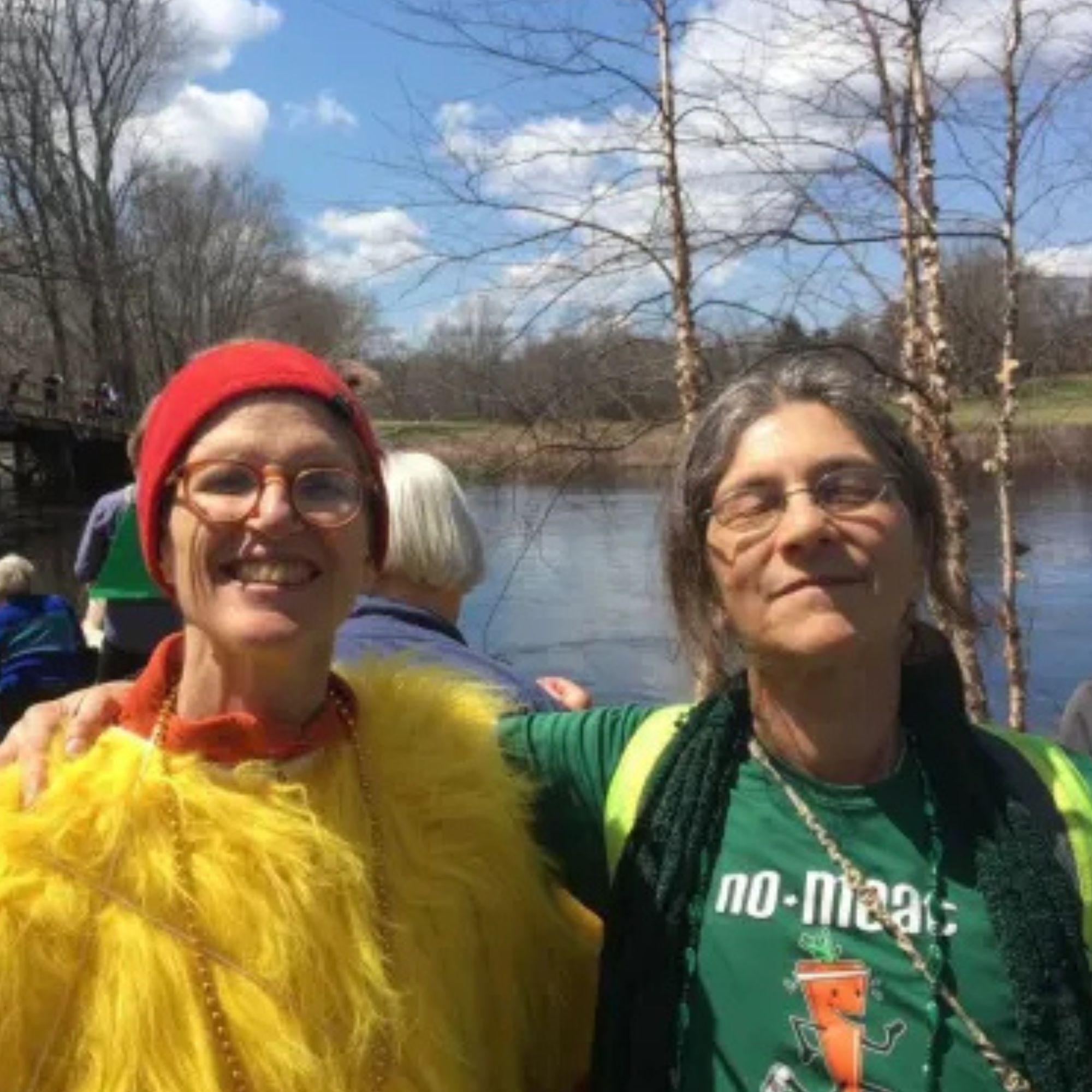
When her racial justice groups hold events, Zitter often offers to bring the food.
“I always offer to bring the food,” she said, “because I say it’s vegan, it’s light on the planet.”
In environmental spaces, she does the same. When someone insists that local food is what matters most, Zitter does not dismiss the value of local sourcing. She simply widens the conversation.
“Local is really important,” she said. “And I do mostly vegan local, but local meat has a really big footprint.”
That is the heart of her method: not a lecture, not a purity test, but a widening of the frame.
Food, for Zitter, is one of the most practical forms of advocacy. Every time there is a silent auction for a cause she supports, she said she donates a coupon for a free recipe transformation. The offer is simple: bring her an old family recipe, or a favorite dish, and she will help make it vegan.
Sometimes that means creating something as close as possible to the original, often with transitional foods. Other times, if the person is interested, she helps create a whole-food, plant-based version.
“As close as possible to the old recipe,” she said, “or if they want a version that’s slightly different, that’s a lot more healthy.”
This kind of outreach meets people where memory lives. Family recipes are not just ingredients. They are holidays, grief, grandparents, childhood kitchens, cultural inheritance, and love. Veganizing them can be a powerful act. It says compassion does not require people to abandon tradition. It asks them to carry tradition forward without the violence.
Zitter knows this personally. She recalled asking a vegan caterer to recreate two deeply meaningful family dishes: a dairy-heavy Jewish noodle kugel from her own tradition and a Swedish scalloped potato dish connected to Forest’s Christmas Eve family buffet.
Both worked.
At a Hanukkah gathering, she said, a “meat and potatoes” family member wanted to take the rest of the kugel home. At the Christmas Eve gathering, people thought the vegan scalloped potatoes were among the best they had tasted.
That experience matters because it cuts through one of the most persistent myths about veganism: that it is deprivation. In Zitter’s hands, vegan food becomes abundance, continuity, memory, and care.
“I love being able to share food with people,” she said. “I think it’s part of my love language.”
The phrase fits her perfectly. Food is how she teaches, but also how she loves.

What’s Your Next Step?
For many years, Zitter and Forest did more traditional vegan outreach through tabling at street fairs, Earth Day events, and festivals. Their banner asked, “What’s your next step?” with a large question mark.
The point was to lower the emotional wall that so often rises when people hear the word “vegan.”
“It doesn’t have to be an on-off switch,” Zitter said. “It can be mostly vegan.”
If someone says something like, “I would go vegan, but I can’t imagine giving up cheese,” she does not see that as the end of the conversation. She sees it as the beginning. She mentioned her vegan yoga teacher, Gwen Murphy, whose response to that familiar objection would be simple: “Then why not go vegan — except for cheese?”
“If you do one or two vegan meals a week, or one or two more vegan meals a week,” Zitter said, “it helps your health, the animals and the environment. You know, you’re already eating salads. You’re already eating a lot of things that are vegan. You’re already eating fruit.”
That gentle entry point is not a retreat from ethics. It is an understanding of how people change. A person who feels invited may take one step, then another. A person who feels attacked may take none.
That does not mean Zitter sees veganism as optional in any moral sense. It means she understands that human beings often move through change gradually, and that the right opening can matter.
“I used to be a much more intense vegan,” she said.
Even then, she was trying not to be judgmental. But she remembers moments when she misread what someone was ready to hear.
When her young niece once asked why she was vegan, Zitter began talking about graphic realities. Her niece had nightmares.
“It was not the right time,” Zitter said. “It was too much. I wasn’t really being sensitive to where she was at.”
That experience helped her shift. Now, when people ask why she is vegan, she first tries to understand why they want to know.
“Where they’re coming from,” she said. “What’s the appropriate response to help them the most?”
This is not easy. Zitter is clear about that. Meeting people where they are does not erase the horror of what animals endure.
“It’s so hard,” she said, “because you’re thinking about all those animals.”
That tension runs through the whole interview: patience and urgency, tenderness and grief, invitation and moral clarity. Zitter does not pretend the balance is simple. She practices it.
The Moment Animals Became Someone
Zitter’s own vegan journey began long before veganism was culturally visible.
She stopped eating red meat after college after reading Frances Moore Lappé’s Diet for a Small Planet. That book, first published in 1971, helped popularize conversations about food, hunger, resource use, and the environmental impact of diet. For Zitter, it was enough to change her relationship with red meat.
Her decision to stop eating chickens came through direct contact.
While living on a farm, she cared for chickens, learned their names, and broke the ice in their water during winter. Then, when friends visited for Christmas, she decided she could not criticize others for having someone else kill an animal if she was unwilling to face what that meant herself.
So she killed a chicken.
She held the bird, cut his neck, watched his body run until he died, placed him in boiling water, and plucked his feathers.
“Of course, I couldn’t eat him,” she said.
Then she caught herself making a mental exception for fish.
“I said to a friend of mine, ‘Well, you know, it’s a good thing that I don’t fish, because here’s how I stopped eating…’ and then I just trailed off,” she recalled. “Why the hell am I waiting until I fish and look into my fish’s eyes? I’m just going to stop eating fish.”
Years later, Will Tuttle’s work helped her understand veganism more deeply. Zitter named Will and Madeleine Tuttle as people she admires, describing them as traveling vegan activists who bring music, art, lectures, and workshops across the country. Will Tuttle’s The World Peace Diet has become a widely known text in vegan spiritual and ethical circles, and Zitter spoke warmly of the Tuttles’ continued work.
Her own music also lives inside that world of vegan ethics and spiritual care. Vegan Nation has featured Zitter’s songs, including pieces such as “Do You Think” and “Animal Blessing Hymn.” Through music, she gives advocacy another language — one that can sometimes reach people before their defenses go up.
In that sense, Zitter’s work is not limited to arguments or information. A song can be a form of witness. A recipe can be a doorway. A conversation can be a seed. A life can become a quiet but persistent argument against cruelty.
Compassion Without Looking Away
Zitter’s compassion is not only directed toward humans. She spoke of trying to “surround the animals with compassion” and remain spiritually sensitive to what is happening to them.
But she also knows how complicated it can be to move through a nonvegan world.
She described trying to respond with compassion when someone asks whether she minds if they order a hamburger. She tries to say, in essence, that she believes each person has to make their own ethical decisions, and she is not judging them — while also acknowledging that she feels sadness for the animal.
“I’m really trying to balance,” she said. “I can’t judge people’s ethics.”
That does not mean she is neutral about animal suffering. It means she understands that all of us are inconsistent somewhere. She has friends who bike everywhere through Massachusetts winters, friends who use almost no fossil fuel, and friends who live in ways she herself does not fully match.
“I don’t want to judge people,” she said. “Sometimes I do, of course. That’s why I meditate every day.”
There are still situations Zitter finds emotionally difficult to navigate in a nonvegan world. Those moments, she said, require both honesty and restraint: honesty about the grief she feels for animals, and restraint in how she communicates that grief to people who may not yet understand it.
For Zitter, that balance is part of the practice. She is not presenting herself as someone who has transcended frustration, grief, or moral exhaustion. She is someone who keeps returning to compassion as a discipline.
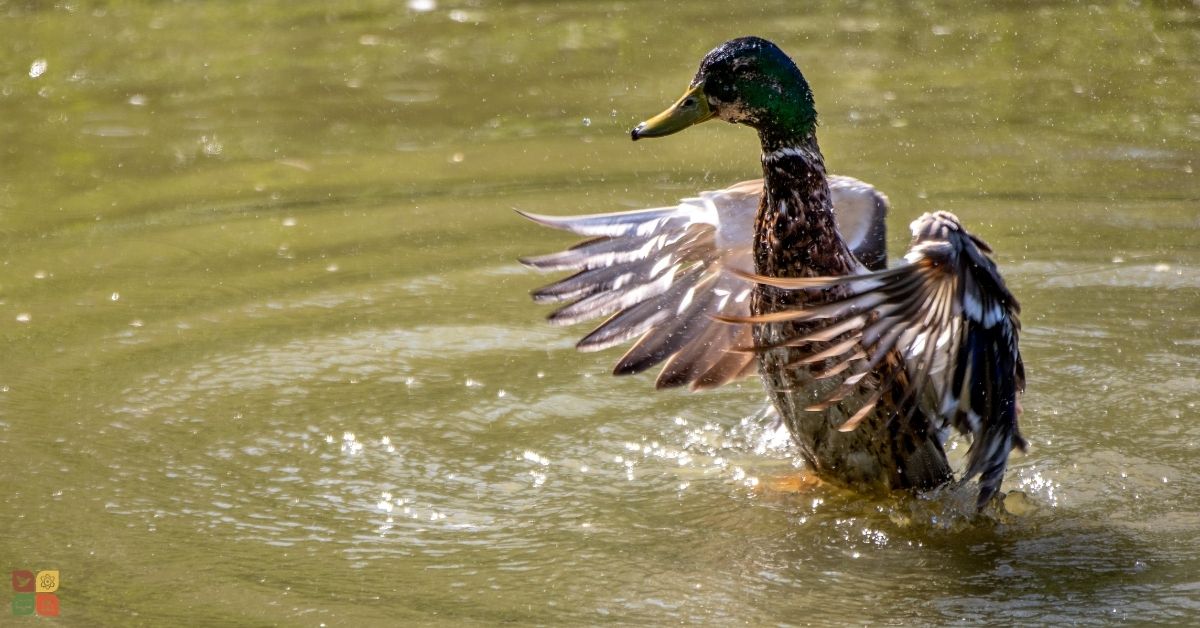
Zitter’s life in Massachusetts includes moments of closeness with animals that remind her of that awareness. During the interview, she paused to talk about ducks near her home. She and Forest live near a lake by a town beach and had stopped feeding the ducks due to sanitation concerns as beach season approaches. The ducks, she said, were standing there expectantly, as if asking where their food had gone.
It was a passing moment in the conversation, but it reflected something central to Zitter’s worldview: animals are not abstractions. They are neighbors, personalities, individuals. They notice. They expect. They communicate. They live alongside us, even when human systems refuse to recognize them as persons.
During COVID, Zitter’s activism shifted again. She began doing what she calls “armchair activism”: signing petitions, passing them on, writing articles, writing letters to the editor, and integrating her ethics into her daily and weekly schedule.
That is another important part of her story. Activism is not only the march, the table, the protest, or the public event. Sometimes it is what a person can do from a chair while tired, recovering, aging, caregiving, or simply living through a changed world.
Zitter said she would like to return to more in-person tabling. But she also honors the activism she can do now.
That flexibility matters. Movements need people in the streets, but they also need people writing letters, sharing petitions, cooking meals, mentoring others, making music, donating recipes, starting conversations, and keeping the ethical thread alive through ordinary life.
Veganism Belongs in Every Justice Space
The conversation eventually turned toward justice beyond veganism.
Zitter spoke thoughtfully about racial justice, human privilege, and the challenges of navigating conversations about oppression across different movements.
As a white activist involved in racial justice work, she said she tries to approach those conversations carefully and respectfully, particularly when discussing connections between human and nonhuman oppression.
Rather than flattening different experiences into a single comparison, Zitter focuses on patterns of domination, agency, and whose suffering society chooses to recognize.
“Thinking about my white privilege has helped me to think about my human privilege,” she said.
That line offers one of the clearest windows into Zitter’s ethical framework. She sees privilege not as a slogan, but as a responsibility to notice who is protected, who is heard, who is granted agency, and who is not.
More-than-human animals, she said, do not have meaningful legal protections, social recognition of their autonomy, or the ability to advocate for themselves within human systems of power.
“There’s just so many parallels,” she said.
Zitter also pointed to feminist vegan thinkers, including Carol J. Adams, Carrie Hamilton and Lisa Kemmerer, among others. Their work all explores the relationship between sexism, speciesism, feminism, animal ethics, and systems of domination. She discussed some of those ideas during a March episode of Vegan Nation connected to International Women’s Day.
Her reflections throughout the interview emphasized that veganism does not exist separately from other justice concerns. Instead, she sees compassion, dignity, and opposition to domination as values that can inform many different movements at once.
That perspective is also reflected in her professional life. Zitter’s career has included mental health work, Deaf community advocacy, and broader social justice organizing. Public professional biographies note that she helped design and direct an inpatient psychiatric unit for Deaf people in Massachusetts.
Her advocacy has also included LGBTQ+ rights. Zitter said that, as part of her social work advocacy, she helped pass the first gay rights bill in Massachusetts in the early 1980s and continues to advocate for trans rights and protection. For her, these commitments are not separate from veganism, but part of what she described as the wider “web of social justice” that includes more-than-human beings.
Whether speaking with vegan-curious community members, participating in racial justice spaces, or using music and food to open conversations, Zitter’s work consistently returns to dignity, care, and relationship-building.
The more she spoke, the clearer her message became: veganism belongs wherever justice is being discussed. Not because every struggle is identical, but because questions about power, suffering, agency, and compassion continue to surface across movements.
Some lives are treated as disposable. Some suffering is normalized. Some beings are denied autonomy because systems have been built to benefit from their exploitation.
Zitter’s answer to that reality is not despair. It is practice.
Bring the vegan food. Offer the recipe. Ask the next-step question. Write the letter. Sign the petition. Listen before responding. Admit where you are still learning. Tell the truth in a way people can actually hear. Keep the animals present. Keep compassion active.
The Practice of Beginning
Zitter and Forest’s life together has also become part of that witness. Their long vegan partnership, their food outreach, their activism, and their shared commitment to compassion show how ethical living can be sustained over time. In fact, they had a vegan potluck wedding in 2009 where most family and friends were not vegan but ventured into new territory with love.
That longevity matters.
In a movement often driven by urgency — and rightly so — Zitter’s story offers a reminder that liberation work also requires endurance. It requires people who keep showing up after the first wave of outrage fades. It requires teachers, caretakers, artists, organizers, social workers, writers, cooks, gardeners, musicians, and elders who carry memory forward.
Zitter is not asking everyone to become perfect overnight. She is asking them to begin.
And then to keep going.
In a world of heat waves, factory farms, political cruelty, climate disruption, and spiritual exhaustion, that kind of activism can look small from a distance. Up close, it is the work of culture change.
Kindness counts when it changes what we eat.
Kindness counts when it changes what we excuse.
Kindness counts when it reaches across species, language, ability, gender, race, culture, and community.
And kindness counts most when it refuses to look away.

