
Alexander Hamilton argued that a united economy was essential to a functioning government. Nearly 240 years later, his questions about taxation, trade, and public responsibility remain familiar.

where science and ethics intersect with politics
Alexander Hamilton argued that a united economy was essential to a functioning government. Nearly 240 years later, his questions about taxation, trade, and public responsibility remain familiar.

In Federalist No. 11, Alexander Hamilton argues that national unity is essential to economic independence. But does commercial strength guarantee freedom, and whose interests does that strength ultimately serve?

The September 18 announcement immediately raised questions about press access and the First Amendment — but exactly what the ban will mean in practice remained unclear Friday evening.

When every conversation feels like a test of who we are and which side we’re on, what happens to a country that has forgotten how to talk to itself? One anonymous voice reflects on division, silence, and the growing distance between people who still have to find a way to live together.

In Federalist No. 10, James Madison argues that political division is rooted in human nature and cannot be eliminated without destroying liberty. His proposed solution—a large representative republic—was designed to make it harder for an unjust majority to organize and sacrifice the rights of others.

In Federalist No. 9, Alexander Hamilton argues that liberty is not preserved by weakening government, but by designing it to withstand human conflict. As polarization deepens and trust in institutions erodes, this essay challenges a familiar instinct: that freedom thrives in the absence of structure. Instead, it asks whether a durable republic—one capable of resisting faction, instability, and collapse—is the very thing that protects both justice and the vulnerable.

Black History Month is not a symbolic observance or a relic of the past—it is a necessary corrective to historical amnesia. From voting rights and policing to education, wealth inequality, and cultural erasure, the struggles and contributions of Black Americans continue to shape the nation’s present. Understanding Black history is essential to understanding America itself—and to confronting the unfinished work of justice that remains.

When political leaders speak of “running” another sovereign nation until it submits to a so-called transition, the danger is not hypothetical. Language like this reveals a worldview rooted in domination rather than consent—and history shows where that road leads. This editorial examines why rhetoric matters, how empire announces itself, and why democracy cannot be imposed by force.

Explore how the Humane Party’s ethical vision reimagines the Seventh Amendment—America’s forgotten promise of justice by the people.

Explore the Sixth Amendment through the Humane Party’s ethical lens—how the right to a fair trial, open court, and true justice remains the test of a nation’s conscience.

Even the most ethical movements risk becoming empires when ego replaces empathy. Of Empires and Ethics examines how control masquerades as coordination, how loyalty becomes a test, and how humane leadership requires more than good intentions—it demands humility.
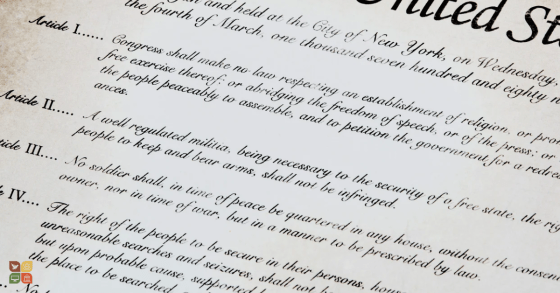
A look at the Fourth Amendment’s promise of privacy—from colonial resistance to today’s digital age. This lesson in liberty examines how modern surveillance and government overreach continue to test the limits of personal freedom.
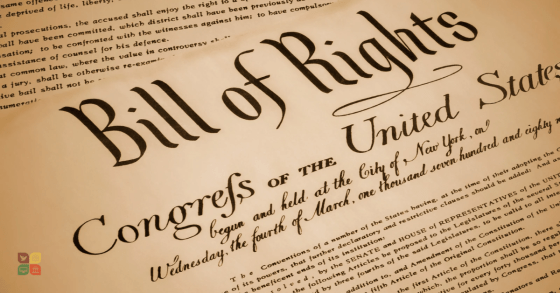
In a year when soldiers patrol American streets, when police forces resemble armies, and when government agents hide their faces from the public they serve, this Amendment is no relic. It is a reminder.

Is the First Amendment a guaranteed safeguard for dissenting voices, or a promise that can be bent by political pressure and corporate risk calculations?
The answer may determine not only the future of satire, but also the health of American democracy itself.

Anniversaries provide a moment to reflect on the many activist achievements that have already been accomplished, to appreciate how far we’ve come. People who would like to help build upon these milestones are invited to be in touch with the Humane Party and indicate your interest.
When civil rights are under attack, the first strike isn’t always a direct hit—it’s often a test. A “trial balloon” … More

