Advocating for animal rights is about the fundamental tenets of compassion and filling every waking moment of our lives with the highest good we possess as living beings—our capacity for kindness, empathy, and seeing ourselves in every other living being who shares our identities as living, sensitive and feeling beings who are aware.
Category: politics
New Documents by the Humane Party’s Economic Transition Team
This week, the Humane Herald’s publication page offers two new important documents written by members of the Humane Party’s Economic Transition Team.
Frank Alarcón: Introducing ANIMAIS
Guest author Frank Alarcón shares the following news about ANIMAIS: ANIMAIS is the first Brazilian and Latin American political movement aimed … More
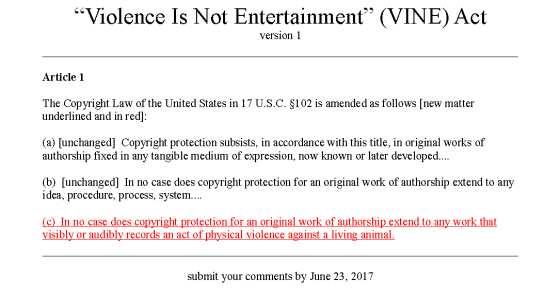
“Violence Is Not Entertainment” Act: Humane Party Opens New Front in Vegan, Abolitionist Movement—Intellectual Property
The Humane Party has today published the first full draft of the “Violence Is Not Entertainment” (VINE) Act, a proposed … More
What Will Trump’s New Executive Order Mean for Animal Agriculture?
President Trump’s executive order on “Promoting Agriculture and Rural Prosperity in America” assigns a task force to identify impediments to farming in the US. One particular impediment is the animal agriculture business. The Humane Party’s Agricultural Policy Transition Team has already done the labor intensive task of crunching numbers and ultimately resolving such impediments.
Historic Ruling for Chimps Sets Precedent for Animal Rights
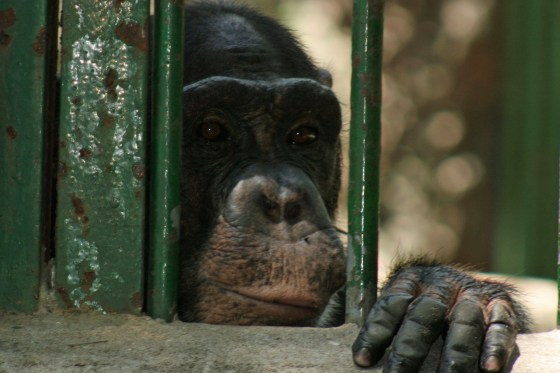
On April 4, 2017, Judge Maria Alejandra Maurício of the Third Court of Guarantees of the Judiciary in the Argentinean State of Mendoza ruled that Cecília, a chimpanzee living alone in a concrete enclosure at the Mendocino Zoo in Argentina, had the right to health and happiness.
Earth Day and the Environmental Movement
On April 22, 1970, 20 million Americans demonstrated coast-to-coast to raise awareness for the ravages taking toll on the environment. Dubbing this day “Earth Day,” its founder, U.S. Senator Gaylord Nelson envisioned it as a “national teach-in on the environment.” April 22 is also the anniversary of the Humane Party’s public launch in 2009,
Same Difference
Empathy rests on the assumption that we are more likely to feel empathic with those with whom we share similarities. What about the empathy of difference? Not everyone is going to look into the eyes of a rattlesnake and be able to see from the eyes of the rattlesnake. Assuming sentience and therefore, being empathic, underlies the Humane Party’s “ecosystem-neutral” philosophical approach to the environment.
Author, Speaker, and Pianist Joanne Kong Brings Her Gifts to the Humane Party
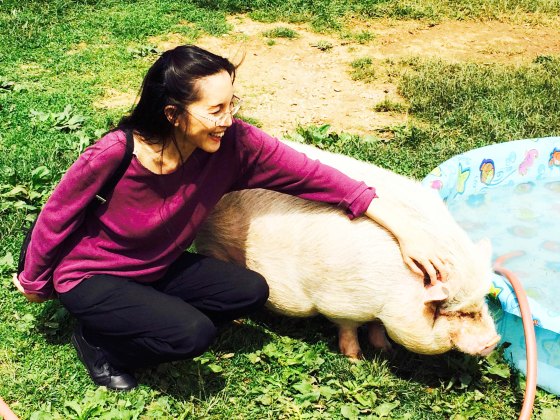
Joanne Kong is a new volunteer with the Humane Party, speaking at public events to advocate plant-based eating, centered ethically in raising awareness that greater compassion for animals and our planet is vitally necessary for transformative growth and positive world change. To her, veganism has the most powerful potential to truly change the world and embrace what is to her the most important quality of humanity—compassion.
Why Does the Annual Harp Seal Slaughter Continue?
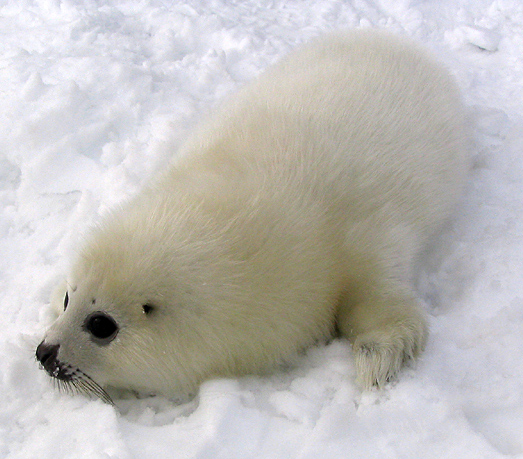
The Canadian seal slaughter began off the coast of Newfoundland this year on March 28th. This is two weeks earlier than usually allowed, as climate change is affecting the seal population. With disappearing ice, Canadian seal hunters are worried that there will be fewer seal pups to hunt, so the Canadian government has allowed the killing of pups as young as 4 weeks this year instead of the usual 6.
Día de los Derechos Civiles 2017
¡Feliz Día de los Derechos Civiles! El 9 de abril de 2017 marca la segunda celebración anual del Día de los Derechos Civiles organizada por el Partido Humanitario. Este día está dedicado a conmemorar los hitos en la historia de los derechos civiles y promover el progreso continuo en su protección. La fecha fue elegida por su asociación con la Ley de Derechos Civiles de 1866, la primera ley importante promulgada por el Congreso con base en los fundamentos establecidos por la Enmienda 13.
Wildlife Services Is Not on the Side of Wildlife
The federal Wildlife Services program killed 2.7 million animals in 2016. In its annual “kill report,” the agency data shows that 1.6 million of the 2.7 million deaths were of native wildlife species. Wildlife Services maintains that it “manages the damages” caused by so-called invasive species, yet less than half of the animals in the report are actually considered invasive. The Center for Biological Diversity asserts that of the almost 3 million animals killed yearly, many are unintentional kills that include household pets.
James Videle Envisions a Post-Abolition Economy
Home
James Videle has joined the Humane Party’s all-volunteer staff as co-leader of the Agricultural Policy Transition Team. The team’s mission is to transition the entire U.S. economy to a post-abolition—i.e., 100% plant-based—economy.
Addiction: Are Federal and State Agencies and Institutions Part of the Problem? Analysis of Substance Use Treatment Providers Licensed in the State of Florida.
Opioid addiction is categorized as an epidemic by the American Society of Addiction Medicine (A.S.A.M.)1 and the CDC.2 The numbers are such that most of us are directly affected or know somebody in our inner circle dealing with the disease. In 2015 the CDC estimated that “91 Americans die every day from an opioid overdose,”2 a number that adds up to 2,730 people a month and 33,215 a year.
Cultivating Well-Being
We’re attuned to the suffering of sentient beings and so, as part of our daily self-care, it’s worthwhile to remind ourselves and our compassionate readers of the individuals and organizations which are doing so much to promote a kind world—four examples follow along with a prescription: no less than one belly laugh daily!
The Criminalization of Animal Rights Activism
Is supporting animal rights terrorism? Is nonviolent activism terrorism? According to some interpretations of the Animal Enterprise Terrorism Act (AETA), they are.