
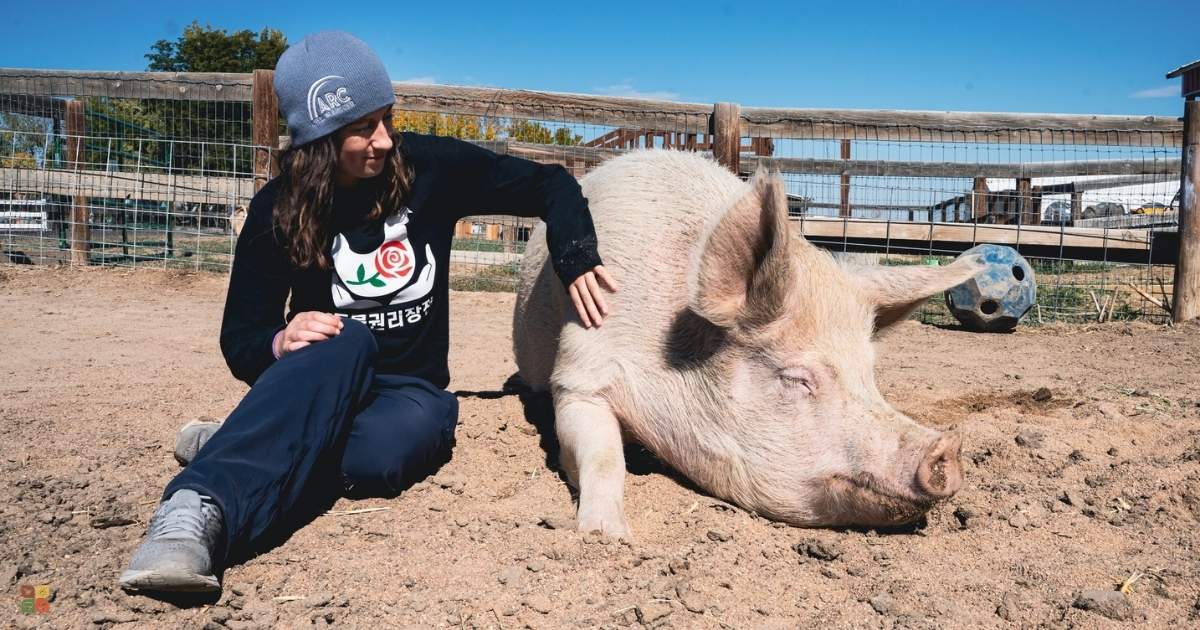
DxE’s lead organizer on revolutionary change and finding joy in the struggle
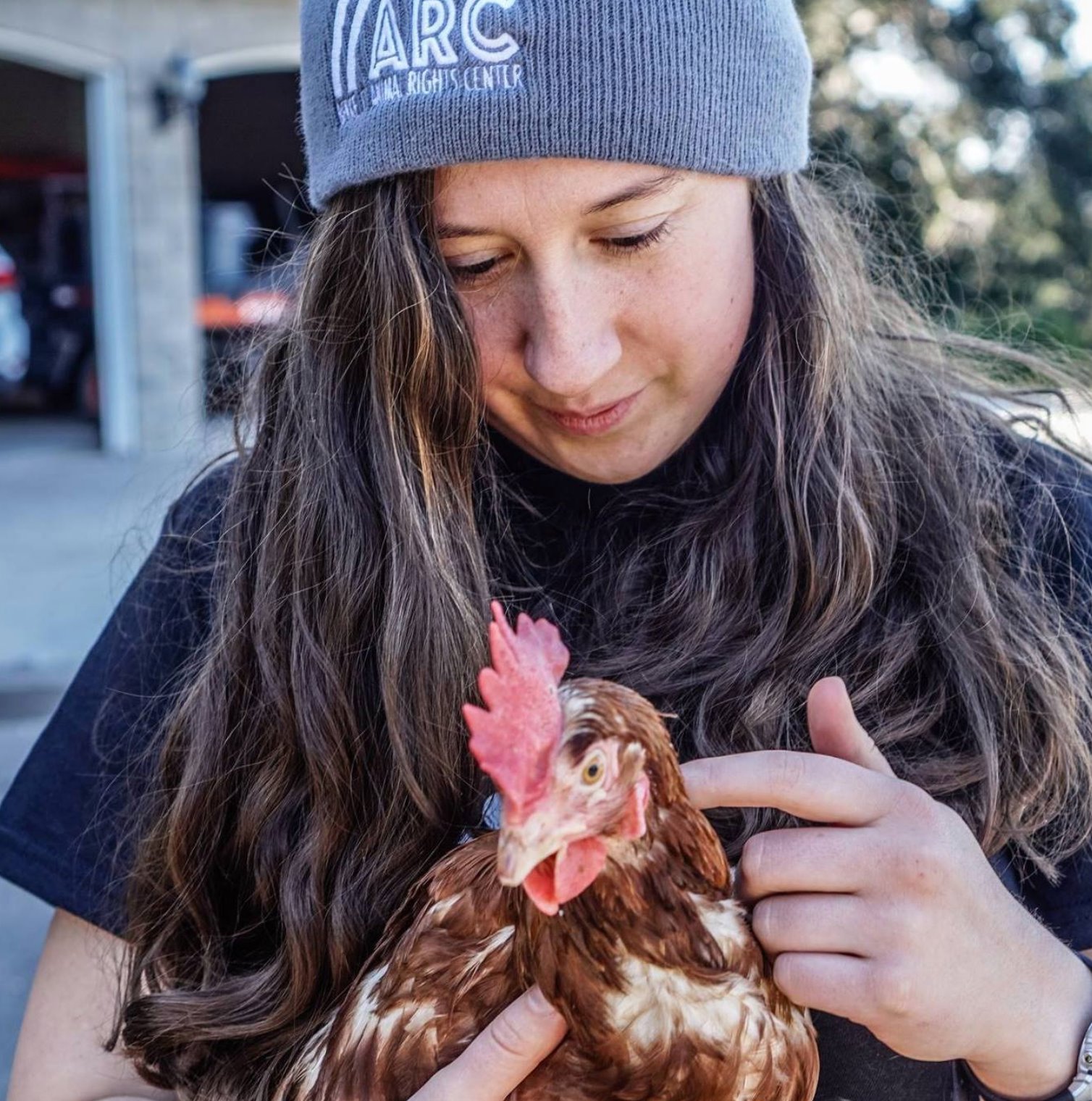
On an ordinary day in the world Almira Tanner is fighting for, things look very different.
The vast majority of domesticated animals are gone because we’ve stopped breeding them into existence. People eat well, maybe from vertical greenhouses. “I’m not a farmer,” she says, “but whatever is the best way to farm plants, that’s what we have.” Councils represent nonhuman animal interests in decision-making, and our homes are built with consideration for the ecosystem and the other animals who live here.
“Let’s make it happen!” she told me when we chatted recently via Zoom.
As the lead organizer of Direct Action Everywhere (DxE), Almira is working toward that kind of revolutionary social and political change, and she wants it in one generation.
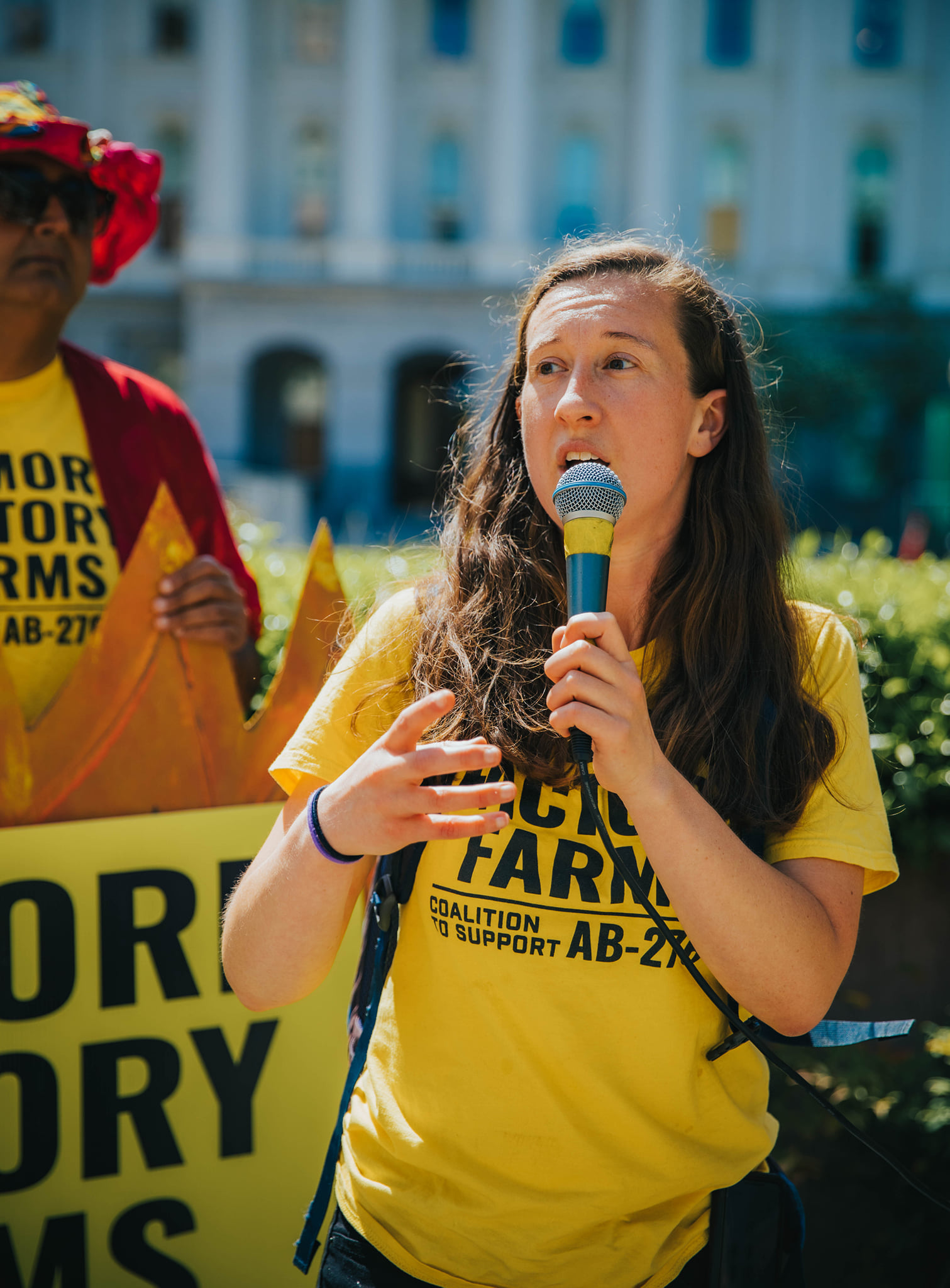
She seems to be everywhere, leading with a hands-on style. I saw her on a Zoom call last month demonstrating to 500 people how to contact our representatives. Next she was holding an in-person Know Your Rights training in Los Angeles, followed by a rodeo protest there.
“As a grassroots network, I feel like the activism comes from the ground up, versus me parachuting in like an executive director … just kind of telling other people what to do.”
She feels privileged to be in her position, a role she was elected to in 2019.
“We’re activists, and I think that’s what keeps DxE and other grassroots movements true to our roots and true to the theory of change that we believe in – which is that people have the power, and we should get out there and do the things.”
I asked Almira about a recent blog post by a well-known advocate that alarmed many in the movement, me included.
The post argues that money coming into the movement should go to welfare technology. It describes dystopian interventions, like genetically engineering happy animals who enjoy their time in animal factories run by robots.
Almira responded: “I want to see a world where our relationships to other animals and our relationships to each other are fundamentally transformed, not just modified by big corporate tech giants or something like that. I think it’s a dangerous place to be where we feel like we are the ones who know for sure what other beings are experiencing and that we can measure this suffering. I am more interested in the bigger picture project of aligning our actions with … treating others with compassion and caring about how other beings feel and exist in this world.”
She said we can make improvements in the animal agriculture system, but we have to consider carefully whether those improvements are making it harder for us to reach our end goal.
“And I’m not gonna say I know for sure all of those,” she said, “but I think if all of a sudden we start investing in creating our own factory farms, then that is entrenching the system versus moving towards the end goal with incremental steps along the way.”
Her words, and her huge smile, brought me back from the depths of despair over that blog post.
I asked what one thing a Humane Herald reader could do that would matter for animals more than they might expect. The answer: Find your community. And if there isn’t one, make one.
“I think it’s really difficult to make social change just on your own,” she said. “Find other people and then go do anything with those people for animals. They don’t need to be vegan. A great way to bring people in is just to do some actions for animals together. I think anything is better than nothing, and most people care about animals and aren’t really doing anything. So, we can bring that zero to one – and that’s such a big change.”
And that’s how you build a movement, folks.
I asked her about the hard days, being a vegan in a non-vegan world and leading an international grassroots network that’s trying to revolutionize the world for animals. I also whined to her about my own frustrations, pessimism and sadness.
She said: “Yeah, it’s hard. And then I always just remember that it’s better than doing nothing – kind of like I know for sure that if we do nothing, things won’t change. So you’ve got to give it a shot and you have to find … joy and satisfaction in the struggle as like a process that keeps you going.”
Lead on, Almira. Lead on.
To learn more about DxE, start at directactioneverywhere.com.

