

UnchainedTV’s 19-award sweep reflects a broader cultural shift toward ethical entertainment, independent media, and values-driven storytelling.

Independent vegan media reached a major milestone this week as UnchainedTV announced it had won 19 awards at the 2026 Telly Awards, one of the entertainment industry’s most recognized international competitions.
The vegan streaming network earned recognition across a wide range of categories, including food programming, education, travel, social impact, reality television, nonprofit media, and environmental storytelling. Out of more than 13,000 entries submitted globally, the network secured Gold, Silver, Bronze, and People’s Telly honors for multiple original productions.
At first glance, award ceremonies may seem disconnected from larger social movements. But moments like this often reveal something deeper happening beneath the surface of culture itself.
For decades, veganism and animal-rights advocacy were largely pushed to the margins of mainstream entertainment. Vegan characters in television and film were frequently reduced to stereotypes, punchlines, or symbols of extremism. Animal-rights conversations, when acknowledged at all, were often treated as fringe activism rather than serious ethical discourse.
That landscape appears to be changing.
From Activist Niche to Cultural Force
Among the network’s biggest winners was New Day New Chef Lite, which secured Gold Telly Awards in both Food & Beverage and Education & Discovery.
The cooking series showcases plant-based cuisine through accessible, lifestyle-oriented programming rather than confrontational debate. That distinction matters.
One of the most significant cultural developments surrounding veganism over the last decade has been its evolution beyond protest spaces alone. While activism remains central to the movement, vegan culture has increasingly expanded into entertainment ecosystems that include cooking shows, travel programming, podcasts, documentaries, reality television, wellness media, influencer communities, and independent streaming platforms.
This broader cultural infrastructure helps normalize plant-based living in ways that traditional advocacy campaigns alone often cannot.
Meanwhile, Green Goddesses Take New York earned multiple Silver awards spanning reality television, environmental media, nonprofit storytelling, and public-interest programming.
Reality television has historically been dominated by spectacle, consumerism, and manufactured conflict. Seeing vegan-centered reality programming recognized within mainstream entertainment spaces reflects shifting audience expectations about which stories deserve visibility.
The travel and culture series Kale Krew also received major honors in categories connected to diversity, health, travel, education, and social impact.
Taken together, the awards suggest that vegan media is no longer operating solely as an outsider protest movement attempting to gain attention from traditional gatekeepers. It is increasingly functioning as a self-sustaining cultural ecosystem capable of producing its own entertainment, journalism, educational content, and lifestyle programming.
Media Shapes Moral Imagination
Entertainment does more than distract audiences. It shapes what societies view as normal, desirable, ethical, and possible.
Cooking shows normalize plant-based meals.
Travel series normalize vegan tourism.
Reality television normalizes vegan social spaces.
Podcasts normalize conversations about factory farming, climate ethics, and animal exploitation.
Culture often shifts before policy does.
Long before laws change, media influences the public imagination by quietly redefining what audiences consider familiar or socially acceptable. In that sense, entertainment becomes cultural infrastructure — not merely reflecting society, but actively helping shape its moral framework.
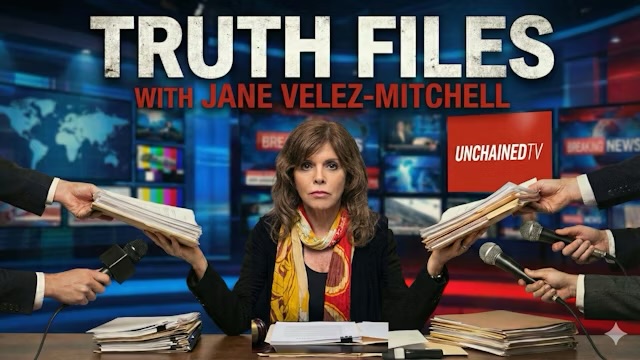
That may be part of why recognition for Truth Files with Jane Velez-Mitchell carries particular significance. The investigative and commentary series earned a Bronze Telly Award while routinely covering subjects that many mainstream outlets continue to soften, sideline, or avoid altogether, including industrialized animal exploitation, factory farming, wild horse roundups, and the environmental consequences of animal agriculture.
For animal-rights advocates, the battle has never been solely about legislation. It has also been about visibility — about whether these issues are permitted to exist within mainstream cultural conversation at all.
The Streaming Era Changes the Rules
The rise of independent streaming platforms has dramatically altered the media landscape over the last several years.
Audiences are no longer fully dependent on traditional corporate television networks to determine which stories receive legitimacy. Independent creators and niche platforms can now build loyal audiences directly, bypassing many of the gatekeeping systems that historically controlled entertainment and news distribution.
That shift has opened space for values-driven media ecosystems centered around ethics, sustainability, environmental concerns, and social responsibility.
UnchainedTV’s success does not mean veganism has suddenly become universally accepted. Nor does it erase the immense institutional power still held by industries tied to animal agriculture, advertising, and corporate media consolidation.
But the network’s 19-award sweep does challenge the long-standing narrative that audiences are uninterested in compassionate or ethically focused programming.
Increasingly, viewers appear hungry for exactly that.
The Telly Awards honor excellence in global television and video production, and UnchainedTV described the achievement as proof that “cruelty-free broadcasting is officially part of the global mainstream.”
Whether the broader entertainment industry fully acknowledges it yet or not, something is clearly changing.
Vegan media is no longer simply asking mainstream culture for representation.
It is building its own cultural presence — and audiences are paying attention.

