
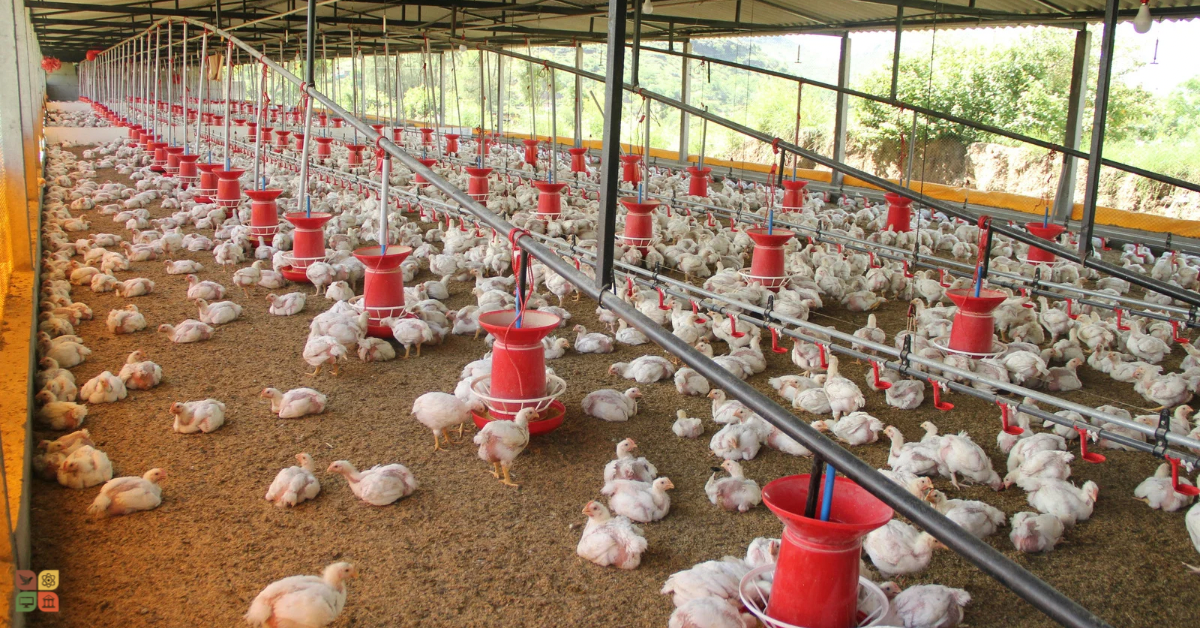
What does “free-range” actually promise?
The phrase appears frequently on cartons, packaging, and menus, often accompanied by imagery of open fields, sunlight, and animals moving freely across wide expanses. It evokes space, autonomy, and a life closer to what many would consider natural. For consumers seeking a more “ethical” option, “free-range” functions as a reassurance—an indication that, whatever else may be true, the animal lived well.
But like many familiar terms, its meaning becomes less certain the closer we look.
At its core, “free-range” is a spatial claim. It suggests that animals are not confined in the way industrial systems are often criticized for. The emphasis is not on what ultimately happens to the animal, but on where and how it exists prior to that endpoint. By focusing on geography—on access to the outdoors, on movement, on perceived freedom—the phrase redirects attention away from outcome and toward environment.
This shift matters. When ethical consideration is anchored in space rather than fate, the conversation changes. The question is no longer whether the animal’s life is taken, but whether its living conditions meet a threshold that feels acceptable. In this way, “free-range” does not eliminate concern; it reorganizes it, placing boundaries around what is open for discussion and what remains largely unexamined.
There is also an important distinction between implication and definition. While “free-range” conjures expansive, pastoral imagery, regulatory standards—where they exist—are often minimal and inconsistently enforced. In many cases, “access to the outdoors” may mean a small door leading to a limited space, used infrequently or not at all. The gap between perception and reality is not incidental. It is sustained by language that invites interpretation rather than precision.
This ambiguity is part of the phrase’s effectiveness. It allows consumers to project their own assumptions onto the label, filling in details that are not explicitly stated. The mind supplies the open field, the fresh air, the unhurried life. The language does not need to guarantee these conditions; it only needs to suggest them.
At the same time, “free-range” reinforces a familiar pattern within food labeling: the focus on improvement rather than transformation. It offers a sense that progress is being made, that conditions are better than they once were, and that participation in the system can be adjusted rather than reconsidered. For many, this feels like a meaningful step. And in some cases, conditions may indeed differ.
But the structure itself remains unchanged.
The animals labeled “free-range” are still part of a system in which their lives are managed, their reproduction controlled, and their deaths scheduled. The language highlights one aspect of their experience while leaving others largely unaddressed. In doing so, it narrows the ethical frame to a question of degree rather than kind.
What, then, does “free” signify in this context?
If freedom is defined by limited access to space within a controlled system, the term begins to take on a different character. It becomes less about autonomy and more about variation within constraint. The boundaries remain; they are simply expanded or softened at the edges.
This is where the phrase does its most important work. “Free-range” does not need to withstand rigorous scrutiny to be effective. It needs only to create a sense of alignment between values and action. It reassures without requiring confrontation, offering a version of the system that feels more consistent with the way many people see themselves.
Language, in this way, becomes a kind of map—not of physical terrain, but of moral comfort. It outlines where we are willing to look, what we are willing to question, and where we are content to stop.
And perhaps that is the deeper function of “free-range.” Not to describe a complete reality, but to define the limits of our attention within it.
 The Humane Herald