
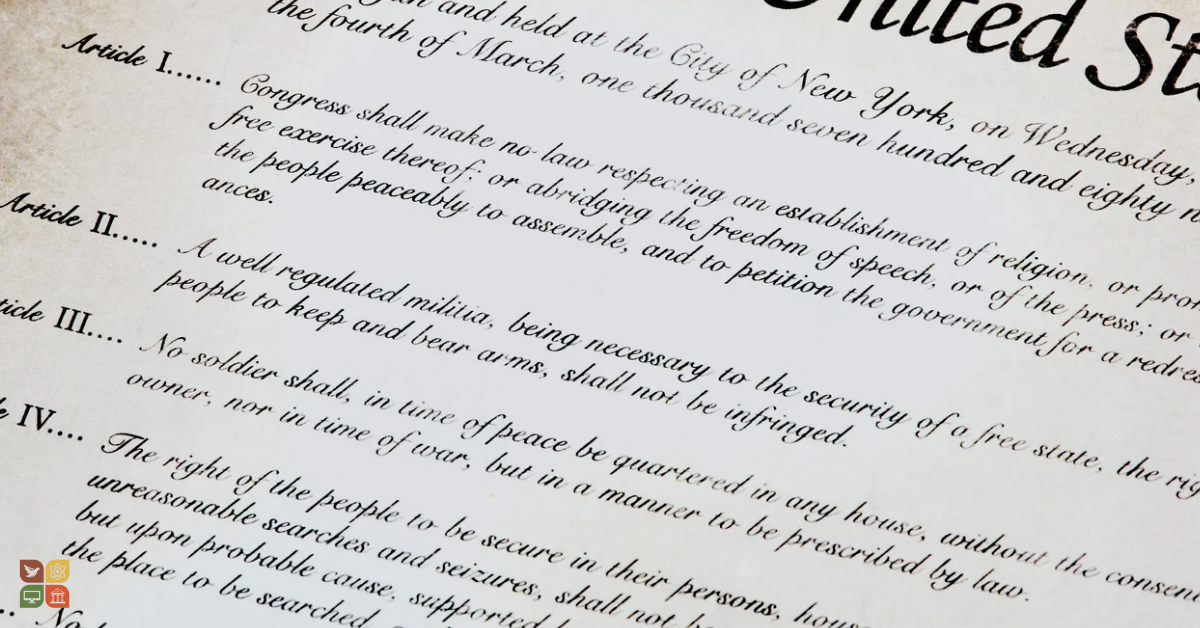
“The right of the people to be secure in their persons, houses, papers, and effects, against unreasonable searches and seizures, shall not be violated…”
A Shield Against Tyranny
The Fourth Amendment was born from the colonists’ lived experience under British rule, when “writs of assistance” allowed officers to search homes and seize property without cause. These general warrants were symbols of tyranny—broad permissions that treated every citizen as a suspect. The framers, having endured such intrusions, vowed that in this new nation, the home would remain a castle of privacy, not a chamber of government inspection.
The Lesson in Liberty
At its heart, the Fourth Amendment protects not just our property but our autonomy—the right to exist without constant observation. It demands that the government meet a high standard before crossing the threshold of our personal lives: probable cause and judicial oversight. Without it, liberty becomes conditional.
From Lockboxes to Laptops
In the 18th century, “papers and effects” referred to letters, ledgers, and belongings. Today, they include emails, phone data, cloud drives, and even biometric information. Yet technology has outpaced legislation. Each new advancement tests the limits of privacy: facial recognition cameras in public spaces, AI scanning of social media, and warrantless tracking of digital devices.
Modern-Day Erosion
Under the current administration, surveillance programs have expanded under the guise of security and efficiency. Federal agencies now employ predictive algorithms that flag individuals for “behavioral analysis,” a modern echo of the general warrants our founders condemned. At airports and borders, Americans are increasingly subjected to device searches without probable cause—effectively reversing the presumption of innocence. These intrusions, though digital, carry the same moral weight as a ransacked home in 1770.
The Humane Interpretation
A humane society respects boundaries—both physical and informational. The Humane Party’s platform recognizes that true liberty demands not only freedom from violence but freedom from unjust scrutiny. Protecting privacy is an act of compassion as much as justice: it affirms trust in individuals and guards against the corruption that grows in unchecked power.
The Ongoing Vigil
The Fourth Amendment is not self-executing; it requires our defense. Each citizen, journalist, and legislator bears responsibility to ensure that privacy remains more than a nostalgic ideal. The tools of tyranny have changed form, but their intent has not. To preserve the spirit of liberty, we must keep both our passwords and our principles secure.
 The Humane Herald