
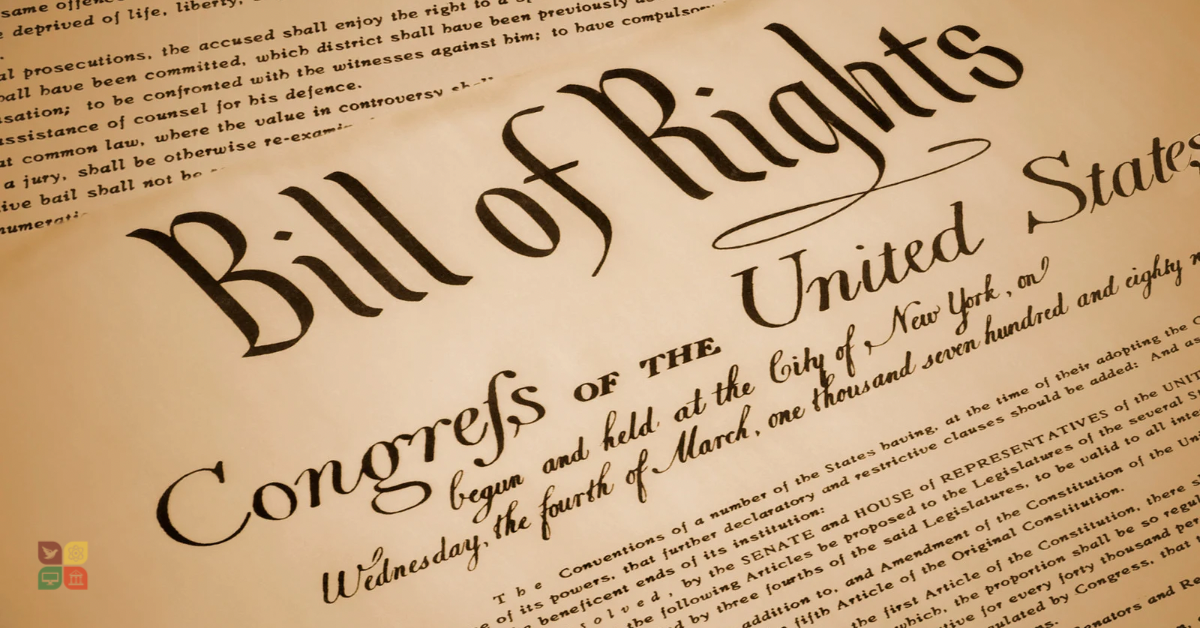
The Third Amendment of the U.S. Constitution may be the least litigated of the Bill of Rights, but its promise—that homes and communities remain free from military intrusion—carries enduring weight. In 2025, with federal troops patrolling U.S. streets and police departments dressed in military gear, its lessons no longer feel like a relic. They feel like a warning.
Origins in Colonial Resistance
The Third Amendment was born from the bitter memory of the Quartering Acts of 1765 and 1774, which forced American colonists to house British soldiers. For colonists, quartering was not only a violation of privacy but a visceral reminder that they lived under occupation.
By the time of the Revolution, opposition to quartering was nearly universal. When the Bill of Rights was ratified in 1791, this amendment served as a promise: the new republic would not allow soldiers to trample the sanctity of the home.
The Text
“No Soldier shall, in time of peace be quartered in any house, without the consent of the Owner, nor in time of war, but in a manner to be prescribed by law.”
One sentence, simple and absolute. It declares that the home is not just shelter, but sanctuary—beyond the reach of military authority.
Rarely Tested, Never Forgotten
The Third Amendment has rarely reached the courts, but its obscurity may itself be proof of its power.
In Engblom v. Carey (1982), prison guards argued their living quarters were unlawfully seized to house National Guard troops during a strike. The Second Circuit held that the Amendment applies to the states via the Fourteenth Amendment, and that “soldiers” may include Guard members.
Few cases exist, but the principle holds: government power stops at the threshold of the home.
Modern Echoes: When Troops Walk the Streets
The Third Amendment may seem distant in a time without forced quartering, yet its deeper logic—that civilian life must remain free of military control—feels acutely relevant today.
•Federal Deployments in Cities: This year, National Guard troops were dispatched into Los Angeles and Washington, D.C., operating alongside local police during immigration raids and protests. In the nation’s capital, Guard troops even took on “beautification” patrols—removing homeless encampments and policing public spaces. Critics argue such deployments blur the line between civic order and occupation.
•Militarization of Police: An executive order earlier this year revived the funneling of military-grade vehicles, weapons, and surveillance gear to local police forces. Armored trucks now roll through suburban streets, while tactical squads resemble combat units more than community guardians.
•Masks and Accountability: Reports of federal immigration agents conducting operations while masked have raised alarms about transparency. A faceless force exercising authority over civilians conjures precisely the kind of unchecked power the Founders feared.
Why It Matters Now
No Americans today are being ordered to house soldiers in their living rooms. But the question at the heart of the Third Amendment endures: When, if ever, should military power enter civilian life?
Its relevance lies less in literal quartering than in its spirit: that liberty requires strict boundaries between civilian society and military authority. That spirit reverberates in today’s debates about:
•Government surveillance inside private homes.
•The militarized policing of protests and neighborhoods.
•Federal authority overriding local governance.
An Editorial Reflection
The Third Amendment is often called “forgotten.” But perhaps the greater danger is forgetting why it was written. Our rights are rarely stripped away all at once. More often, they are eroded gradually—normalized in moments of crisis, justified as temporary, and accepted until they are permanent.
The Founders understood this. They enshrined in the Bill of Rights not only the freedoms most often tested—speech, press, assembly—but also the protections that would prevent abuse before it began. The Third Amendment is one of these silent shields.
In a year when soldiers patrol American streets, when police forces resemble armies, and when government agents hide their faces from the public they serve, this Amendment is no relic. It is a reminder. A reminder that liberty is not defended only by the laws we invoke loudly, but by those standing quietly at the door—waiting to be remembered before it is too late.
 The Humane Herald