
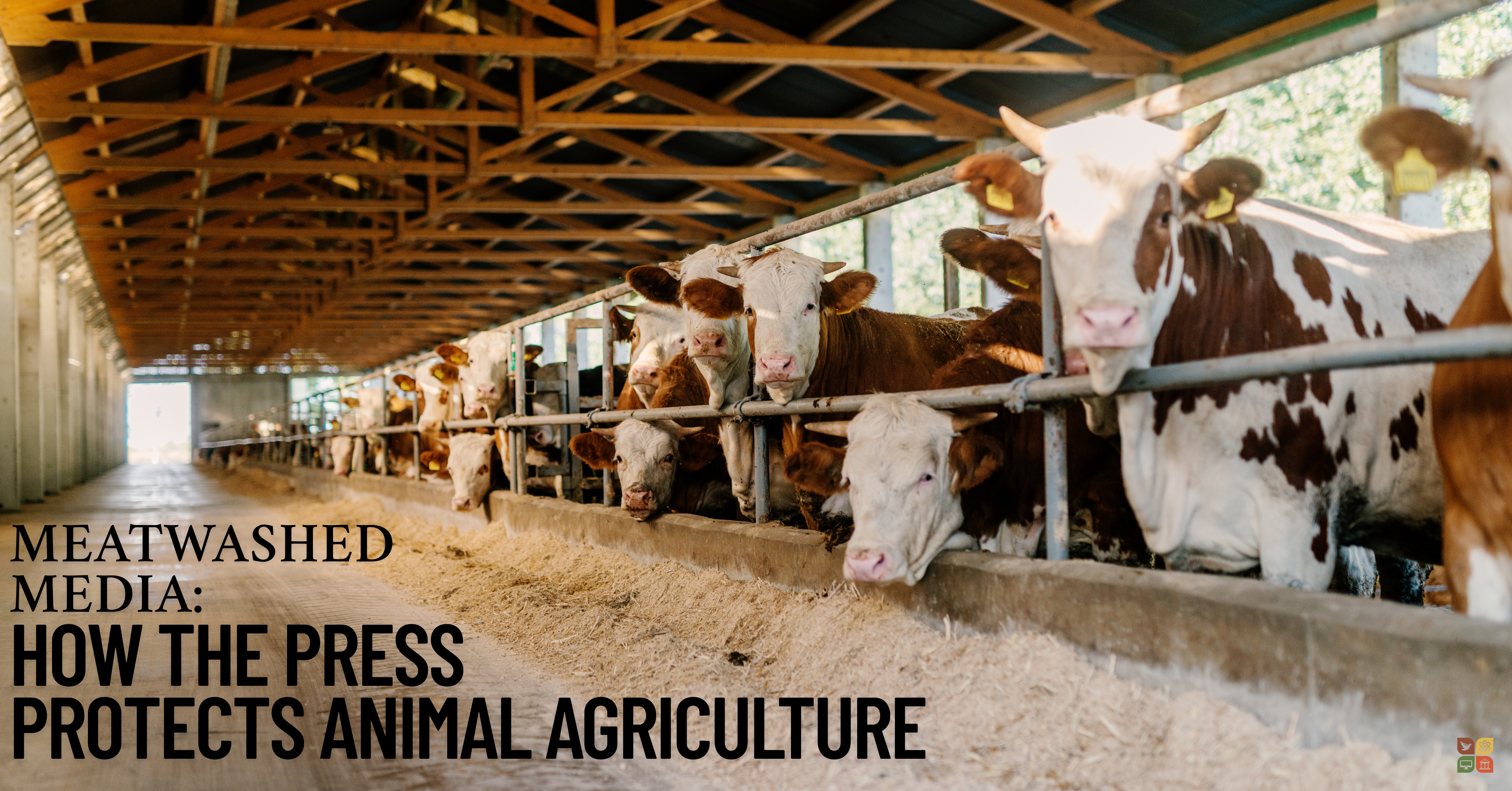
For decades, the public has relied on the press to serve as a watchdog against corruption and abuse. Yet when it comes to one of the largest, most destructive industries in the world—animal agriculture—the media doesn’t just look the other way. It actively shields it.
This phenomenon, dubbed the meatwashing of the media, refers to the systemic bias in news coverage that protects the image of meat, dairy, and egg industries, even as mounting evidence shows their devastating toll on animals, the planet, public health, and workers.
A Cloak of Normalcy
From cooking segments and burger commercials to “balanced” reporting that platforms industry talking points, mainstream media outlets normalize and promote animal products daily. Rarely are slaughterhouses described with the language they deserve: places of violence, terror, and death. Instead, sanitized terms like processing plant or protein production facility dominate.
Even when media outlets report on environmental or health crises—such as antibiotic resistance, deforestation, or zoonotic outbreaks—they often stop short of naming the animal agriculture industry as a primary driver. This selective framing amounts to a journalistic sleight of hand: deflect, distract, and depoliticize.
Industry Ties and Editorial Cowardice
Why does this happen? In part, because animal agriculture is deeply embedded in the economic and political fabric of the country. It buys influence not just through lobbying and campaign donations, but through advertising dollars. Many media companies receive significant revenue from fast food chains, grocery stores, and agribusiness giants. Covering the ethical, ecological, and economic reality of animal exploitation risks alienating these funders.
Journalists who challenge the meat status quo often face editorial pushback or are told to “present both sides”—as if the right to life of animals or the survival of the planet are up for debate.
Silencing the Truth
Meanwhile, whistleblowers and activists trying to expose abuse in slaughterhouses and factory farms are labeled as radicals. Ag-gag laws, which criminalize the documentation of animal cruelty in these facilities, are rarely covered with the urgency they deserve. Instead of highlighting the horrors being hidden, the press often portrays animal advocates as a threat to “hardworking farmers” and “American tradition.”
This narrative discipline is no accident. It mirrors historical patterns where powerful institutions controlled the public narrative to uphold exploitation—whether it was tobacco, fossil fuels, or even slavery.
Beyond Bias: Ethical Failure
To call this merely bias is an understatement. It is a systemic ethical failure. A media ecosystem that refuses to call animal exploitation what it is—violence—is complicit in that violence. By obscuring the truth, the press doesn’t just protect the industry. It delays justice.
A Call for Media Revolution
We need a media revolution as much as we need a food system revolution. One cannot happen without the other. Independent outlets, investigative journalists, and publications like The Humane Herald are stepping up—but they need support.
It’s time we stop accepting meatwashed reporting as “neutral.” It’s time to name it, challenge it, and replace it.
Until every cage is empty—and every news story tells the whole truth.
 The Humane Herald