
What if we use the AI windfall to end animal agriculture? I try a thought experiment using the structure of Aidan Kankyoku’s contentious essay and the recommendations of the Beyond Cage Free campaign.
First I asked Aidan to help me understand why he chose to give up the fight for abolition. He agreed to an interview, but as time went on, I became less interested in his personal choice than in advancing an alternative to his argument, which in essence is this:
Because factory farming is likely to persist, abolition has failed to stop its expansion, and AI-driven funding can accelerate welfare innovation, we should use that money and technology to reduce as much suffering as possible within the system that exists.
I asked him, as a thought experiment, to game out with me what would happen if that same AI money went instead toward transforming the system itself.
He declined.
He said he saw no role for himself in this chapter of my thinking, citing his immersion in the immediate problem of the early arrival of “extremely destabilizing AI.” If I wanted the interview, he suggested in a follow-up email, I could take all of his writing, feed it to Claude, and ask the chatbot to answer as Aidan would. People are considering this way of using AI to make ourselves “infinitely accessible” to each other, he explained.
I declined.
Somewhere between my first and fifth reading of his essay “There is a path to meat without misery,” I found my solution in the Beyond Cage Free campaign. The coalition’s argument is essentially this:
Because an AI-driven funding windfall could accelerate structural change across food, agriculture, climate, public health, and animal protection, we should redirect welfare funding and invest it in building a food system that makes factory farming increasingly obsolete.
Members of the coalition say the money is an opportunity to move beyond animal agriculture altogether, yielding simultaneous gains for animals, public health, biodiversity, climate stability and food security.
So if people like Aidan are willing to imagine a world transformed by artificial intelligence, why imagine so little transformation?
As an exercise, I am going to plug BCF’s objectives into the structure of Aidan’s essay – and turn the whole thing on its head.
He used a frame of biblical quotes and metaphor from a Greek myth. It’s scripture, myth and manifesto all at once. It’s 17,000 words, but don’t worry; I’ll do it in about 2,000.
Readers familiar with his essay will recognize some landmarks. Where he employs biblical passages that emphasize sacrifice, suffering and resignation, I drop in secular quotes that emphasize liberation, transformation and refusal. Where the verses encourage readers to view welfare tech as a form of moral rescue, I replace the theology of rescue with a politics of transformation.
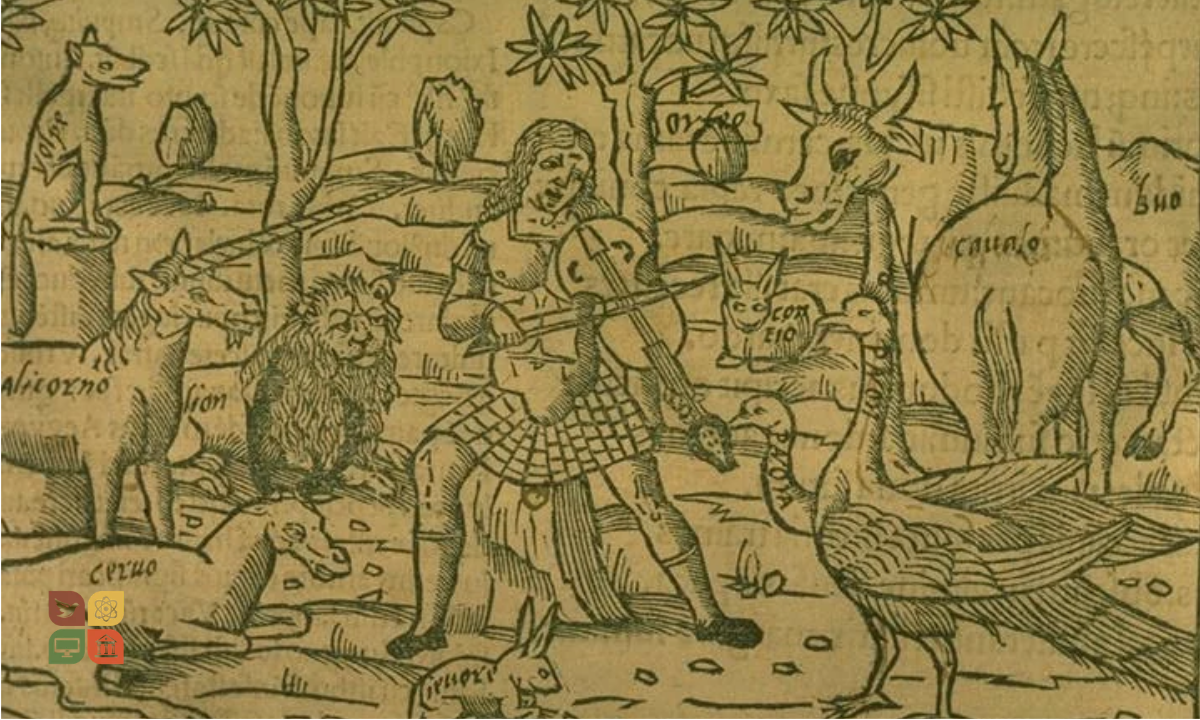
He evokes catabasis, the Greek Hero’s Journey to the underworld. I’m not sure why he chooses Orpheus as his hero, actually, and not the successful Heracles or Dionysus. Orpheus fails to rescue his love, Eurydice, because he chose to look back. For me, in Aidan’s framing, Eurydice represents the animals; the underworld is factory farming; Orpheus is the advocate (Aidan?) who is willing to enter morally contaminated territory.
Aidan argues that if you love animals enough, you should be willing to descend into places that disgust you in order to help them. That’s why the welfare-tech rungs get progressively harder to accept: he’s testing whether the reader will continue descending with him. But Orpheus’ story is a tragedy about a rescue mission that doesn’t succeed.
My remedy is anabasis, ascent. Abolitionists make the journey by climbing a ladder of rungs built on the tenets of Beyond Cage Free – in order to achieve a plant-based food system.
1. De facto
“I am in earnest. I will not equivocate. I will not excuse. I will not retreat a single inch. And I will be heard.” – William Lloyd Garrison
In the beginning, there was animal agriculture. It replicated to become the most egregious ongoing crime in the history of humanity.
The Law of Succession
Every dominant food system in history appeared to be permanent. Subsistence farming gave way to industrial agriculture; local food systems gave way to global supply chains. The world changes by replacing systems, not merely improving them.
2. Why welfare cannot win
“The animals of the world exist for their own reasons. They were not made for humans …” – Alice Walker
Welfare tech aimed at reducing suffering and optimizing production has no remedy for the underlying ethical problem of using animals for food.
3. Never join ’em
“Power concedes nothing without a demand. It never did and it never will.” – Frederick Douglass
If AI money and technology can redesign animals, AI money and tech can redesign an animal-free food system instead. When we have the opportunity to make the ethical choice for animals, we must.
4. Anabasis
“I am no longer accepting the things I cannot change. I am changing the things I cannot accept.” – Angela Davis
Aidan says to climb down Orpheus’ ladder and bargain with the ruler of the underworld. In his plan, we’ll have to let go of our moral purity and get blood on our hands. But we don’t believe in using animals for food. Why would we help it continue, make it more desired and more profitable, in fact?
Aidan says we want meat without suffering, because people will keep wanting meat. I say we don’t want meat at all. We want food without victims.
He offers two ways to get a chicken breast without the misery. Build it from a single cell, or start with the chicken and remove the suffering. Here’s a third: find something else to eat.
The Greek word for the way down is catabasis. The word for the way up is anabasis. So let’s go up.
The first three rungs are the Beyond Cage Free coalition’s recommendations. The fourth rung I added.
Keep your moral purity; leave your moral scarcity behind.
Rung 1: Reclaim the moral horizon
Move from a utilitarian philosophy that gives preference via Effective Altruism money to reduce animal suffering through welfare reforms. Move to a deontological philosophy, which gives animals rights.
The metric to measure movement toward the goal is not a level of suffering; it is the number of animals used in the food system. That number should be going down. BCF argues that “cage-free campaigns are based on the number of animals spared from cages, a method which does not encourage a reduction in the total number of animals that are bred and leads to an increase in environmental impacts.”
Concerning duty and rights, animals are not property or commodities. That’s the culture to cultivate. People can’t choose something new if they can’t imagine it, and if we believe AI changes everything, we can begin with persuasion and move into action.
Rung 2: Gather the coalition
Animal agriculture is an animal rights issue. It’s also a climate issue, a public health issue, a biodiversity issue, a food security issue and a food justice issue. The future is built not by one ideology but by many interests moving in the same direction, because no single movement has enough power to transform a food system on its own. Holistic and multiplying, this is the kind of systems thinking that EA embraces.
Beyond Cage Free argues that plant-based food system transformation should become a central philanthropic priority because reducing the number of animals bred into the food system also generates benefits across animal protection, climate mitigation, public health and food security.
BCF is convening advocates from across these connected concerns to develop a High Ambition Coalition for Plant-Based Food Systems Transformation.
Rung 3: Design a plant-based future
Transform the infrastructure and the marketing, and the masses will follow. Or they’ll at least default to the better choice, because systems shape choices.
Transfarm (see Transfarmation Project) the infrastructure, and don’t leave anyone behind. Help people leave animal agriculture by supporting them to grow different things or obtain new skills.
BCF says to address both supply and demand and make an “Action Plan for a Plant-Based Future.” Subsidize animal-free agriculture; expand outreach, education and awareness campaigns; lobby governments at every level; secure plant-based food at all kinds of public institutions.
Rung 4: Make animal agriculture obsolete
If artificial intelligence can help redesign supply chains, nutrition, agriculture, manufacturing, logistics and public policy, then its highest use is not reducing suffering within animal agriculture. It is accelerating the transition beyond it.
Imagine that the full ambition of the AI era is not welfare tech, but transformation tech.
Consider transition infrastructure such as school food programs, alternative protein supply chains, and transition grants for farmers and restaurants. Consider cultural acceleration like investigative journalism, abolitionist marketing and targeted public education campaigns. Consider political infrastructure like plant-based policy think tanks, legal defense funds, transition-focused lobbying and municipal food transition initiatives. Consider using AI specifically against animal agriculture, with tools for exposing greenwashing, providing consumer transparency, supply-chain tracing and public databases of animal use. Consider demand collapse strategies like personalized plant-based coaching, AI nutrition assistants, AI meal planning and new behavior-change systems.
Aidan’s brainless chickens are obsolete animals.
If an AI windfall is real, what else becomes possible? If millions of dollars become available, what else becomes possible? If billions become available, what else becomes possible?
If we are willing to imagine happier factory farms, be willing to imagine fewer factory farms. If we are willing to redesign animals, be willing to redesign food systems and make animal agriculture obsolete.
Imagine a future classroom of kids learning that billions of animals were once bred into existence for food every year. The teacher is trying to explain why we thought that was necessary. The kids learn that we cut down entire forests in order to grow feed, we polluted entire rivers with animal waste. They learn that we engineered, confined, killed and ate entire populations of animals because we couldn’t imagine another way.
Imagine the kids’ confusion. Imagine their disbelief. Imagine animal agriculture becoming not just obsolete, but unthinkable.
5. Believers invited
“Never doubt that a small group of thoughtful, committed citizens can change the world; indeed, it is the only thing that ever has.” – attributed to Margaret Mead
Aidan argues that the pace of innovation will not be limited by funding, but by talent. If money isn’t an issue, let’s go! But let’s move with a positive vision for change.
BCF’s High Ambition Coalition for Plant-Based is open to everyone who believes that the food system can be transformed and that a system is something we create together. Rather than treating animal agriculture as a single-issue problem, it brings together people working on animal protection, climate, public health, food justice, food security and related concerns around a shared vision.
Its advisors include members of Plant Based Treaty, Free From Harm, and In Defense of Animals.
Believers are invited, because the future won’t build itself the way we want it to. If this vision interests you, learn more at beyondcagefree.org.
6. Action replicates
“Hope is a discipline.” – Mariame Kaba
Aidan is looking for the dominant replicator and laments that hope doesn’t replicate.
Maybe not, but action does. Hopeful social transformations happen when culture, institutions, economics, technology and policy begin reinforcing one another. No single intervention abolishes a system.
Systems become obsolete when every part of society begins moving in the same direction.
Beyond Cage Free is creating momentum powerful enough to make an animal-free food system increasingly inevitable. Consider that school menus replicate; food standards replicate; procurement contracts replicate; transition programs replicate; and plant-based infrastructure replicates.
Aidan imagines a vegan starting a factory farm. I imagine a philanthropist building an animal-free food system. Can you imagine a system that does not require us to engineer away suffering? Can you imagine farmers who are paid to transition rather than defend the status quo? Can you imagine AI wealth being used not to perfect animal agriculture, but to outgrow it? Can you bring yourself not just to imagine it, but to build it?
In that case, build on.

