Breeders and sellers of pet rabbits, this one is for you.
My last column was about rabbits being used to make dog treats. This one is about rabbits being used to make pets. I don’t know why rabbits took over my week, but I do know that ignorance is bliss for the ignorant, and suffering continues unseen. If we want change, we cannot look away.
Here’s how this one went down.
Somebody shared a photo of a little rabbit at a farm store in Illinois. A tag clipped to his cage labeled him a disabled bunny. He was “on clearance while supplies last.”
In this world, a rabbit is inventory. The price of his life started at $19.49. His value dropped to $10 when the store realized he could not use his back legs properly.
How long had he been languishing alone in that Rural King in Benton? Did he receive veterinary care? Was he in pain? What had happened to him?
Katie Reed, founder of Dolly’s Dream Home Rabbit Rescue in St. Louis, shared a theory: he may have been dropped.
“Rabbits are prey animals, and many absolutely despise being picked up. They can twist, kick and launch themselves out of someone’s arms in a split second. Unfortunately, their delicate spines aren’t designed for those kinds of emergency exits,” she wrote in a Facebook post about him.
Thankfully, Katie’s drop theory did not apply in this case. X-rays showed he has a severe curvature of his spine, and he was likely born this way.
Katie says he is built like a question mark, but he is functioning like an exclamation point.
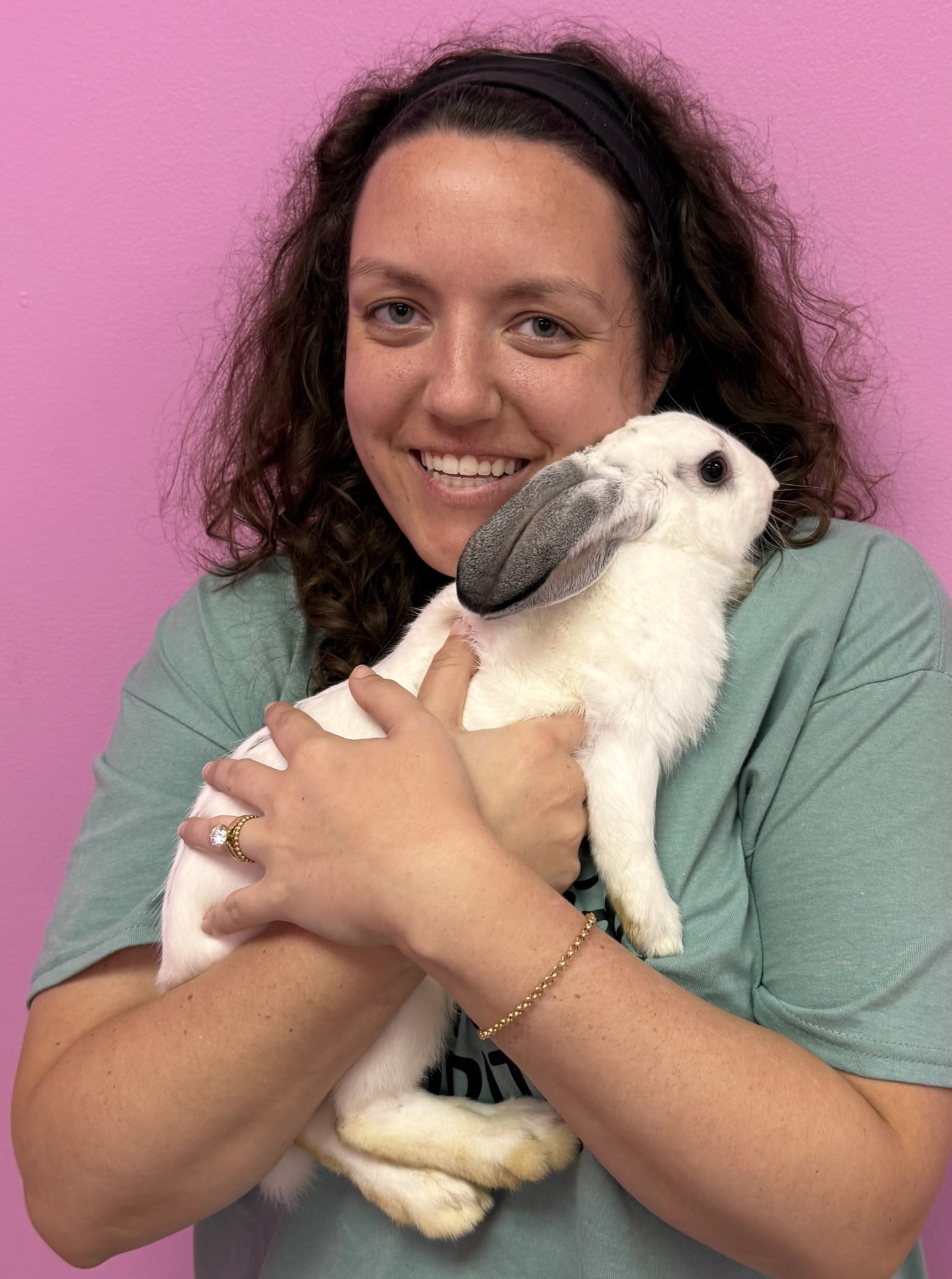
He has a name now. It’s Dinky, and he is safe and thriving at her rabbit rescue.
But let me back up.
It was two weeks ago that a Dream Home volunteer drove across state lines and more than four hours to save this bunny. Rural King sent him out the door for $5.
Dinky’s story stole the internet’s heart.
“You can put a toaster on clearance because it doesn’t work properly, but you can’t treat a living being the same way,” Katie wrote.
She is making the most of people’s interest to advance her message: Stop breeding rabbits.
“There’s a rabbit overpopulation crisis. Spaying and neutering is expensive, so most people don’t do it … There are so many accidental rabbits out there that there’s no point in bringing more and more into the world,” she said.
“Do you feel the same about dogs and cats?” I asked. “One hundred percent,” she said.
“How do you feel about using rabbits for pet food or human consumption?” I asked.
“It’s disgusting,” Katie said. “A lot of people applying to adopt say, ‘Well, I have meat rabbits, but I wouldn’t eat this one because it’s a Holland Lop.’ And we’re like, whoa. It’s like eating a German Shepherd but not a poodle. To us it’s all the same.”
That’s how I feel about all animals. You wouldn’t eat a dog; why would you eat a cow? Why would you eat a chicken, a lamb, a fish or any sentient being?
“We have stories similar to Dinky’s all the time, and I don’t want to understate his, because it is a big one. We’ve rescued hundreds of rabbits originally from Rural King. We even have two coming in this Saturday,” Katie said.
Because of Dinky, she said, thousands of people now know that rabbit rescues exist.
Of course, if Rural King – and the stores like it – didn’t buy rabbits from breeders, there would be less need for rescues. If there were no such thing as rabbit breeders, that would be perfect.
In 2019, California’s Pet Rescue and Adoption Act went into effect, making it the first state to prohibit stores from selling dogs, cats and rabbits purchased from breeders. Instead, it directs stores toward shelters and rescues.
No animal should be bred, for any reason. But as long as people do, we are 100 percent responsible for those animals’ welfare.
For starters, California’s law should extend to chicks, hamsters and every other animal that stores sell. And it should be the law in every state.
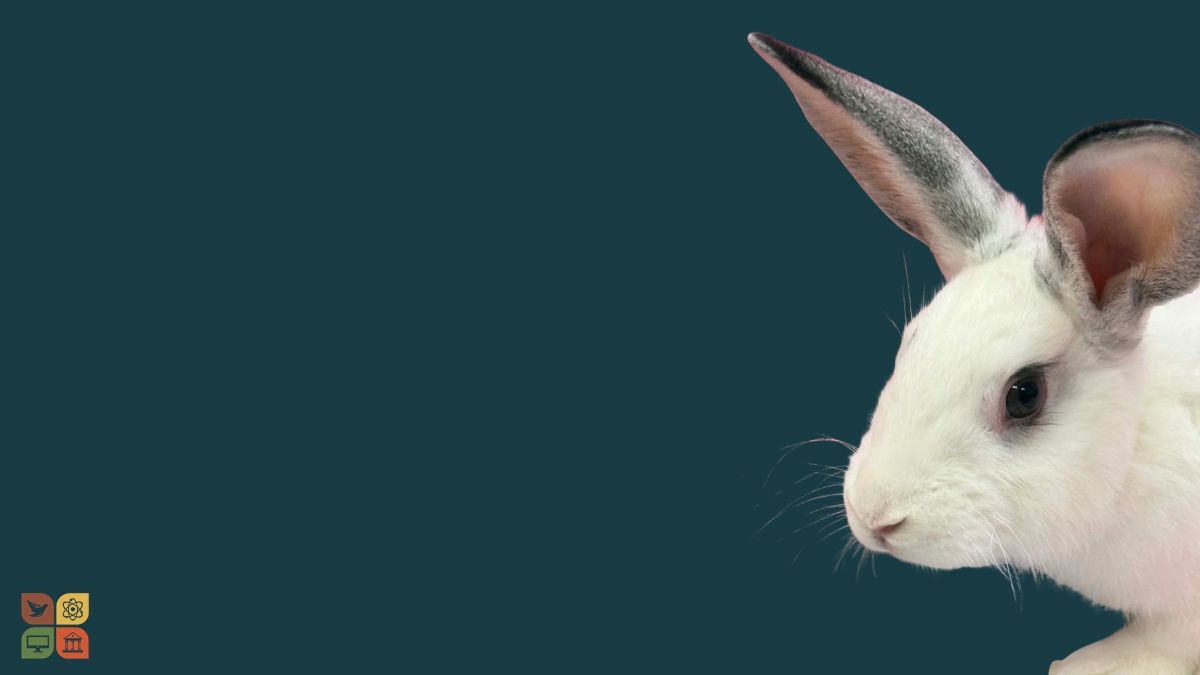
It’s possible that Dinky, a disabled bunny with soft white hair, long lashes, gray-tipped ears and a little stripe running down his back, will move us closer to that goal.
That’s because Katie is working on Dinky’s Law, a campaign to ban stores from selling rabbits in Missouri. Stay tuned here for updates and ways to help.
A little bit more on the rescue: Dolly’s Dream Home is named after Dolly, the OG rescue, who is named after Dolly Parton, of course. Dolly the rabbit was being used as a breeder. She lived in a wire cage for six years, and her babies were each taken away to be butchered.
To support the Dream Home, Katie runs a bunny-supply store – no breeders welcome. Dolly’s Dream Store maintains a food pantry and offers services like grooming, bunsitting and a ton of bun education, including free online classes for anyone with rabbits in their lives.
The Dream Store is incredibly pink, by the way. It’s like the Barbie Dreamhouse, but better. It’s fun and bright, keeping the vibe high in the often devastating world of rescue. Rabbits see mostly blues and greens, Katie told me, so the pink is for us.
Back to Dinky.
Katie says he will probably crawl for the rest of his life. He doesn’t need wheels, but there is no correction for his disability. She’s going to start him on physical therapy to build his muscles, which are underdeveloped because he was confined to such a small space.
But he’s doing a lot better already. She brought him to the Dream Store to hang out with everyone. At one point, he was lounging in a pen in the event room.
The next thing she knew, Dinky came crawling by the front counter. He had climbed out of his pen and was off on an adventure!
Katie says he doesn’t even flinch anymore when you move to pet him. She imagines he never felt secure because he had nowhere to hide in that cage at Rural King. But now he’s like a Walmart greeter.
Will she keep him or will he be adoptable?
“We don’t have sanctuary rabbits here,” Katie said. “We think there’s a family out there for everyone. If we started keeping bunnies, we wouldn’t be able to give them all the attention they deserve.”
I asked Katie why she devotes her life to rabbits.
She told me that when she was little, she had a bunny named Millie.
“I loved her so much, but she lived in a cage with a water bottle, and she died of uterine cancer because she wasn’t spayed. There was so much I didn’t know.”
Later, in college, she rescued Elvis, a rabbit who was going to be eaten. “I had no idea about how many got dumped, how many needed help, or how few regulations there were,” she said. “I asked who could help, and then, uh-oh, here we are. It snowballed.”
Well, I’ll take every bit of pink cheer and witty sarcasm Katie brings to the terrible world of pet rabbits.
Rabbits are bred into servitude. They spend their days in cages in stores and kids’ bedrooms and backyards. They suffer unwanted touch, dangerous mishandling, poor nutrition and improper housing. They are plagued by loneliness and illness. They are often set loose outside, which is a death sentence.
Sometimes they are stuffed into cardboard boxes and left by dumpsters. This is what happened at Dolly’s Dream Store, the same week Dinky arrived.
Someone abandoned four baby rabbits in a box by the store’s dumpster. The babies are doing well, but if Katie had not taken the trash out that night, they might have died.
Please visit Dolly’s Dream Home Rabbit Rescue to learn about the rescue and the store, find their social media links and follow Dinky’s story with me.