
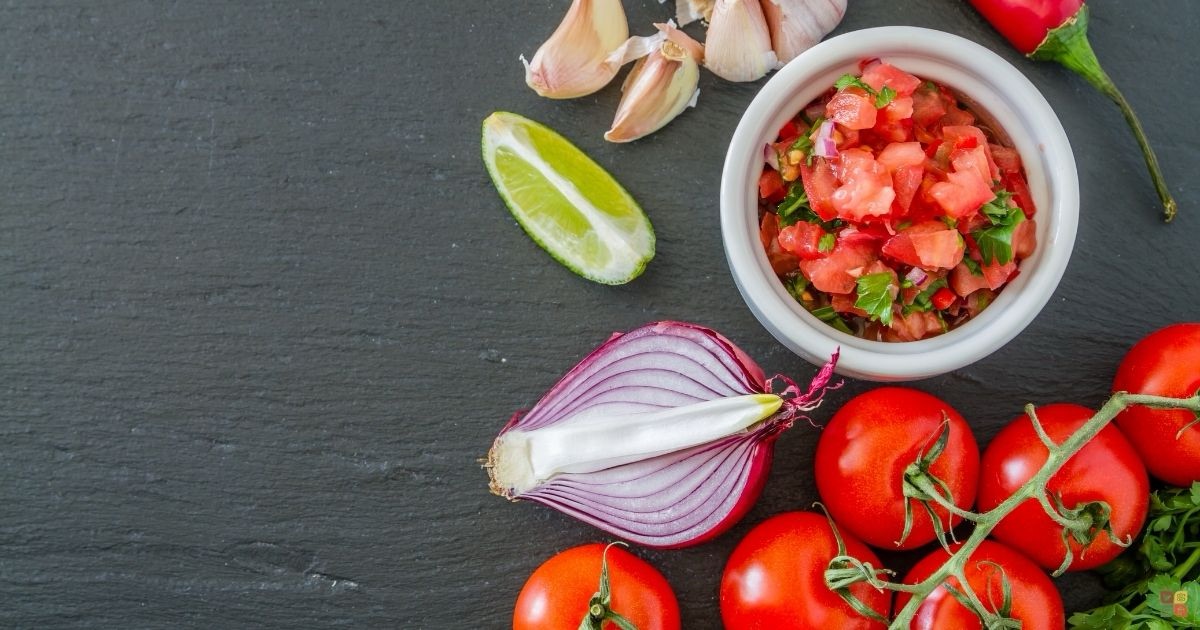
There is a particular kind of satisfaction you get from eating something you grew and/or made yourself.
Maybe it’s a tomato that finally turned the exact shade of red you’ve been watching for all week. Maybe the jalapeños have been multiplying faster than you know what to do with them. Maybe there’s cilantro hanging on despite the weather, or an onion waiting in the pantry that technically came from the grocery store but is about to join the party anyway.
Homemade salsa is wonderfully forgiving that way.
You don’t need a perfectly planned garden, a huge harvest, or even a garden at all. This is one of those recipes that works just as beautifully after a walk through the produce section.
Fresh Garden Salsa
This makes roughly 3 cups, depending on the size of your vegetables.
Ingredients
- 4–5 ripe Roma or garden tomatoes
- 1 onion
- 1 jalapeño
- 1 small handful fresh cilantro
- 1 clove garlic
- Juice of 1 lime
- ½ teaspoon salt, plus more to taste
- ¼ teaspoon ground cumin, optional
- Freshly ground black pepper, to taste
For more heat, leave some or all of the jalapeño seeds and membrane intact or add a second pepper. For a milder salsa, remove them completely.
And if your garden gives you something slightly different? Use it. Cherry tomatoes, heirlooms, a serrano pepper, extra garlic, a little sweet pepper — salsa doesn’t demand perfection.
Make It
Start by washing your produce well.
Core the tomatoes and roughly chop them. Finely dice the onion and jalapeño, mince the garlic, and chop the cilantro.
For a chunky salsa, combine everything by hand in a bowl. Add the lime juice, salt, cumin if using, and black pepper, then stir well.
For something closer to restaurant-style salsa, add the ingredients to a food processor and pulse just a few times. Stop before it becomes completely smooth — unless completely smooth happens to be how you like it.
Taste.
That part matters. Taste it.
Need more salt? Add it. More lime? Squeeze it in. Want another jalapeño? Go for it. Too spicy? Add another tomato.
Then, if you can stand to wait, refrigerate the salsa for about 30 minutes before serving. Giving everything a little time together makes a surprisingly big difference.
When the Garden Decides the Recipe
One of my favorite things about garden cooking is that sometimes the recipe isn’t really the starting point.
The garden is.
You look at what’s ripe, what’s abundant, and what needs to be used today — and dinner begins there.
Salsa might be one of the easiest ways to practice that kind of cooking. A few tomatoes and peppers can become something completely different in ten minutes, without requiring expensive ingredients or anything particularly complicated.
And if you didn’t grow a single ingredient yourself? That doesn’t make this any less homemade.
Grab the tomatoes that look best. Smell the cilantro. Pick your pepper according to your tolerance for chaos. Take it home and make something fresh.
A Quick Produce-Safety Reminder
If you’re buying ingredients rather than picking them from your own garden, take a moment to check current food recalls before you shop or cook — particularly when recalls involving fresh produce are active.
The FDA maintains an updated Recalls, Market Withdrawals & Safety Alerts list where you can search current notices by product or company. Food recalls can change quickly, so checking the active list is much more useful than relying on an old article or social-media post.
And remember: a recall doesn’t necessarily mean every tomato, pepper, onion, or other item of that type is unsafe. Check the specific brand, grower, distributor, package information, dates, and locations included in the notice before deciding what to do.
A few seconds of checking can save a lot of worry — and then you can get back to the important question:
Chips, tacos, burritos…or eating the salsa directly from the bowl?

