
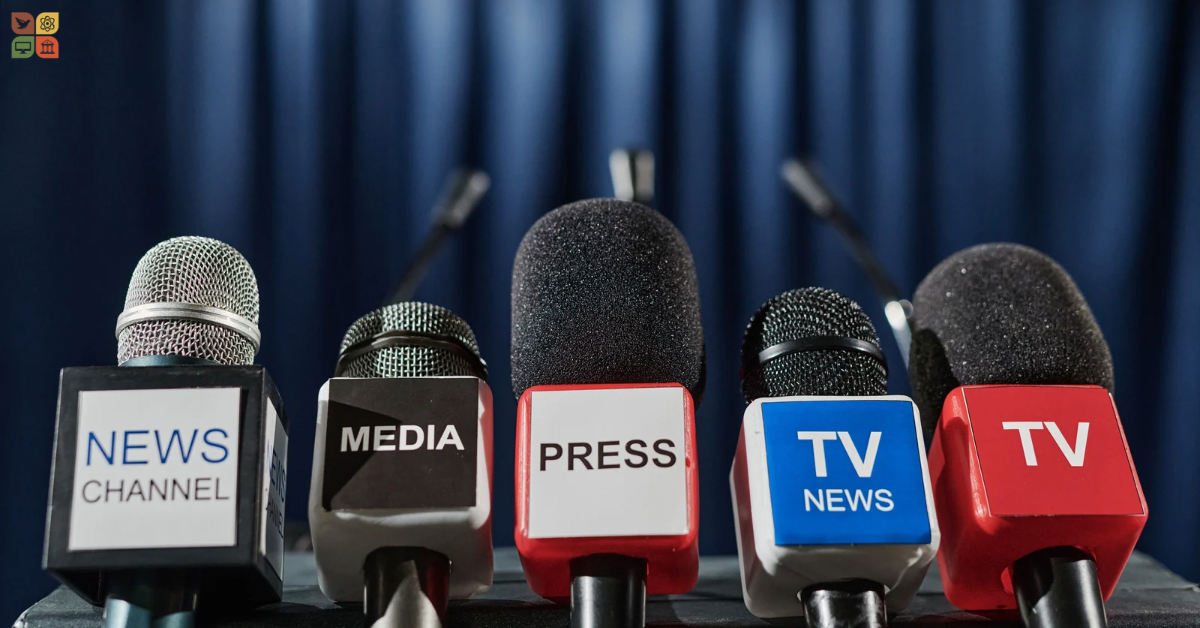
In democratic societies, threats to press freedom are often imagined as overt—arrests, censorship laws, or violent crackdowns that clearly signal a break from democratic norms. These are the moments that draw international attention and public alarm. But more often, the erosion of a free press happens in quieter, less visible ways: through restricted access, selective cooperation, and the gradual normalization of pressure that reshapes the boundaries of what journalism can safely pursue.
These shifts rarely announce themselves as crises. They unfold incrementally, embedded within routine interactions between institutions and the press. Yet over time, they redefine the conditions under which journalism operates—and, ultimately, what the public is permitted to see, question, and understand.
The Power of Access
Journalism, at its core, depends on access—not just to information, but to proximity. Access to officials who make decisions, to briefings where narratives are framed, and to spaces where accountability can be demanded in real time.
But access is not a passive condition. It is actively managed, and in many cases, strategically distributed.
In recent years, concerns have grown around how access is granted and withheld:
• Reporters excluded from key briefings or limited in follow-up opportunities
• Independent or critical outlets receiving less visibility or fewer invitations
• Journalists experiencing subtle distancing after publishing unfavorable coverage
Individually, these actions may appear procedural or even incidental. Institutions can justify them as logistical, strategic, or routine. But when viewed collectively, a pattern begins to emerge—one in which access is no longer simply a function of journalistic presence, but a variable shaped by compliance, tone, and perceived alignment.
And once access becomes conditional, it begins to influence behavior in ways that are rarely acknowledged outright.
When Access Becomes Leverage
The relationship between journalists and institutions has always contained a degree of tension. That tension is, in many ways, necessary—it is what drives accountability. But when access becomes a form of leverage, that tension shifts into something more restrictive.
Journalists are placed in a position where every question carries a secondary calculation: Will this jeopardize future access?Will pushing further close a door that may not reopen?
This dynamic does not require explicit warnings or formal consequences. It operates through anticipation, through an awareness of how quickly access can narrow once a line—often undefined—is perceived to have been crossed.
Over time, the effects are cumulative and often subtle:
• Questions become more measured, less confrontational
• Framing narrows to what is more likely to be tolerated
• Official narratives begin to occupy more space, not necessarily because they are accepted, but because they remain accessible
This is not a failure of individual integrity. It is the predictable outcome of a system in which access is unevenly distributed and quietly contingent.
The Rise of Informal Pressure
Beyond access, pressure on journalists increasingly takes forms that are difficult to categorize, regulate, or even fully document.
Public criticism from powerful figures can single out individual reporters, framing them as adversarial rather than inquisitive. In an era of digital amplification, such criticism can quickly cascade into widespread harassment, blurring the line between political rhetoric and public intimidation.
At the same time, legal and institutional ambiguities—whether related to protest coverage, source protection, or emerging legislation—create an environment where the boundaries of acceptable reporting feel uncertain. Journalists are left to interpret not only what is legally permissible, but what is pragmatically safe.
These pressures rarely exist in isolation. They intersect, reinforce one another, and contribute to a broader climate of caution. The result is not necessarily silence, but hesitation—a recalibration of risk that shapes how stories are pursued, framed, and, in some cases, whether they are pursued at all.
Why This Matters
A free press is often defined in legal terms: the absence of formal censorship, the protection of speech, the existence of independent outlets. But legal freedom does not always translate to functional freedom.
The more relevant question is not simply what journalists can publish, but what they are realistically able to investigate, ask, and sustain without consequence.
When the cost of pursuing certain lines of inquiry becomes too high—whether through loss of access, reputational targeting, or professional instability—self-censorship can emerge not as a choice, but as an adaptation.
The outcome is not immediately visible, but it is profound:
• Information becomes narrower in scope
• Perspectives become more uniform
• Accountability becomes more difficult to maintain
And the public, often without clear indication, receives a version of events shaped as much by structural pressure as by editorial judgment.
The Role of the Public
Press freedom is not sustained by journalists alone. It exists within a broader ecosystem that includes the public, institutions, and the economic realities that support media.
A public that values press freedom must also recognize how it is eroded—not only through overt suppression, but through the quieter mechanisms that reshape incentives and boundaries. Supporting independent journalism, engaging critically with media sources, and resisting the dismissal of critical reporting as adversarial are all part of maintaining that ecosystem.
Because when access becomes leverage, and pressure becomes normalized, independence is no longer just a principle—it becomes a safeguard.
A Watchful Eye
Press Freedom Watch exists to observe these shifts—not only when they are visible, but when they are subtle.
Not only when they provoke immediate concern, but when they begin to feel routine.
Because the most significant changes to a free press are rarely introduced as turning points. They are absorbed gradually, becoming part of the background against which journalism operates.
And by the time they are widely recognized, they are often already embedded.
 The Humane Herald