
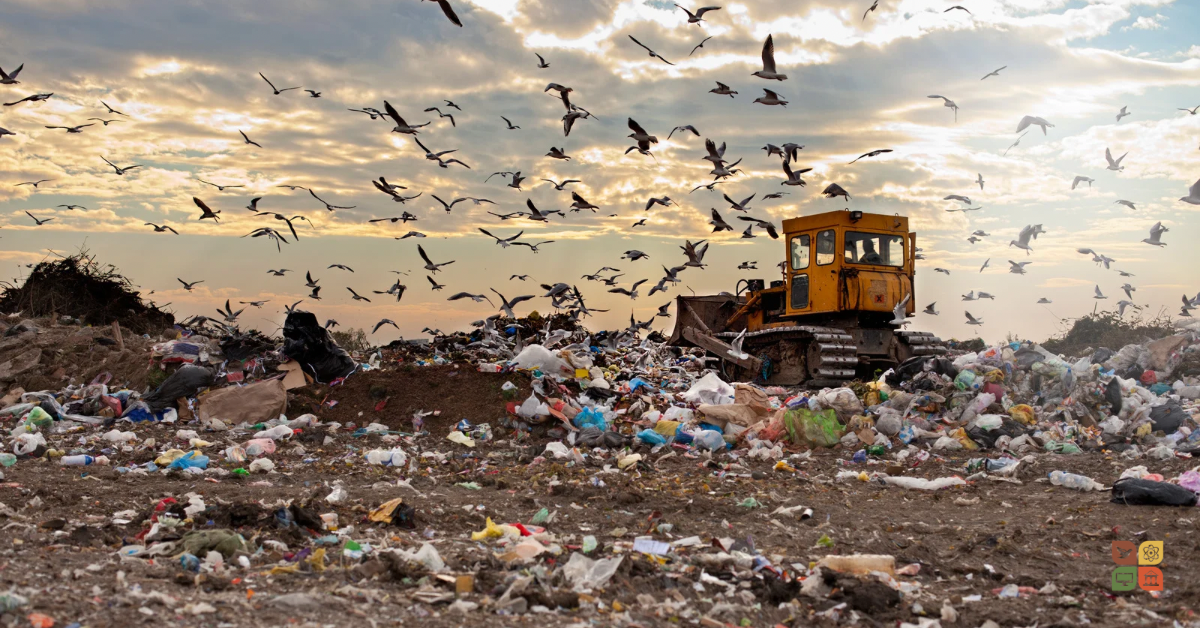
As holiday shopping surges to its peak, the United States enters its most waste-intensive stretch of the year — a season that generates tens of millions of extra tons of trash, drives up factory-farming demand, and accelerates the environmental and ethical crises already pushing the planet past its limits. The December gift economy is often framed as tradition and joy, yet its consequences fall hardest on ecosystems, workers, and nonhuman species whose suffering remains invisible behind the checkout counter.
The Scale of Holiday Waste
From Thanksgiving to New Year’s Day, Americans produce 25% more waste than during any other period of the year — an estimated 1 million extra tons per week. Wrapping paper, plastic packaging, food scraps, and impulse-buy items destined for landfill all compound the climate impact of an already strained waste system. Holiday returns worsen the problem: nearly 40% of returned gifts end up discarded, not reshelved.
For wildlife, this means increased habitat pollution, rising ocean plastics, and greater pressure on already-collapsing ecosystems. For future generations, it means inheriting depleted soils, unstable climate systems, and rising extinction rates — all fueled, in part, by a month of unchecked consumption.
The Hidden Driver: How Shopping Season Reinforces Factory Farming
The December gift cycle does not only generate garbage — it drives up slaughter numbers.
Holiday dinners, parties, corporate gatherings, school events, and travel meals collectively spike demand for meat, dairy, and eggs. This surge intensifies:
• Winter slaughter schedules
• Forced breeding and confinement cycles
• Transport stress on animals during severe weather
• Greenhouse gas emissions from feed, manure, and distribution
In other words: the “season of giving” becomes one of the highest-impact months of systemic harm to nonhuman animals.
Even products that aren’t food — leather accessories, wool items, down jackets — tie gift shopping directly to the exploitation pipeline.
Why Ethical Gifting Is No Longer Optional
The ethical gifting movement isn’t just a trend; it’s a response to planetary limits.
Ethical gifting recognizes that every purchase is a vote for the future — one that either reinforces faunacide and ecological collapse or helps dismantle it.
Choosing differently matters because:
• Ethical gifts break cycles of extraction and suffering.
• Money shifts toward vegan, fair-trade, or regenerative businesses.
• The cultural norms around gifting begin to evolve.
• People receive not just an object, but a message: “I choose compassion.”
In a time when governments and corporations delay action, individual ethical practice becomes both activism and culture-shifting.
Sustainable, Compassionate Alternatives
To honor the season without fueling destruction, consider gifting:
1. Experience-Based Gifts
No waste, no packaging, no exploitation.
Ideas: classes, museum passes, concert tickets, handmade “favor coupons,” virtual workshops.
2. Vegan, Cruelty-Free Goods
Plant-based treats, eco-friendly candles, ethically sourced soaps, vegan leather accessories, upcycled fashion.
3. Zero-Waste or Low-Waste Options
Refill kits, reusable items, compostable goods, thrifted treasures, handmade crafts.
4. Donations in Someone’s Honor
Animal sanctuaries, climate organizations, community aid groups.
A gift that helps the world, not clutter it.
5. “Gifts of Time”
Babysitting hours, home-cooked meals, snow shoveling, digital help — compassion made practical.
Ethical Gifting as Activism
When millions choose compassion over consumption, holiday culture changes.
Ethical gifting:
• Reduces demand for animal exploitation
• Cuts waste and emissions
• Strengthens eco-conscious businesses
• Reframes the holidays around care, not clutter
• Signals to policymakers that culture is shifting
Every ethical gift interrupts a destructive system — and builds a more humane one.
Closing
The holidays do not need to be synonymous with excess. They can be a season of intention, restoration, and responsibility. Ethical gifting is more than a trend; it is a direct answer to the planetary emergency unfolding in real time. The question facing us this December is simple:
If giving is supposed to reflect our values, what — and whom — are we honoring when we choose the unethically made?
 The Humane Herald