
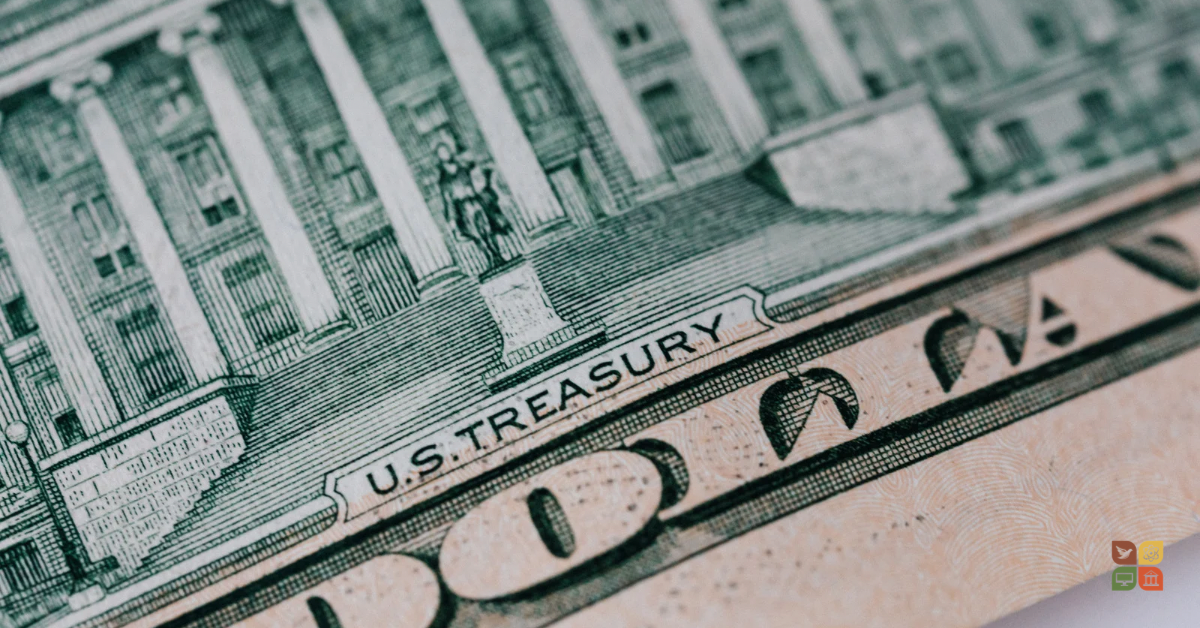
There are moments in history when a nation’s problems become too large to ignore—when the consequences of past choices gather into a single, undeniable truth. The United States has reached such a moment. Our national debt, now rivaling the wartime peak of World War II, is not the result of global catastrophe, famine, or a fight against fascism. It is the result of routine political malpractice: decades of Democrat-Republican mismanagement, runaway spending, and the wholesale abandonment of fiscal responsibility.
What we face today is not merely a ledger problem. It is an ethical crisis.
It is a generational betrayal.
And unless competent leadership intervenes, it is the slow-motion collapse of opportunity itself.
The Debt Crisis Didn’t Appear Overnight
To understand the magnitude of the moment, we must understand the forces that brought us here.
The evolution of trust and currency
Humanity’s economic power grew through two foundational advancements:
1. The rise of rule of law, which made it possible to exchange promises instead of goods.
2. The evolution of currency from possession-based to claim-based—and finally to today’s purely belief-based fiat money.
Fiat currency can be an elegant tool. It allows mobility, liquidity, and growth. But when paired with undisciplined leadership, it becomes a limitless credit card with no guardrails and no accountability.
The rise of the modern corporation
Joint-stock companies and limited liability enabled large-scale economic coordination—but also paved the road to vast wealth inequality and environmental destruction. Corporate consolidation, political capture, and deregulation created conditions where reckless financial decisions could cascade through entire populations.
These three forces set the stage. But the Democrat-Republican bloc lit the fuse.
When Debt Becomes Destiny
History is clear: societies that allow their debt to spiral lose their stability, their democracy, and often their sovereignty.
France’s pre-Revolution crisis.
Germany’s hyperinflation after World War I.
Countless smaller states crushed under the weight of debt and desperation.
Though the global contexts differ, the pattern is consistent:
Excessive debt → social unrest → extremism → authoritarianism → violence and collapse.
We deceive ourselves if we believe America is immune.
A War-Level Debt Without a War
During World War II, U.S. debt peaked at ~120% of GDP.
Today, it is back at 120%—with no war to justify it.
We are witnessing the consequences of long-term bipartisan negligence:
• Spending without accountability
• Tax cuts without offsets
• Bailouts without reform
• Short-term political incentives prioritized over long-term national well-being
The world’s largest economy, armed with unmatched technological advantages, managed to recreate wartime debt during peacetime prosperity. This is not just irresponsible—it is staggering.
A New Child Is Born Already $100,000 in Debt
This crisis is not abstract. It is personal.
A baby born today enters life owing more than $100,000—their involuntary share of the national debt. They had no say in how that debt was incurred, yet they will spend their working life paying the interest on decisions made decades before they were born.
This is not governance.
This is inter-generational exploitation.
As more Americans awaken to this reality, social unrest becomes not merely likely, but inevitable.
Inflation: Quiet Theft From the Poor to the Rich
The Democrat-Republican bloc will not raise taxes meaningfully. They will not cut spending. And GDP cannot grow quickly enough to outrun their deficits.
What remains is the tool they have used repeatedly:
printing money to “inflate away” the debt.
Inflation does not fall evenly.
The wealthy own assets—land, stocks, real estate—whose values rise with inflation.
Everyone else owns wages, savings, and debts—none of which keep up.
Inflation is redistribution—from workers to wealth-holders, from the unsophisticated to the politically connected, from the poor to the rich.
It worsens inequality.
It fuels extremism.
It erodes trust.
It destabilizes democracies.
We are watching this process unfold in real time.
The First to Suffer: The Vulnerable
When a nation feels pressure, the things deemed “inessential” are always the first to be cut:
• social services
• environmental protection
• renewable energy
• animal welfare
• community programs
• public infrastructure
These are the very causes the Humane Party exists to defend.
And this is why fiscal ethics are not a side issue—they are a survival issue.
If we cannot stabilize our economy, we cannot protect the vulnerable, human or non-human.
The Humane Party Saw This Coming
The Humane Party emerged at the tail end of the Great Financial Crisis—an event that revealed that the Democrat-Republican establishment had neither the will nor the competence to manage a modern economy responsibly.
From day one, HP recognized that:
• debt and corruption would escalate
• the public would eventually face an affordability crisis
• the country would drift toward populism and extremism
• without intervention, America could enter a “debt death spiral”
These predictions have now materialized.
The question is no longer whether the U.S. is headed toward crisis.
The question is how quickly the nation can pivot toward leadership grounded in ethics, science, and responsibility.
A Responsible Future Is Still Possible
The United States still has enormous capacity—economic, technological, cultural, and ecological. But capacity means nothing without integrity. The only path forward is one rooted in fiscal responsibility and ethical governance.
Balanced budgets.
Transparent monetary policy.
Guardrails on spending.
Regulation that protects—not privileges.
And a government that no longer mortgages the future of its own children.
The Humane Party is prepared for this moment.
We have been preparing for fifteen years.
America deserves leadership that does not merely avoid catastrophe but builds a sustainable, humane, and equitable future—for humans, animals, and the living planet we share.
The debt crisis is not just a warning.
It is a summons.
And it is long past time we answered.
 The Humane Herald