
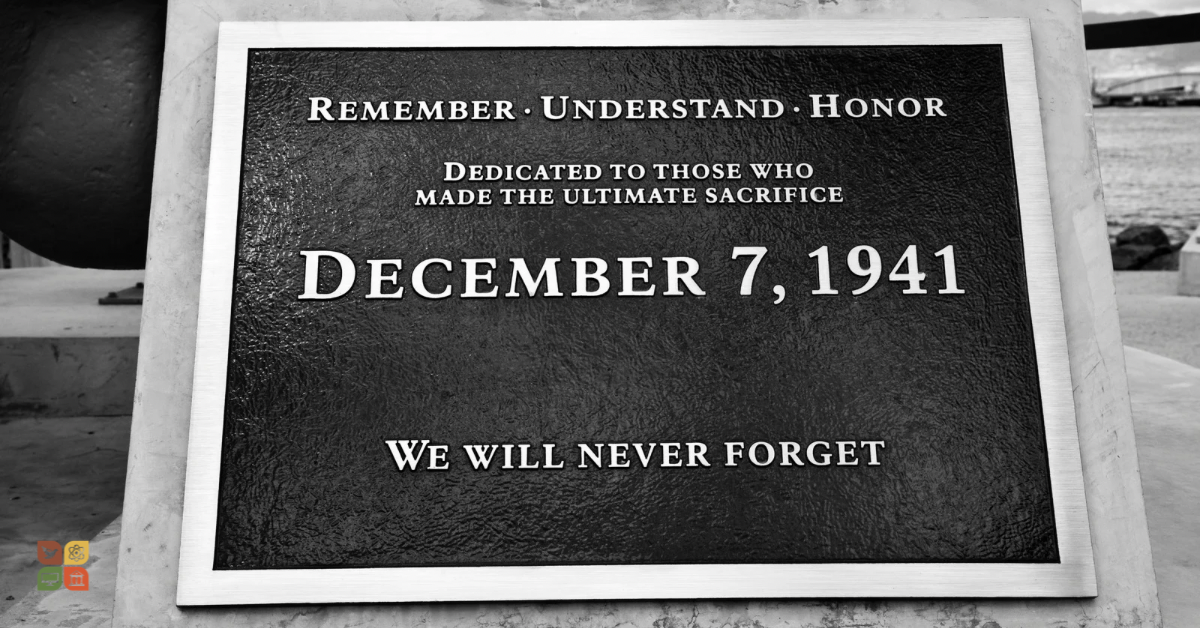
On December 7, remembrance must mean more than ritual—it must mean confronting the systems that make war inevitable.
December 7 is etched into American memory as the day the world changed. The attack on Pearl Harbor in 1941 marked the United States’ entry into World War II, a conflict that reshaped the global order and left tens of millions of human and nonhuman beings dead. For generations, the day has been framed through a narrow patriotic lens: heroism, sacrifice, and national resolve.
But remembrance without truth becomes mythology.
And mythology, when unchallenged, becomes permission.
Today, as the nation engages once again in symbolic tributes, the Humane Herald offers a different reflection—one rooted not in military pride, but in ethical clarity. Pearl Harbor should not be invoked to glorify war. It should be invoked to understand the catastrophic human, environmental, and moral consequences of a global order built on violence, competition, and control.
The Real Cost of War: Beyond the Battlefield
War is often presented as a series of strategic decisions, battles, and treaties. Left out of the narrative are the beings—human and nonhuman—whose lives and habitats are destroyed in minutes and forgotten within years.
The attack on Pearl Harbor killed more than 2,400 people. But the broader Pacific War that followed killed millions across East Asia and the Pacific Islands and devastated entire ecosystems. Forests burned. Reefs shattered. Wild species vanished under bombing, occupation, and famine. Oceans filled with metal, oil, chemicals, and radioactive waste.
War has never been a human-only event.
It is a planetary event.
Yet our memorials rarely reflect this reality. Our textbooks rarely show the environmental collapse or the species destroyed. Our political leaders rarely acknowledge the long-term ecological wounds still bleeding beneath the surface.
Emergency Powers: Crisis as an Excuse for Control
Pearl Harbor did not only launch a military response—it launched a political one. In the days and months after the attack, the U.S. government expanded its power dramatically, invoking “national security” to justify policies that would later be recognized as grave violations of civil rights.
Most notoriously, over 120,000 Japanese Americans—most of them U.S. citizens—were incarcerated in camps under the guise of wartime necessity. Businesses were seized, homes confiscated, families torn apart. This was not an unavoidable outcome of war; it was a choice made under the influence of fear, racism, and political opportunism.
These same patterns repeat today:
• Protesters charged as “extremists.”
• Whistleblowers labeled threats to national security.
• Indigenous water protectors surveilled and criminalized.
• Animal rights activists prosecuted under “terrorism” laws.
History is not repeating—it is continuing.
Militarism Over Humanity
For decades, the U.S. has prioritized military spending above public well-being. Even as hunger rises, climate disasters intensify, and ecosystems collapse, the Pentagon receives billions more each year while social, environmental, and humanitarian programs face cuts or political gridlock.
We commemorate sacrifice while sacrificing the living.
We remember past attacks while ignoring the daily violence of poverty, homelessness, police brutality, and environmental destruction at home.
We mourn what was lost on December 7, 1941—while participating in the systems that guarantee suffering on December 7, 2025.
An Honest Remembrance
Rethinking Pearl Harbor does not diminish the pain or courage of those who lived through it. It deepens it. It recognizes that war is not a moment—it is a machine. A machine built on the belief that domination solves conflict, that violence produces peace, and that the lives of some matter more than the lives of others.
A Humane Party vision rejects these premises outright.
We honor the victims of Pearl Harbor by refusing to repeat the logic that led to their deaths.
We honor history by learning from it—not sanitizing it.
We honor the future by refusing to accept war as inevitable.
Toward a Truly Safe World
A humane world is not one in which we build bigger weapons.
It is one in which we build systems that make weapons irrelevant.
That means:
• Demilitarizing foreign policy
• Rejecting war-driven economies
• Centering diplomacy, justice, and climate stability
• Protecting civilians, animals, and ecosystems from state violence
• Investing in peace, not punishment
• Replacing patriotic myth with moral truth
December 7 should not be a day of martial pride.
It should be a day of collective responsibility.
Remember the losses.
Reject the narrative that glorifies them.
Choose a world in which remembrance does not require repeating the past.
 The Humane Herald