
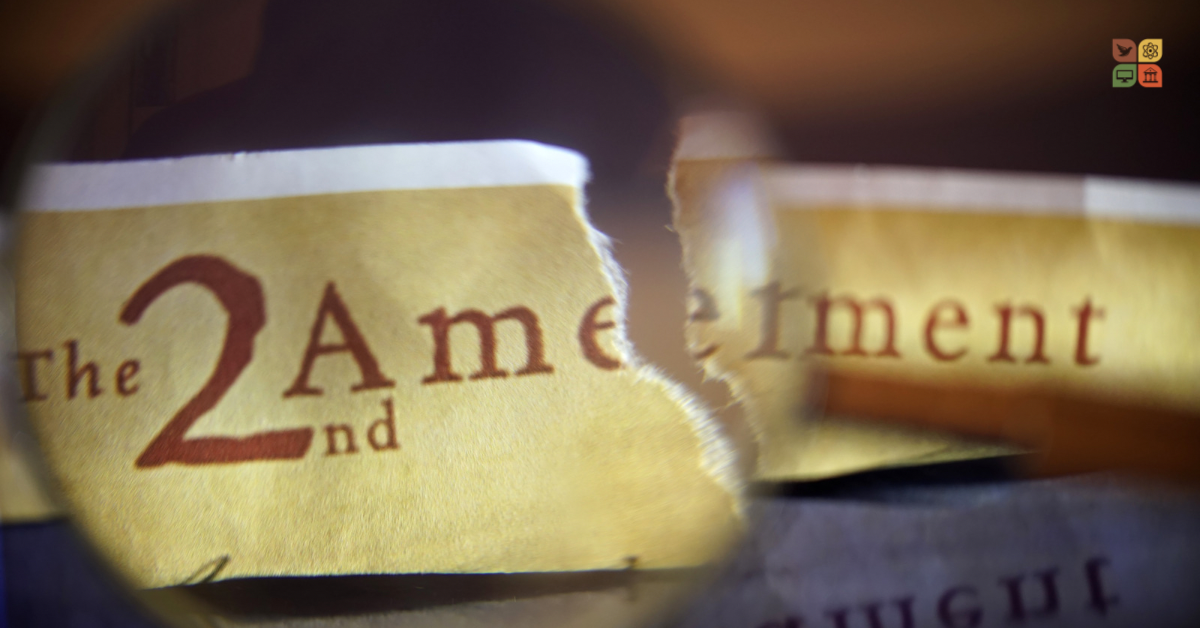
From Muskets to Militias
When the Second Amendment was ratified in 1791, the United States was a fragile experiment in democracy. Its text — “A well regulated Militia, being necessary to the security of a free State, the right of the people to keep and bear Arms shall not be infringed” — reflected a nation wary of centralized power. Citizens were expected to serve as militia members, armed with single-shot muskets and flintlock pistols, to defend their states against both foreign invaders and domestic tyranny.
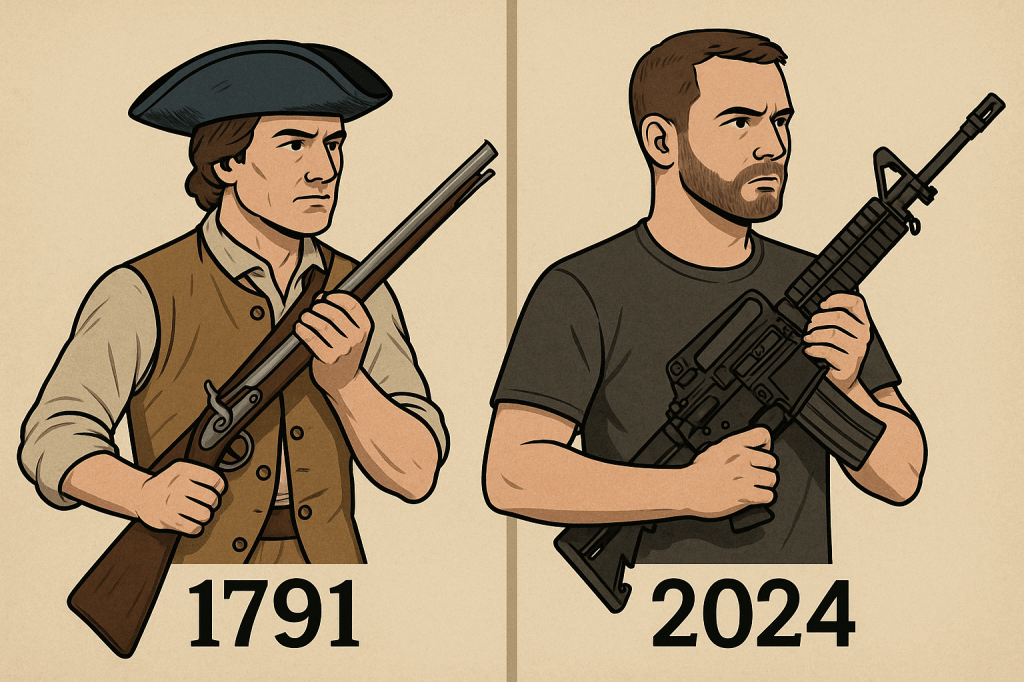
The Founders, shaped by their recent struggle against the British crown, distrusted permanent armies and believed an armed citizenry was a safeguard of liberty. Yet the weapons of their era were rudimentary compared to today’s semi-automatic rifles and high-capacity magazines.
The Legal Shifts
For much of U.S. history, courts interpreted the amendment as tied to collective defense — a state militia right rather than an individual guarantee. This interpretation began to shift in the late 20th century, propelled by advocacy groups reframing the Second Amendment as a matter of personal freedom.
•United States v. Miller (1939): Upheld federal restrictions on sawed-off shotguns, tying legality to militia relevance.
•District of Columbia v. Heller (2008): A turning point. The Supreme Court struck down D.C.’s handgun ban, affirming an individual right to keep firearms for self-defense in the home.
•McDonald v. Chicago (2010): Incorporated that right against the states.
•NYSRPA v. Bruen (2022): Expanded gun rights further, ruling that laws must be consistent with the “historical tradition” of firearm regulation, dismantling New York’s restrictions on concealed carry.
These rulings transformed the Second Amendment into a robust shield for personal gun ownership, reshaping the nation’s legal and political landscape.
A Nation Divided
The amendment is now a fault line in American politics and culture:
•Gun rights advocates argue that firearms protect against crime, ensure self-defense, and guard against government overreach.
•Gun control advocates highlight mass shootings, suicides, and the toll of gun violence, insisting that “well regulated” demands meaningful oversight.
Policy battles rage over background checks, red-flag laws, assault weapons bans, and the very definition of what “arms” the amendment protects.
The Contemporary Cost
The United States suffers more gun deaths than any other developed nation. Schools, churches, grocery stores, and nightclubs have all become sites of mass shootings. In the past year alone, tragedies from Uvalde to Buffalo reignited calls for reform, yet Congress remains gridlocked, tethered to competing interpretations of the Second Amendment.
Meanwhile, states diverge sharply: California enacts strict gun control laws, while Texas and Florida expand open-carry and permitless carry policies. The patchwork reflects a country unable to reconcile liberty with safety.
Reconciling Liberty and Responsibility
The muskets of 1791 are gone, replaced by AR-15s capable of firing dozens of rounds in minutes. The Founders could not have foreseen ghost guns, bump stocks, or 3D-printed weapons. What they did envision was a balance — liberty secured by responsibility.
“Well regulated” was never a throwaway phrase. Early militia laws required gun owners to register their weapons, report for inspection, and be trained. The idea that regulation is incompatible with the Second Amendment ignores the very history on which it stands.
An Ethical Lens
This debate is not only legal but ethical. A society must ask: What responsibility do we owe one another when rights collide with safety? At what point does the “right to bear arms” infringe upon a child’s right to come home from school, a congregation’s right to worship in peace, or a community’s right to gather without fear?
To cling to an absolutist view of the Second Amendment, without acknowledging the human toll, is to weaponize freedom against the very people it was meant to protect.
Conclusion: Choosing Our Future
The Second Amendment began as a safeguard for democracy. Today, it has become both a rallying cry and a stumbling block. The path forward demands honesty: recognizing the historical context, respecting constitutional rights, and embracing the ethical responsibility to protect life.
The muskets of 1791 are museum pieces. The Constitution, however, is not. It is a living document, one that demands interpretation in light of present realities. To preserve both liberty and safety, America must reckon with what “well regulated” means in the 21st century.
 The Humane Herald