
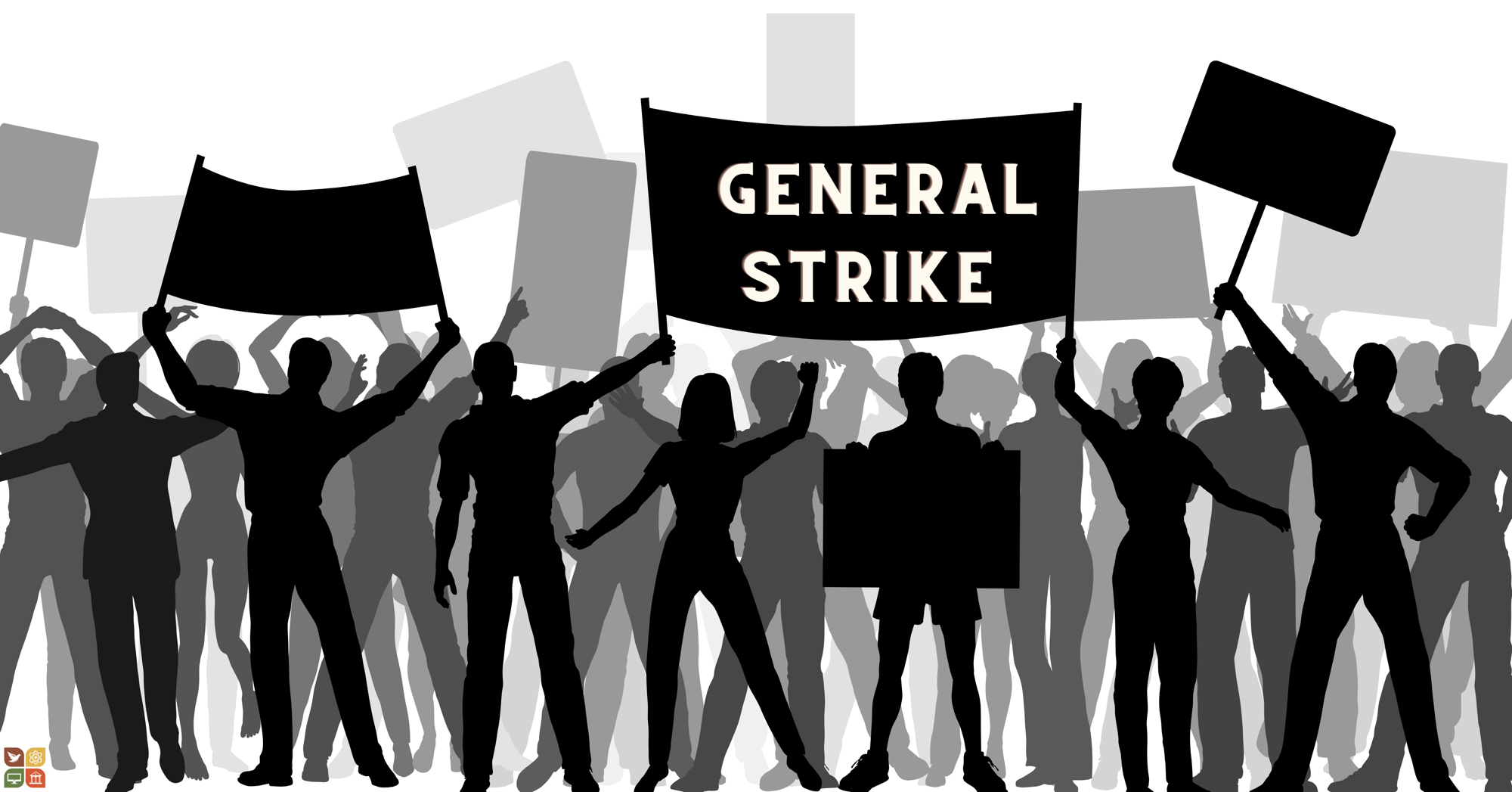
As murmurs of a nationwide general strike grow louder across activist circles and online organizing spaces, a fundamental question emerges: Are we witnessing the birth of a new movement – or the breaking point of a fractured nation?
Calls for a mass withdrawal of labor, spending, and social participation are surfacing in reaction to a rising tide of governmental violence, ecological collapse, and economic precarity. In encrypted chatrooms and grassroots forums, everyday people are asking whether the time has come to shut down business as usual – not just figuratively, but literally.
But beyond the hashtags and growing anger lies a deeper dilemma: what moral foundation must underlie such a powerful act of resistance? And what vision of society – if any – is waiting on the other side of disruption?
Why Now?
Several factors are converging to create fertile ground for the idea of a general strike:
- The increasing criminalization of dissent and protest.
- Escalating income inequality and worker exploitation.
- Inaction on the climate emergency while natural disasters displace thousands.
- Government rollbacks on human rights, animal protections, and civil liberties.
To many, these are not separate issues – they are symptoms of systemic rot. As one anonymous organizer in a recent discussion put it, “We’ve tried petitions, protests, and elections. Maybe it’s time we stop playing their game.”
The Historical Weight of a Strike
A general strike is not a social media trend – it’s a historical force. In past eras, such actions have toppled regimes, halted wars, and reshaped economies. But they have also backfired, leading to military crackdowns, movement fragmentation, and unintended suffering, especially for the most vulnerable.
Unlike a protest or boycott, a general strike entails sustained refusal – of work, commerce, and sometimes even compliance with laws. It is a political tool that can either destabilize injustice or deepen chaos. Its moral weight demands careful consideration.
What Ethics Require
Any action that risks large-scale societal disruption must pass two fundamental tests:
- Is it grounded in nonviolence?
A general strike cannot become a Trojan horse for violence, retaliation, or the targeting of marginalized groups. Ethical action requires discipline, compassion, and clarity of purpose. - Does it build something better—or just destroy what is?
Dismantling unjust systems is not enough. We must ask: What comes next? An ethical movement must articulate not only what it rejects, but what it affirms – equal rights for all beings, ecological restoration, true democracy, and systemic justice.
Without those foundations, a strike risks becoming reactive rather than revolutionary – cathartic but hollow.
Toward Constructive Withdrawal
If a general strike is to occur, its strength must come not from anger alone, but from the withdrawal of consent to a violent and unsustainable status quo. It must express not only defiance, but renewal.
That means:
- Uplifting alternative economic models rooted in compassion and cooperation.
- Organizing mutual aid and care networks that fill the gaps left by state or corporate retreat.
- Elevating voices that advocate for long-term, ethical vision – not just temporary disruption.
We must remember: the goal is not chaos, but conscience.
Final Thought
The allure of a general strike reflects real pain, righteous anger, and moral urgency. But power, when untethered from ethics, becomes just another form of domination.
If a general strike does emerge, its true measure will not be how much it disrupts – but how deeply it reflects the kind of world we’re willing to build in its place.
Have thoughts on this article or ideas for future features?
Email us at humaneherald.editor@gmail.com or visit humaneherald.org to connect.
 The Humane Herald