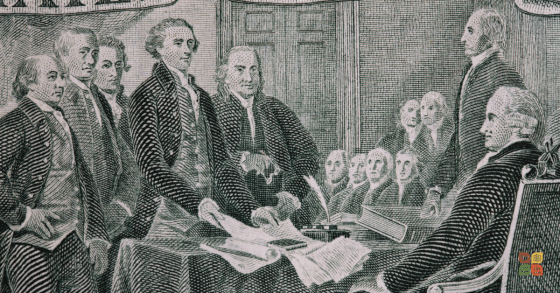
In Federalist No. 5, John Jay warns that separate American confederacies would drift toward rivalry and conflict — making unity essential for lasting peace.
Tag: constitutional history
Why a United America Is Safer From Foreign Ambition
In Federalist No. 4, John Jay explains that foreign nations are less likely to challenge a strong, unified America — making unity essential to preserving peace.
Peace, Safety, and the Strength of a Unified Nation
John Jay argues that a strong national government is essential for preventing conflict and protecting America’s peace — a truth that remains relevant in an interconnected world.
Unity as the Safeguard of Liberty
John Jay argues that America’s survival depends on national unity — a truth that remains as essential in the 21st century as it was in the founding era.
Choosing a Nation by Reason or by Force
Hamilton warns that the nation must choose whether it will be shaped by reasoned choice or by accident and force — a question that continues to define American democracy.
THE FEDERALIST PAPERS — SERIES I: THE NEED FOR UNION
Before the Constitution could be written, America had to answer a single question: can a nation govern itself by reason — or will it fall to accident and force?
Amendment X — The Balance of Federal and State Power
The Tenth Amendment defines how power is divided in the United States, reserving undelegated authority to the states or the people. As federal and state responsibilities evolve, the amendment remains central to debates over governance, rights, and constitutional structure.
Amendment VIII — When Punishment Becomes a Mirror
The Eighth Amendment protects against excessive fines, excessive bail, and “cruel and unusual punishments.” In a nation still debating what compassion means, the amendment remains one of the Constitution’s most important moral boundaries.