
Preparing With Care for People, Companion Animals, and Wildlife
We’re writing this from Lancaster County, Pennsylvania — but this storm does not belong to one place.
Over the next several days, a powerful winter system is expected to move across a wide stretch of the country, bringing a volatile mix of heavy snow, ice, freezing rain, high winds, and blizzard-like conditions. In some regions, it will arrive as snow piled high and drifting fast. In others, it will come quietly, coating roads, trees, and power lines in ice before anyone realizes how dangerous it has become.
Storms like this don’t just disrupt plans. They test systems. They expose vulnerabilities. And they affect far more than commuters and power grids.
They affect bodies — human and nonhuman alike.
This is not a piece about panic. It’s a piece about preparedness grounded in care. About recognizing that weather is never just weather — it’s a shared event, experienced unequally, by people, companion animals, and wildlife moving through the same cold air.
Preparing Ourselves: Slowing Down Before the Storm Forces Us To
For people across the storm’s projected path, the most important preparation is often the simplest — time.
Time to slow down.
Time to gather what’s needed.
Time to stay put when staying put is the safest option.
If you are able, prepare as though travel may become impossible for at least a few days. That means food that doesn’t rely on electricity, clean drinking water, medications, and basic emergency supplies. It also means charging devices, checking flashlights, and knowing how you’ll stay warm if power is lost.
But preparation isn’t only logistical. It’s relational.
Check in with neighbors. Especially elders, disabled folks, and anyone who may be isolated or reliant on electric medical equipment. Winter storms don’t just create emergencies — they compound existing ones.
If you must travel, assume conditions will change faster than forecasts can update. Ice doesn’t announce itself. Bridges and back roads are often the first to become dangerous. No errand is worth a life.
Companion Animals: Cold Is Not Just Uncomfortable — It’s Dangerous
For those of us who share our homes with companion animals, storms demand a shift in routine.
Animals feel cold differently than we do. Smaller bodies lose heat faster. Wet fur freezes. Paws burn on ice and salt. Anxiety rises with wind, pressure changes, and unfamiliar sounds.
During severe winter weather:
• Keep companion animals indoors whenever possible.
• Limit outdoor time to brief, supervised breaks.
• Dry paws and bellies thoroughly after going outside.
• Make sure food and water are plentiful — disruptions happen quickly in storms like this.
If an animal must be outdoors, shelter matters. A proper winter shelter is not decorative — it must be insulated, raised off frozen ground, protected from wind, and filled with dry bedding that retains heat.
And if you see animals left without protection during dangerous conditions, don’t assume someone else will intervene. Cold kills quietly.
Wildlife: Surviving the Same Storm Without Shelter or Supplies
Wild animals do not have the luxury of forecasts or stocked pantries.
They move through this storm with instinct alone — conserving energy, seeking cover, and taking risks when hunger outweighs caution. Ice makes foraging dangerous. Deep snow makes movement exhausting. Freezing rain can be especially devastating, locking food sources under layers of ice.
There are small, responsible ways humans can reduce harm:
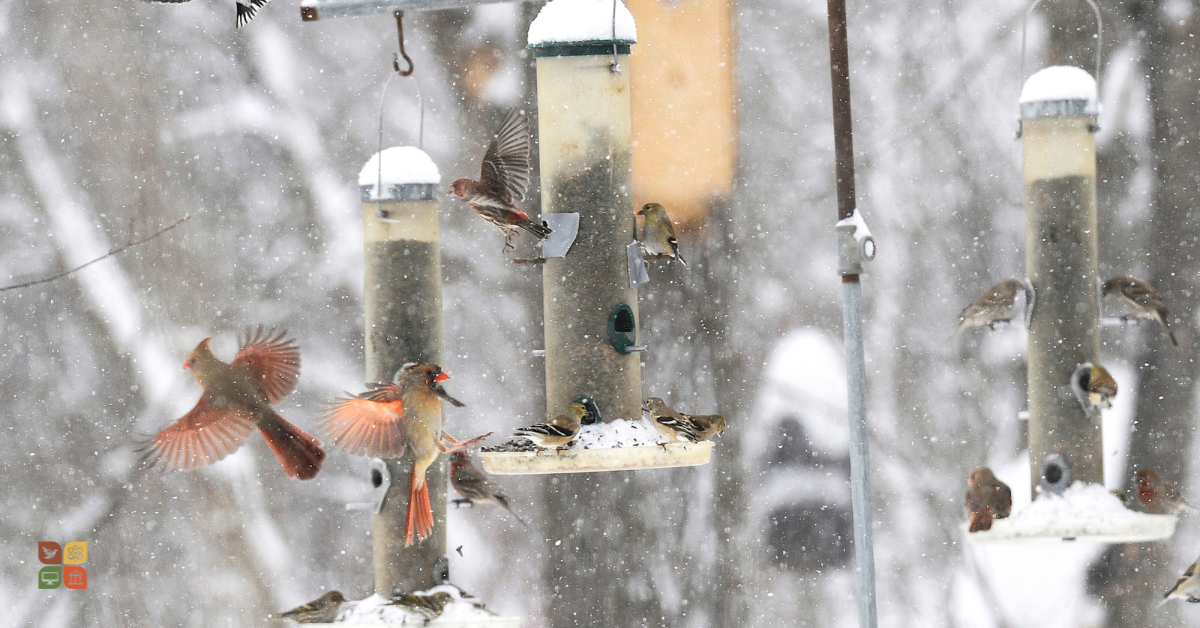
• Keep bird feeders stocked with appropriate, high-energy food.
• Provide unfrozen water when possible.
• Leave brush piles, fallen leaves, and natural shelter undisturbed — they are survival infrastructure.
At the same time, resist the urge to “rescue” wildlife that appears still or quiet. Many species conserve energy during storms and may look vulnerable while doing exactly what they must to survive. Interference, however well-intentioned, can cause more harm than good.
The goal is not control. It’s coexistence.
The Bigger Picture: Storms Are Becoming Harder to Weather
This storm is not an anomaly.
Ice storms reaching farther south. Blizzard conditions paired with rapid temperature swings. Infrastructure pushed beyond its limits. These patterns are becoming more frequent, more intense, and more uneven in their impacts.
Preparation, then, is not just personal. It’s ethical.
How we respond — who we check on, which lives we consider, what risks we normalize — tells us something about the kind of communities we are building in a changing climate.
Winter storms remind us that we are not separate from the systems around us. We share the cold. We share the risk. And we share responsibility for reducing harm where we can.
From Lancaster County to every place this storm may touch:
Slow down. Stay safe. Look out for one another — human and nonhuman alike.
Editor’s Note
The Humane Herald does not typically publish weather coverage for its own sake. We are doing so now because this storm represents more than a routine winter event.
Forecast models indicate a once-in-a-generation winter system, affecting an unusually wide geographic area with a rare combination of ice, heavy snow, blizzard conditions, and extreme cold. Of particular concern is that this storm is expected to impact regions that do not regularly experience winter weather of this severity — areas with less infrastructure, fewer resources, and lower preparedness for prolonged freezing conditions.
Events like this carry disproportionate risk for vulnerable populations: elders, disabled individuals, unhoused communities, companion animals, wildlife, and those living in regions unaccustomed to managing ice and deep snow at scale.
This article is offered not as sensational coverage, but as a care-centered response — one that recognizes weather as a shared ethical concern, not merely a logistical inconvenience. As climate-driven extremes become more frequent and less predictable, preparedness grounded in compassion becomes a matter of public responsibility.
 The Humane Herald