
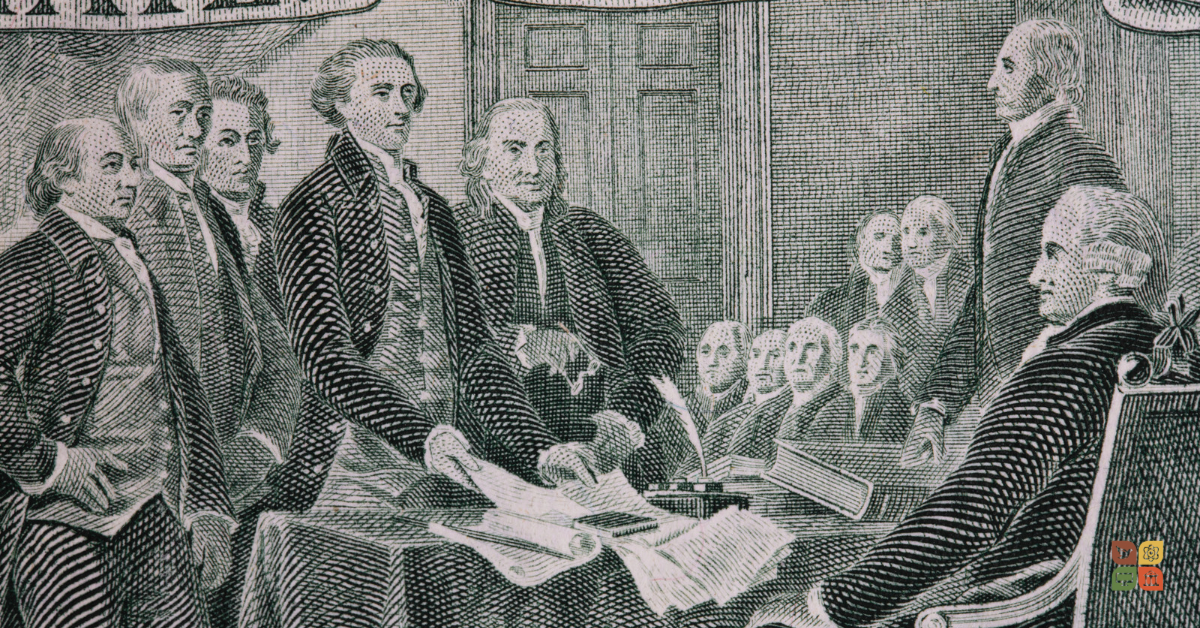
How the Founders Used Reason to Build a Nation Capable of Self-Government
Before America could adopt the Constitution, it had to answer a more fundamental question: can a nation choose its future through reason, or will it be shaped by accident, conflict, and force?
Introduction
The first fourteen Federalist Papers form the intellectual opening act of the American experiment. Written by Alexander Hamilton, James Madison, and John Jay under the shared name Publius, these essays explain why the thirteen states needed to unite under a stronger national government — and why the Articles of Confederation had left the fledgling country weak, unstable, and vulnerable.
In these papers, the authors argue that unity is not merely a political preference but a necessity: essential for peace, commerce, diplomacy, and basic survival. They warn that without federal cohesion, the states will fall into rivalry, economic retaliation, foreign manipulation, and even war. And they present a compelling alternative — a constitutional republic built on Enlightenment principles, reasoned governance, and the protection of rights.
For today’s readers, these essays offer more than historical insight. They reveal how the framers understood human nature, power, ethics, and the conditions required for a functioning democracy. They established a template for rational, ethical governance — one that resonates deeply with The Humane Herald’s commitment to reason, compassion, and structural reform.
What This Series Covers
Over the next installments, this series will explore:
• Federalist No. 1 — Setting the Stakes
Hamilton frames the entire project: Will governments arise from reasoned choice, or from accident and force?
• Nos. 2–5 — Jay on Unity and Foreign Threats
Why only a united nation can protect itself diplomatically and militarily.
• Nos. 6–7 — Hamilton on Interstate Conflict
What history teaches about neighboring states competing for power, territory, and economics.
• Nos. 9–10 — Madison on Factions and Republicanism
Why large, diverse republics best suppress factional violence and protect liberty.
• Nos. 11–14 — Commerce, Defense, and Practical Governance
How union expands economic strength and ensures national stability.
This series prioritizes clarity, accessibility, and ethical interpretation — showing how Enlightenment-era ideas created the structure we still rely on today.
Why This Matters Today
The founders understood something profoundly modern:
fragmentation breeds instability.
Without structural unity, both rights and governance collapse.
In an era with rising polarization, disinformation, and institutional erosion, these early essays are not ancient philosophy — they are a mirror.
Their message is timeless:
Reasoned, ethical union is the antidote to chaos.
 The Humane Herald